DUBLIN, May 18, 2026, 10:02 (Irish Standard Time)
- Ryanair says peak summer fares will likely stay about flat, pulling back from its earlier guidance for a modest increase.
- The airline said the risk to jet-fuel supply is easing now, but high fuel prices keep its 2027 profit forecast too uncertain to predict.
- Shares dropped over 3% despite the carrier posting a record annual profit.
Ryanair said Monday it doesn’t expect peak summer fares to rise, the latest sign that late bookings, fuel worries and consumer caution are weighing on pricing in the busiest period for European travel. The airline still reported a record full-year after-tax profit of 2.26 billion euros, up 40% before an exceptional charge.
Ryanair is key for tracking low-cost leisure travel in Europe. The airline had planned for summer fares to go up slightly. Now, it sees fares for April-June dropping by a mid-single-digit percentage, and fares for July-September likely “broadly flat.” That is a worse scenario for airlines trying to offset higher fuel bills.
Ryanair’s booking window is getting shorter as more travelers hold off on making plans. CFO Neil Sorahan told the Guardian, “Demand is still strong,” but flagged that people are waiting longer to book, making it harder to see trends for July through September. Sorahan said late bookers might be hit with higher fares. The Guardian
Ryanair is distancing ticket prices from worries about jet-fuel supply. Sorahan told Reuters the carrier is “increasingly confident” there won’t be any issues with jet-fuel supplies after summer. CEO Michael O’Leary said suppliers are saying there’s no planned disruption through mid-July. Reuters
Fuel is still Ryanair’s biggest variable. The carrier said it has hedged roughly 80% of its jet-fuel through March 2027 at about $67 a barrel, using contracts to fix prices. The other 20% isn’t hedged and is subject to market swings. Ryanair said spot prices shot above $150 a barrel after the Middle East conflict and long closures in the Strait of Hormuz.
Annual numbers looked solid. Revenue climbed 11% to 15.54 billion euros, with traffic up 4% to 208.4 million passengers. The company said average fares jumped 10% for the year to March, bouncing back from last year’s drop.
Investors shrugged it off. The Ryanair investor site showed the Dublin-listed shares fell 3.18% to 21.32 euros, while the Nasdaq stock dropped 3.35% to $53.36. Both moves tracked early-market losses after the fare warning.
Still, that more relaxed supply outlook might not hold up. Ryanair isn’t giving profit guidance for the year through March 2027, calling it “far too early” due to swings in fuel prices, risk of shortages, higher wages, maintenance bills, new environmental taxes, and threats linked to the Middle East, Ukraine and European air-traffic control problems.
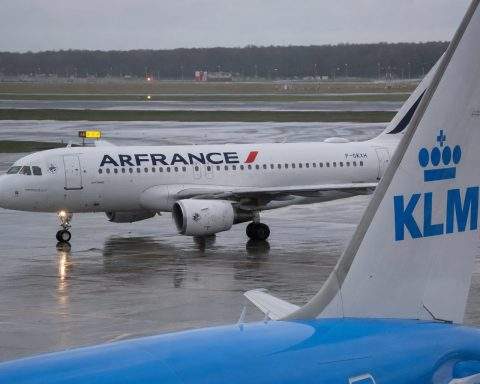
It’s not just Ryanair under the gun. Last week, Reuters said Air France-KLM is looking at a $2.4 billion jump in its fuel bill this year. British Airways parent IAG has cut its annual profit outlook, and easyJet pointed to 25 million pounds in extra March fuel charges.
Ryanair says its low cost base and hedging let it push harder on pricing. Goodbody now sees Ryanair’s profit for the year to March 2027 at 1.93 billion euros, down 14% from its prior view, after the broker said the latest guidance pointed to average fares dropping about 1% in the year.
Airline and holiday companies can’t just hike prices with inflation still hurting wallets, Dan Coatsworth, head of markets at AJ Bell, said. “The market was too fragile” for fare increases now, he said. But if costs keep rising, carriers might have to push prices up later. The Guardian
Ryanair said negotiations to extend Michael O’Leary’s contract through 2032 are close to being finished. The new package would grant him an option for 10 million shares, but the shares will vest only if profit-after-tax or share price goals are achieved.