New York, May 19, 2026, 16:03 EDT
- AST SpaceMobile stock traded between $78.68 and $90.88 on Tuesday, last up 2.2% at $88.75.
- The next hurdle for the stock is on the operations side, as investors want to see if the company sticks to its 2026 satellite launch timeline.
- Direct-to-device satellite coverage is picking up more investment from carriers and Big Tech. AT&T, Verizon, T-Mobile, SpaceX, Amazon, and Globalstar are all in the mix.
AST SpaceMobile shares climbed in a choppy session Tuesday, shaking off earlier losses. Traders shrugged off last week’s earnings miss and bought into the company’s push to send up more BlueBird satellites.
The stock was recently at $88.75, up 2.2%. It dropped to $78.68 earlier before climbing to a session high of $90.88. Volume hit 18.8 million shares.
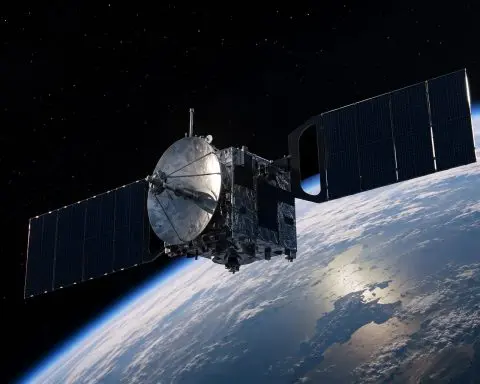
ASTS is trading less like a regular telecom name and more like an execution play now. The company is working on a low-Earth-orbit network to link everyday phones straight to satellites. The market is called direct-to-device, or D2D, so there’s no need for a special satellite phone or dish.
AST SpaceMobile said in a post on X Monday, picked up by Stocktwits, that two BlueBird satellites are already headed to Cape Canaveral and a third is “close behind.” CEO Abel Avellan told CNBC the company’s 45-satellite goal for this year is “on target” and said they expect launches “approximately every month.” Stocktwits
AST SpaceMobile posted first-quarter revenue of $14.7 million, way up from $718,000 last year, but losses kept growing. The net loss to common stockholders widened to $191.0 million from $45.7 million. Loss per Class A share was 66 cents.
The company is sticking with its 2026 target for around 45 BlueBird satellites in orbit. In the May 11 update, BlueBird 8, 9 and 10 were reported on schedule to be sent to Cape Canaveral, with launch expected around mid-June on a SpaceX Falcon 9.
AST SpaceMobile’s balance sheet is a key part of the bull case. The company reported roughly $3.46 billion in cash, cash equivalents and restricted cash at March 31. AST said that’s enough to cover working capital, planned operating costs and capital spending for at least the next year.
But the risks are clear. Oppenheimer’s Tim Horan said “results remain secondary” until the company can get the constellation up and prove the service, but also warned that commercial service isn’t coming until at least 2027 and only if the year-end satellite target is met. In April, a Blue Origin failure put AST’s BlueBird 7 in the wrong orbit, which shows how fast launch issues can shake an equity story. Investors.com
AT&T, T-Mobile, and Verizon said last week they’ve agreed in principle on a joint venture to use satellite-based direct-to-device tech to cut out U.S. wireless dead zones. Industry news like this has kept the stock moving. AST SpaceMobile said it welcomed the plan. CEO Avellan said the company expected to be a “key enabler” in the shift. AT&T Newsroom
Competition is picking up. Reuters said the FCC has cleared EchoStar’s spectrum sale to SpaceX and AT&T, which gives Starlink an easier route into direct-to-cell. Amazon said in April it will buy Globalstar to add D2D to its Amazon Leo setup.
Broader markets offered little support. The Invesco QQQ Trust, tracking the Nasdaq 100, dropped 0.6%. The SPDR S&P 500 ETF Trust lost 0.7%. Rocket Lab, another space name, slid 3.6%.
ASTS investors are watching for more than just talk about dead zones. They want to see hardware on the launch pad, and working satellites in space. Mid-June is when the focus is set.