London, May 21, 2026, 08:25 BST
- FTSE 100 trades lower in early London dealings after Wednesday’s rally.
- BT reports flat core earnings as fibre demand offsets revenue pressure.
- Sage raises its FY26 revenue outlook; easyJet warns fuel and bookings cloud its year.
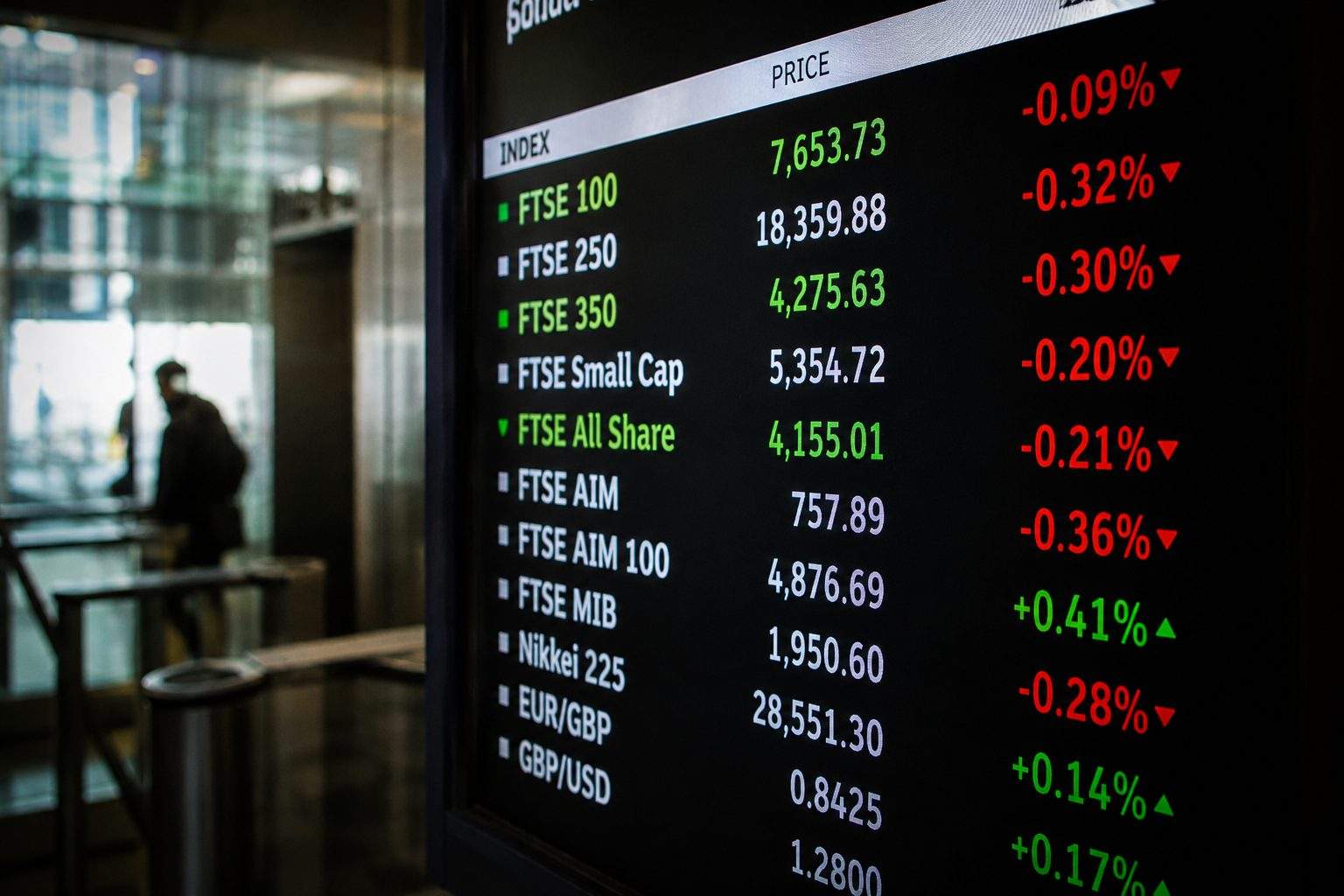
UK stocks slipped early on Thursday, with the FTSE 100 down 0.34% at 10,396.72 at about 0815 BST, giving back part of the previous session’s rally. The move came after the blue-chip index — the benchmark of the 100 largest companies listed in London — closed up about 1% on Wednesday.
The pullback matters now because London is trying to hold gains while investors juggle company earnings, oil above $100 a barrel and bond yields near recent highs. FTSE futures had already pointed lower before the open, even as Asian stocks rallied after Nvidia results and Samsung’s strike suspension lifted chip shares.
BT was one of the main corporate names in focus. Britain’s biggest broadband and mobile group said it added 2.2 million fibre connections in the year to end-March, while revenue fell 3% to £19.7 billion and core earnings — earnings before interest, tax, depreciation and amortisation, a common profit measure — held flat at £8.2 billion.
Chief Executive Allison Kirkby said BT was “building the UK’s digital backbone even faster and further.” The Openreach network, used by BT rivals Sky and Vodafone as well as BT itself, lost 825,000 lines in the year as customers switched to alternative fibre providers, and BT expects another 800,000 losses this year. Reuters
Sage gave the market a cleaner growth story. The software company said underlying revenue rose 11% to £1.36 billion in the first half, operating profit rose 15% to £326 million, and it now expects FY26 organic total revenue growth above 9%. CEO Steve Hare said Sage’s “intelligent agents” were helping finance teams close books faster and plan more effectively. Sage
The travel read was rougher. easyJet reported a first-half loss of £552 million and said its full-year outlook remained uncertain as the Iran war lifted fuel costs and weakened summer booking patterns. CEO Kenton Jarvis said the airline aimed to “bounce back from this year’s Middle East-related setbacks,” but second-half bookings were 58% sold, down from 77% a year earlier. Reuters
That put oil back in the frame for London investors. Brent crude traded around $106.57, while the UK 10-year gilt yield — the yield on a UK government bond — was near 4.995%, a level that can make equities less attractive by raising financing costs and improving returns on bonds. Sterling was little changed near $1.3427.
Retailers were still being measured against Wednesday’s Marks & Spencer update. M&S had led FTSE 100 risers, up 6.6%, after adjusted pretax profit beat Visible Alpha consensus despite a 29% drop in pretax profit linked to last year’s cyberattack. JPMorgan analyst Georgina Johanan called the update “better than feared,” while AJ Bell’s Russ Mould said the crisis looked more like a “blip” in the retailer’s recovery. Morningstar
The global backdrop was not all negative. On Wall Street, the S&P 500 rose 1.1% and the Nasdaq gained 1.5% on Wednesday as chip stocks rallied before Nvidia’s results, with BMO Private Wealth’s Carol Schleif saying “technology is driving the bus again today, and the AI theme.” Reuters
But the downside case is still close. A fresh rise in oil prices, a setback in Iran-related talks, or another leg up in gilt yields could keep pressure on airlines, consumer shares and highly valued growth names. Company updates are also uneven: BT still has line losses to absorb, Sage has to prove AI spending can keep feeding growth, and easyJet’s summer depends on late bookings coming through.