New York, May 21, 2026, 16:06 (EDT)
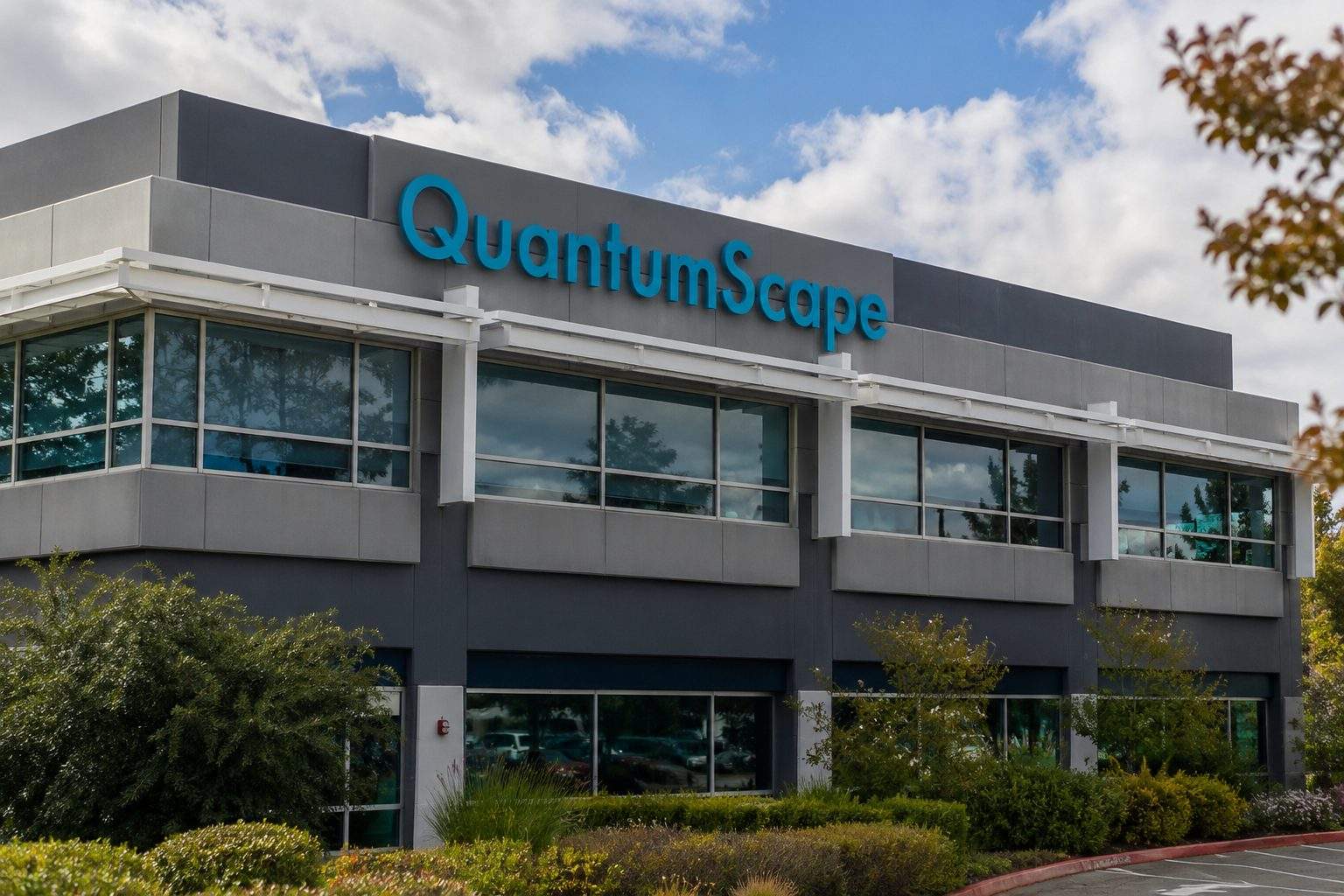
QuantumScape jumped Thursday, finishing the day 9.13% higher at $8.37. The stock hit $8.50 during the session before settling at $8.41 after hours. S&P 500 added 0.18% and Nasdaq managed a 0.09% gain by comparison to QuantumScape’s move.
QuantumScape jumped 5.07% to $7.67 on Wednesday, marking a second big swing in two days. Options action was mixed, with calls outpacing puts, but traders were also willing to pay more for downside hedges, according to TheFly data from TipRanks.
The move has some weight right now. QuantumScape is still in the stage where sentiment around the stock moves quicker than the fundamentals. The company is still working to show that it can move its solid-state lithium-metal batteries—built around a solid separator meant to boost energy density, charging and safety—from pilot production to the commercial level.
QuantumScape’s automated pilot line, the Eagle Line, is the newest hook in its operations. In April, the company said it finished installing the line and got it running. QuantumScape said it was already making early volumes of QSE-5 cells and wanted to increase production during the second quarter to support automotive and other programs.
Automotive stays at the core. QuantumScape said it’s still working with Volkswagen Group’s PowerCo on field tests. It shipped cells to an automotive joint-development partner last quarter, and finished a tech evaluation with a different top-10 automaker, which has now started joint development work with QuantumScape.
Siva Sivaram, the CEO, pushed back on concerns about new markets being a distraction, telling the company’s Q1 call, “not like we are taking our eye away” from automotive. Four of the top 10 automakers are working with QuantumScape, he said, in Europe, North America and Japan. Volkswagen is the most advanced. Investing.com
The company says there are markets beyond cars—AI data centers, defense, aerospace, government. Corning program director Jamie Huang-Chu said QuantumScape might let customers get a “better battery at a competitive price.” Mark Maybury, who was chief scientist for the U.S. Air Force and now advises QuantumScape, pointed to “compelling advantages” for industrial and defense uses.
QuantumScape stayed deep in the red in the first quarter, with a GAAP net loss of $100.8 million and $109.2 million in operating expenses. The company kept its full-year adjusted EBITDA loss forecast at $250 million to $275 million. Adjusted EBITDA, a non-GAAP figure, leaves out interest, taxes, depreciation, amortization, and stock-based compensation. Companies use it to show operating performance without certain accounting costs.
Cash runway stays in focus for bulls. The company finished Q1 with $904.7 million in liquidity. Customer billings came in at $11.0 million—these are invoices sent to customers and partners, not U.S. GAAP revenue.
Insider filings gave traders more numbers to watch. A new Form 4 showed CTO Timothy Holme unloaded 150,183 Class A shares at a weighted average price of $7.5022. Holme also sold 34,254 shares through a trust under a Rule 10b5-1 trading plan. The same filing listed 31,322 shares let go to pay taxes on restricted stock units.
Chief Legal Officer Michael O. McCarthy III sold 24,211 Class A shares at a weighted average price of $7.3721, according to a separate filing. The sale is to meet tax obligations from restricted stock units.
Peer action was uneven. Solid Power picked up roughly 6.7% in late trade, Amprius added 1.0%, while Enovix lost 1.0%. Battery-technology stocks stayed volatile as the wider market held steady.
Wall Street isn’t betting big here. According to Investing.com, QuantumScape carries a 12-month price target of $7.16, under where shares finished Thursday. The analysts tracked issued no buy calls, two sells and an overall neutral view.
QuantumScape flagged the risks. The company listed technical setbacks, production snags, quality and cost issues, partner execution, slow customer pull-through and more fundraising—all weighing on its outlook and possibly diluting shareholders. Momentum is fragile. If the Eagle Line ramp, field tests or customer shipments don’t hit targets, any rally can unwind fast.
Nasdaq’s standard session is 9:30 a.m. to 4 p.m. ET, followed by after-hours from 4 p.m. to 8 p.m. U.S. markets are set to close Monday for Memorial Day, so Friday is the last full session before the holiday break.