Meta Stock Pops as Paid AI Plans Hand Investors a Fresh Growth Story

Meta Stock Pops as Paid AI Plans Hand Investors a Fresh Growth Story

NEW YORK, May 27, 2026, 4:01 PM EDT

  • Meta shares rose late Wednesday after reports that the company is rolling out paid tiers for its social apps and Meta AI.
  • The stock outpaced a nearly flat broader market, with investors looking for signs that AI spending can turn into new revenue.
  • The main risk remains whether subscriptions can matter enough against Meta’s much larger advertising business and heavy AI capex.

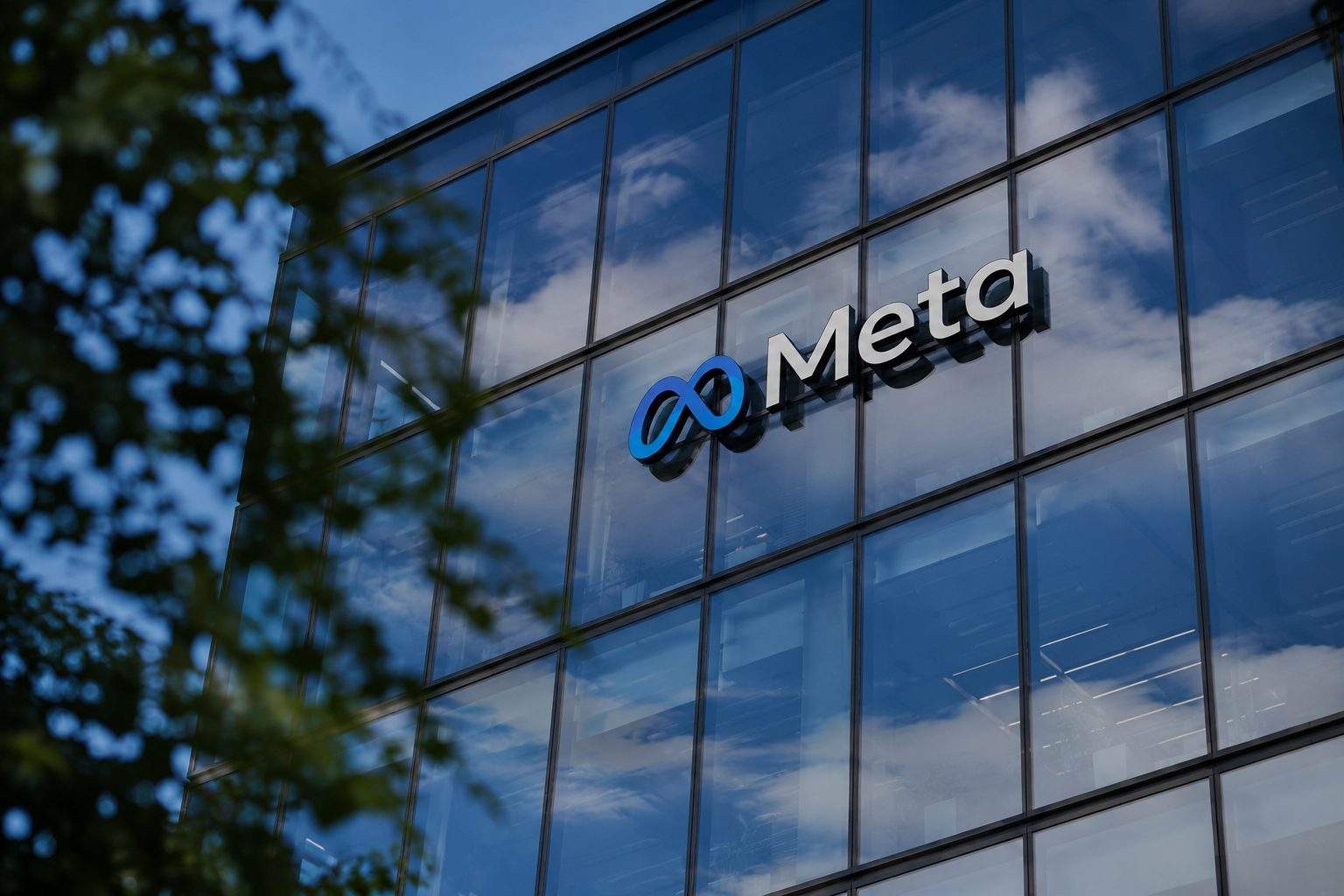
Meta Platforms shares climbed late Wednesday after the Facebook parent moved deeper into paid subscriptions for Instagram, Facebook, WhatsApp and Meta AI, giving investors a fresh revenue story as the company spends heavily on artificial intelligence.

Meta was recently up about 3.9% at $636.43, after touching an intraday high of $638.35, while the Invesco QQQ Trust, a proxy for large Nasdaq technology shares, was little changed. Alphabet rose modestly and Snap also gained, leaving Meta ahead of several ad-linked technology peers in late trading.

Why it matters now: investors have been pressing Meta to show how its large AI outlays will produce revenue beyond advertising. Bloomberg reported Wednesday that Meta is selling consumer subscriptions to its Meta AI chatbot for the first time, with a Meta One Plus tier at $7.99 a month and a Meta One Premium tier at $19.99 a month.

Barron’s reported that Naomi Gleit, Meta’s head of product, said in an Instagram video that Facebook Plus, Instagram Plus and WhatsApp Plus would offer users “richer ways to express and connect,” while Meta also tests AI plans that give users “more to work with.” A Meta spokesperson said Meta AI would remain free for everyday use, Barron’s reported. Barron’s

The move marks a small but visible shift for a company still built mainly on ads. Subscriptions could give Meta a steadier stream of revenue and help pay for capital expenditure, or capex — money spent on long-lived assets such as data centers, chips and servers.

That spending has been the stock’s sore point. Meta said last month it expected 2026 capital expenditure of $125 billion to $145 billion, up from an earlier $115 billion to $135 billion range, as it builds AI infrastructure. Reuters reported then that the shares fell more than 6% in extended trading after the higher forecast.

Meta’s core business is still strong. The company reported first-quarter revenue of $56.31 billion, up 33% from a year earlier, and said ad impressions across its apps rose 19%. Family daily active people, a measure of people using at least one of its apps each day, rose 4% from a year earlier to 3.56 billion, though it slipped from the previous quarter.

Chief Executive Mark Zuckerberg called it a “milestone quarter” and said Meta was “on track to deliver personal superintelligence to billions of people,” according to the company’s April earnings release. Meta Investor

The competitive backdrop is not quiet. Alphabet, which owns Google, remains a benchmark for investors judging whether AI can lift search and advertising revenue, while Snap is a smaller social-media peer trying to squeeze more money from users and advertisers. Reuters reported after Meta’s April results that D.A. Davidson’s Gil Luria said Meta had failed to impress investors in the context of stronger results from Google parent Alphabet.

Governance was also in view. Meta’s annual meeting was scheduled for Wednesday at 10 a.m. Pacific time, with shareholders voting on directors, auditor ratification and 10 shareholder proposals, including items tied to child safety, generative AI chatbot data and other platform risks.

But the rally could fade if paid plans prove too small to offset AI spending, or if users resist another subscription. Legal and regulatory risk also hangs over the stock: Meta warned last month that youth-safety scrutiny and additional U.S. trials could ultimately result in a material loss, Reuters reported.

For now, the market read was simple enough. Investors bought the idea that Meta may have found one more way to charge for AI, even if the big money still comes from ads.


Khadija Saeed is a financial markets reporter at TS2.tech, specializing in stocks, technology and emerging industries. She studied economics and finance at the London School of Economics and previously worked in market research before moving into financial journalism. Her coverage focuses on the companies, innovations and economic trends influencing global investors. Follow Khadija Saeed on Google News.

Google Preferred Source

TS2 Tech on Google

Follow the stories that move markets

Make TS2 Tech a preferred source or open our publication directly in Google News.

TS2 TECH • DAILY MODEL PORTFOLIO

Stocks to Buy Today

Five stocks stand out, supported by recent earnings or more attractive entry points. Today's selection highlights companies raising their outlooks and reporting firm orders, rather than focusing on heavily traded chipmakers.

Today’s market stance Selective • earnings-led
#1 • HIGHEST CONVICTION 24% weight

Xylem

NYSE: XYL
STRONG BUY
Model score 92 / 100
★★★★★

A 12-cent earnings beat and raised 2026 profit outlook highlight the results, while quarterly revenue matched expectations. The water treatment segment offers AI infrastructure exposure without increasing semiconductor holdings.

Why today

Earnings per share surpassed expectations; the company raised its guidance, citing increased water demand from data centers.

Next catalyst

Order conversions are being monitored to confirm that the new margin level is sustainable.

Main risk: Annual revenue guidance moved to about $9.2bn, and project timing can shift.
#2 • BEST CONTRARIAN 22% weight

Alphabet

NASDAQ: GOOGL
BUY ON WEAKNESS
Model score 89 / 100
★★★★½

Google Cloud's revenue surged 82%, with its operating margin hitting 35.6%. However, shares declined as capital expenditures increased. The reset offers a better entry point, but exposure remains limited since quarterly free cash flow moved into negative territory.

Why today

Cloud segment outperformed expectations; company reset guidance following earnings; search operations continue to drive strong cash flow.

Next catalyst

Cloud backlog is being converted more efficiently, leading to improved alignment between expenditures and cash flow.

Main risk: 2026 capex is now $195bn to $205bn, while depreciation is rising.
#3 • DEFENSIVE GROWTH 20% weight

Unilever

LON: ULVR • NYSE: UL
BUY ON PULLBACKS
Model score 87 / 100
★★★★☆

Underlying sales increased by 5.8%, driven by a 5.5% rise in volume—the company's strongest volume growth in over ten years. Guidance has been raised, but after today's significant share price jump, a gradual approach to buying may be more prudent.

Why today

Strong volumes drive results; outlook raised; steady cash flow in low-beta environment

Next catalyst

Second-half pricing trends and updates on the Foods transaction.

Main risk: Commodity inflation, currency moves and a large one-day gap.
#4 • EARNINGS MOMENTUM 18% weight

Sherwin-Williams

NYSE: SHW
ACCUMULATE
Model score 84 / 100
★★★★☆

Sales and adjusted earnings surpassed expectations, prompting management to raise its full-year guidance. The company is benefiting from higher prices and increased market share, but the stock's rapid three-day rally suggests investors may want to hold off on buying at the open.

Why today

The company beat expectations, raised its outlook, demonstrated strong pricing power, and continued to gain market share.

Next catalyst

The company is targeting adjusted EPS between $11.80 and $12.20.

Main risk: Weak housing demand, raw-material inflation and a richer entry.
#5 • TACTICAL UPSIDE 16% weight

PayPal

NASDAQ: PYPL
TACTICAL BUY
Model score 81 / 100
★★★★☆

Adjusted earnings surpassed expectations, prompting an increase in full-year profit guidance. The reported $60.50 per share approach offers added flexibility, though its smaller weighting signals lower margins and uncertainty regarding a potential deal.

Why today

Earnings surpass forecasts; guidance raised; strategic options under review.

Next catalyst

Focus is on the $400 million cost program, margin trends, and any official response to the deal.

Main risk: Operating margin fell to 17.4%, and no sale is assured.
Portfolio structure
Water & infrastructure 24%
Technology & cloud 22%
Consumer staples 20%
Coatings & materials 18%
Payments 16%
Build positions in two or three tranches.

Avoid buying a stock that's trading more than 5% above its previous close. Revisit the list after Wednesday's Fed decision and this week's mega-cap earnings.

Strong companies, weaker entries today
Coca-Cola NYSE: KO
WAIT FOR PULLBACK

Strong quarter with improved guidance, but a nearly 6% rally limits short-term upside.

Visa NYSE: V
WAIT FOR RESULTS

Visa is set to report earnings after the close. The portfolio won’t be taking on new event risk ahead of the results.

Nvidia NASDAQ: NVDA
WATCH

While long-term demand is solid, questions persist around chip momentum and AI financing.

Portfolio heat 6.4 / 10

Moderate. Recent earnings provide solid support, though event risk is still elevated.

Market risk check

The Nasdaq faces continued pressure as chip stocks endure a steep correction. With the Federal Reserve set to announce its decision on Wednesday, investors should brace for increased intraday volatility.

TS2 DAILY MODEL PORTFOLIO 100% allocated

This is an editorial model portfolio and does not constitute personalized investment advice. The scores reflect how today's five holdings compare to the current opportunity set, rather than predicting future returns.

Keel Infrastructure Shares Pop Again, Traders Watch KEEL’s AI Play
Previous Story

Keel Infrastructure Shares Pop Again, Traders Watch KEEL’s AI Play

Wolfspeed Stock Just Hit a Wall After Its AI Surge. The Risk Traders Can’t Ignore
Next Story

Wolfspeed Stock Just Hit a Wall After Its AI Surge. The Risk Traders Can’t Ignore