
NEW YORK, May 27, 2026, 16:22 (EDT)
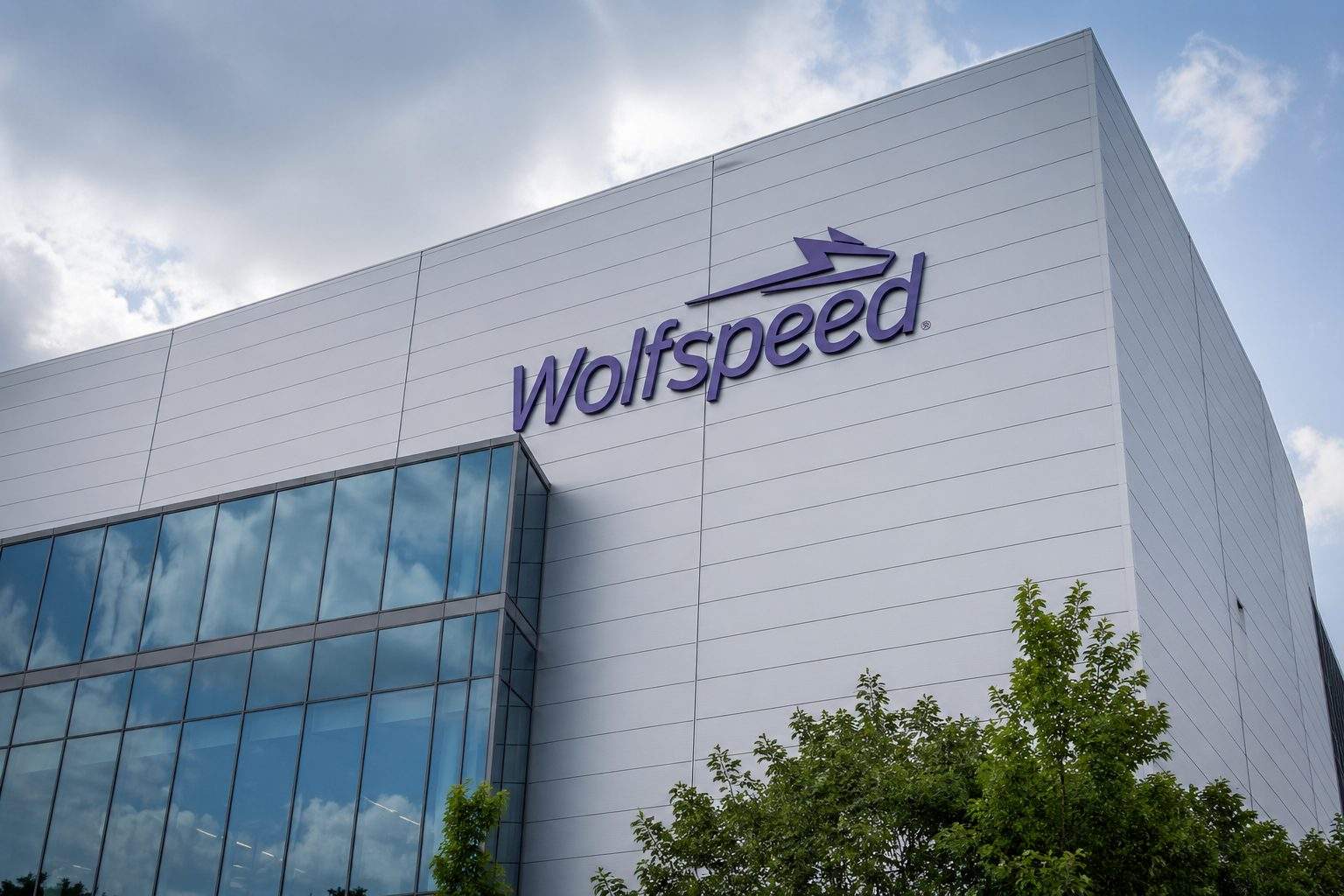
Wolfspeed Inc. shares fell hard on Wednesday, sliding 14.3% to $63.00 as a fast-moving AI power-chip rally cooled. The stock swung between $56.55 and $78.00, while the iShares Semiconductor ETF, a listed fund that trades like a stock and holds chip shares, fell about 1.1%; broader tech was nearly flat.
That matters now because Wolfspeed has become a volatile test of whether investors will keep paying up for power chips tied to artificial-intelligence data centers, not just graphics processors. Wolfspeed makes silicon carbide, or SiC, power chips — components built to handle high voltage and heat more efficiently than standard silicon in some power applications.
The spark for the group came a day earlier. Vicor raised its second-quarter revenue guidance to $142 million from $126 million, citing higher product revenue and royalties from a new licensee of its patented power-system technology; Barron’s reported that the news lifted Wolfspeed, Navitas Semiconductor and Monolithic Power Systems on Tuesday. Vicor CEO Patrizio Vinciarelli said the license gave original equipment makers and hyperscale data-center operators “multi-source access” to Vicor technology. Barron’s
By Wednesday, the read-through was not clean. Vicor still gained 3.9%, but Navitas lost 9.2% and Monolithic Power fell 2.5%, a split tape that left Wolfspeed exposed after its own big move.
Part of the May run came from a separate bullish note by Citrini Research, which argued that the AI buildout is inheriting parts of the electric-vehicle supply chain. Business Insider reported that Citrini called Wolfspeed “the only game in town” in its niche, helping fuel a sharp rally earlier this month. Business Insider
But Wolfspeed’s own numbers still look like a turnaround, not a clean growth story. In its fiscal third quarter, the company posted revenue of $150.2 million, a gross loss of $40.0 million and a net loss of $119.9 million; a gross loss means production costs exceeded sales before overhead and other expenses are counted. Wolfspeed also reported about $1.2 billion in cash, cash equivalents and short-term investments and said it had enough liquidity for at least one year after the filing date.
Management has tried to keep investors focused on the balance sheet and product roadmap. Chief Executive Robert Feurle said the company made “meaningful progress against our priorities,” while Chief Financial Officer Gregor van Issum called the quarter “another major step” in strengthening the balance sheet after a refinancing cut total debt by $97 million and was expected to lower annual interest expense by $62 million. SEC
The backstory is still fresh. Wolfspeed emerged from Chapter 11, the U.S. court process that lets a company reorganize debt while continuing to operate, after slashing debt by nearly 70% and annual cash interest costs by about 60%, Reuters reported last year.
The risk is just as plain. A March SEC prospectus registered the potential resale of up to 32.9 million shares tied to a selling stockholder, including shares already held, shares from convertible notes — debt that can turn into stock — and warrants, which are rights to buy shares. Wolfspeed said it would not receive proceeds from those sales and that registration did not mean the stockholder would sell, but the filing keeps share-supply pressure in view.
So the downside case is not complicated: if AI data-center demand takes longer to show up in Wolfspeed orders, or if electric-vehicle and industrial weakness lingers, negative margins and possible share supply could cap rallies. A stronger case would need harder evidence that the new AI power story is moving from market narrative into revenue.
For now, Wednesday’s drop says traders are not done testing that story. Wolfspeed remains a leveraged bet on AI power demand — and on whether a company that just repaired its balance sheet can turn that theme into profitable sales before patience thins again.


![US Stock Market Today 08/26/2026 [UPDATE: 01:17 EDT] [Semtech Holds 4% Gain as QQQ Slips Before Nvidia]](https://ts2.tech/wp-content/uploads/2026/08/US-market-dashboard-2026-08-26-0113-480x384.jpg "US Stock Market Today 08/26/2026 [UPDATE: 01:17 EDT] [Semtech Holds 4% Gain as QQQ Slips Before Nvidia]")