NEW YORK, June 5, 2026, 05:02 (EDT)
- Broadcom dropped 12.6% Thursday, with its quarterly revenue and AI-chip outlook both coming in below what investors were hoping for.
- AVGO changed hands at $410.95 before the bell Friday, slipping 1.9% from where it finished Thursday.
- Chip stocks took a hit on sentiment, though Broadcom still called for another AI revenue jump.
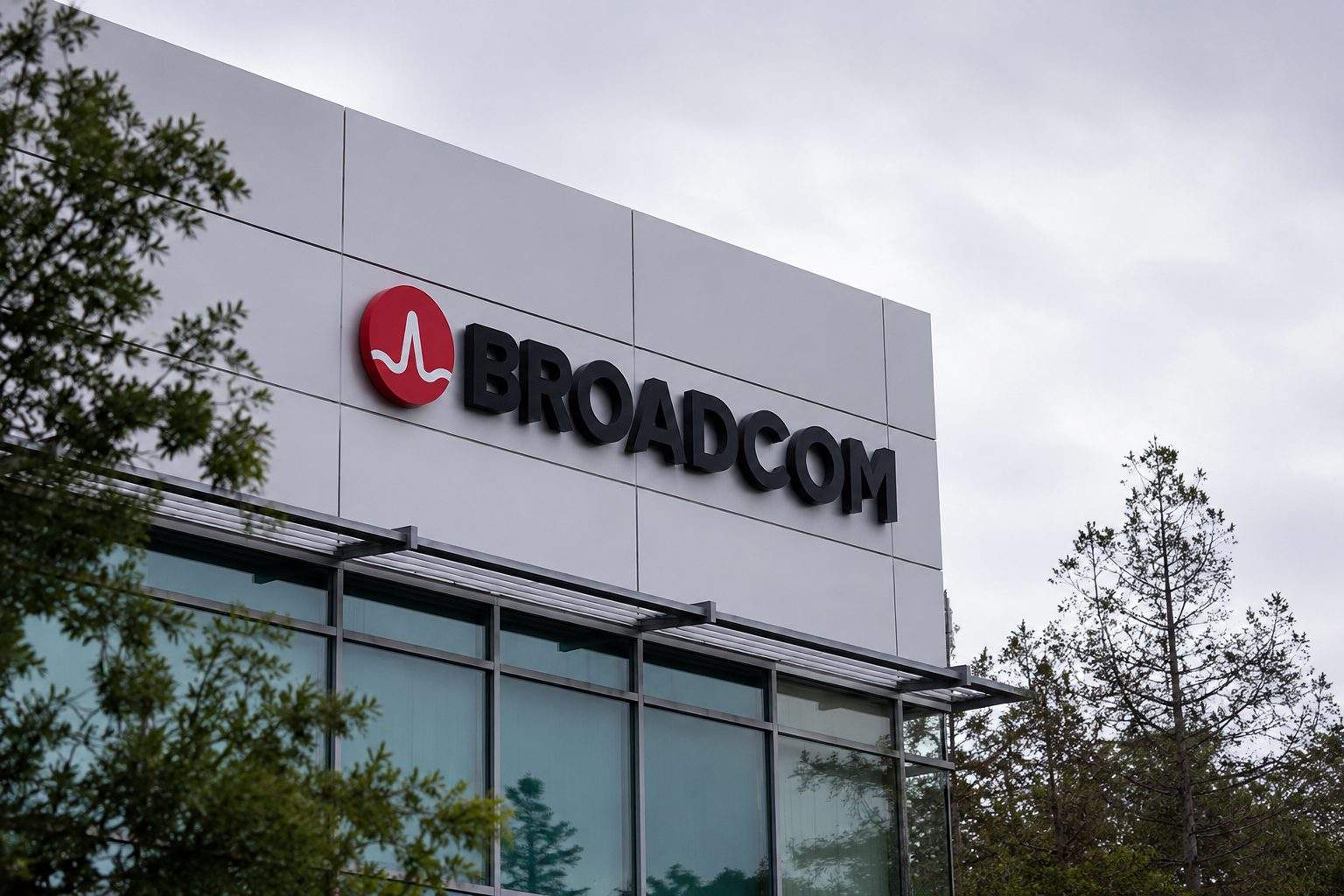
Broadcom Inc. stock dropped in the premarket Friday, adding to losses after the company’s AI sales outlook didn’t meet bullish investor hopes. AVGO was last at $410.95 ahead of the open, off 1.9% from Thursday’s $418.91 finish. Premarket trading, which happens before markets open at 9:30 a.m. ET, tends to see lighter volume.
Broadcom is getting attention now as a major AI play apart from Nvidia. The stock sank 12.6% on Thursday after reporting Q2 revenue of $22.19 billion, just under the consensus estimate of $22.27 billion. The miss weighed on the Nasdaq Composite, which slipped 0.09%, while the Dow added 1.73% and the S&P 500 was up 0.41%.
Broadcom’s latest numbers weren’t soft by normal standards. The company reported a 48% jump in revenue for its fiscal second quarter, hitting $22.187 billion. Non-GAAP diluted earnings climbed 54% to $2.44 a share. These non-GAAP numbers exclude certain costs and are meant to show profit from regular operations.
Broadcom stuck with its $100 billion long-term outlook for AI-chip sales and guided to $16 billion in AI chip revenue for the third quarter. That number fell just short of Visible Alpha’s $16.36 billion estimate. CEO Hock Tan did not lift the long-term target, as investors had hoped.
“Nothing slows down what was estimated prior — they just didn’t raise it,” Ben Bajarin, chief executive of technology consultancy Creative Strategies, told Reuters. Ryan Lee, senior vice president of product and strategy at Direxion, said the move showed the market “demands perfection” from chip stocks. Reuters
Broadcom stuck to its key points. CEO Tan said AI semiconductor sales hit $10.8 billion, up 143% from a year earlier, thanks to higher demand for custom AI accelerators and AI networking. These accelerators are chips built for specific AI tasks, not for general uses.
Chief Financial Officer Kirsten Spears told analysts consolidated revenue is on track to jump 84% year over year in the third quarter, landing near $29.4 billion. Spears said the company expects to keep its non-GAAP operating margin around 67%. Operating margin measures the part of revenue left after paying operating costs.
Competition is in focus. Nvidia’s GPUs still set the pace for most AI jobs, but Marvell Technology is moving deeper into custom chips aimed at large cloud firms. Marvell has told Reuters it expects its custom-chip business to bring in more than $10 billion in revenue in 2029.
Wall Street analysts offered mixed reads on the stock. DA Davidson’s Gil Luria said Broadcom’s small revenue beat and forecast didn’t meet high investor hopes. JPMorgan’s Harlan Sur pointed to growing AI bookings, saying they keep pushing revenue visibility higher, Benzinga reported.
Some analysts flagged risks. Kevin Cassidy at Rosenblatt said that repeating the fiscal 2027 AI outlook might “intensify investor concerns” about losing market share. Cantor Fitzgerald’s C.J. Muse called the results “disappointing” and highlighted a gross-margin forecast that missed consensus. Gross margin is the portion of sales left after production costs. Benzinga
Broadcom, in its latest release, pointed out risks like reliance on big customers, supply chain pressures, contract manufacturing, holding or growing gross margin, and rivalry in semiconductor solutions. These aren’t just standard disclaimers for Broadcom; they’re key to whether its AI growth can keep going without hurting margins or losing customer share.
Friday’s regular session is the next test. In Asia, tech stocks fell further after Broadcom’s miss, according to Reuters. Bob Savage, BNY’s head of markets macro strategy, said the “AI-led equity rally” is running out of steam. Reuters