
New York, June 7, 2026, 13:02 EDT
Stocks aren’t in a bear market right now, but Friday’s drop pushed some traders to ask if one could be next. Cash equity markets are closed for the weekend. Investors are looking at the week ahead and trying to decide if the AI-driven rally just paused or if it’s starting to break down. The NYSE and Nasdaq open Monday through Friday, 9:30 a.m. to 4:00 p.m. Eastern.
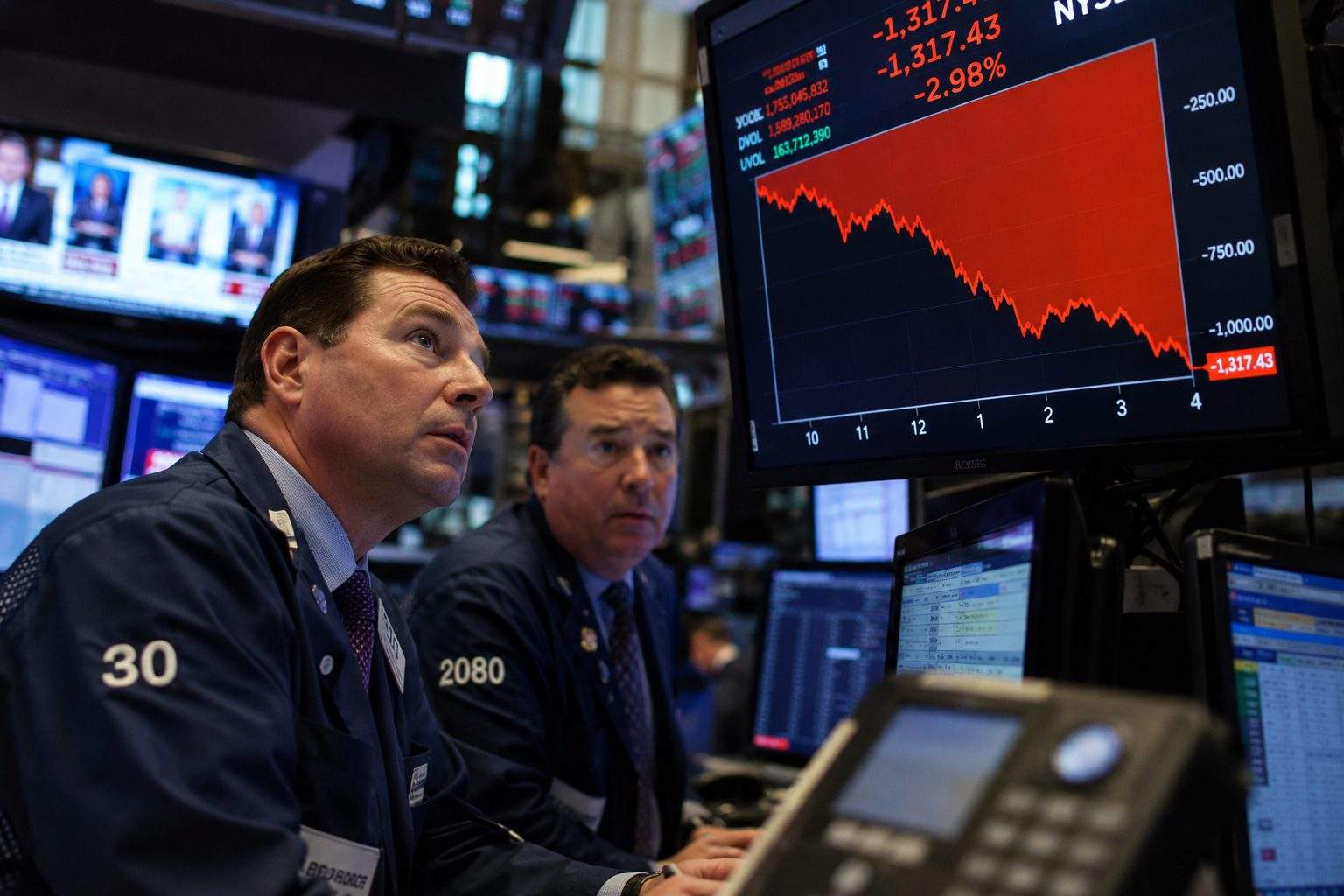
Wall Street’s streak broke after nine weeks, when a stronger-than-expected U.S. jobs report cooled bets on a dovish Fed and pressure came down hard on crowded positions. On Friday, the S&P 500 fell 2.64%, Nasdaq Composite slid 4.18%, and the Dow Jones lost 1.35%, according to Reuters.
Bears usually show up when markets drop at least 20% from highs. S&P 500 isn’t down that much. What happened Friday was more a sharp move out of leaders than a full-on slump across the board. Sometimes a leadership break shows up before the numbers do.
Semiconductor stocks led the market lower as investors dumped many of the names tied to this year’s AI boom. U.S.-listed chipmakers shed roughly $1.3 trillion in value on Friday. The PHLX Semiconductor Index dropped 10.3%, the steepest one-day slide since March 2020. Nvidia, Broadcom, and Advanced Micro Devices all got hit, with Broadcom’s latest report raising fresh doubts about demand for custom AI chips.
“The dam just broke today,” said Ryan Detrick, chief market strategist at Carson Group. But Ohsung Kwon, chief equity strategist at Wells Fargo, said he doesn’t see it as “the end” of the semiconductor bull run. Reuters
Stronger-than-expected economic numbers drove the move, not fears of a slowdown. Nonfarm payrolls increased by 172,000 in May, with the unemployment rate steady at 4.3%, according to the Labor Department. Revisions pushed March and April payrolls up by 93,000 jobs total, suggesting the labor market was tighter than markets expected.
The Fed outlook just got trickier. A hawkish Fed signals more rate hikes to tackle inflation. U.S. rate futures, according to Reuters, now price a 68.4% chance of a rate hike in December, up from 52% late Thursday. Markets still see the Fed on hold for June. Janus Henderson Investors’ portfolio manager Bradford Smith called the jobs numbers a “barnburner.” Reuters
Tom Porcelli, chief economist at Wells Fargo, said the labor market isn’t back in “overheating mode.” But he said the report keeps pressure on Fed officials looking to drop the central bank’s easing bias. That’s an issue for long-duration growth shares. Those stocks trade on profits far out in the future. Reuters
Busy week coming up for investors. Consumer price numbers hit Wednesday, producer data follows on Thursday, and SpaceX is set to kick off its long-awaited IPO on Nasdaq June 12, according to Reuters. Jason Pride, chief of investment strategy and research at Glenmede, said the main focus is if the SpaceX deal points to “market froth.” Reuters
The bear-market warning may be premature. If inflation softens, oil prices fall, or Oracle and Adobe beat estimates, Friday might look like traders clearing out positions after the rally, not the first step down. The risk for bulls is different: if inflation stays high, Treasury yields keep climbing and AI stocks drop again, that could flip a single hard session into a correction—a 10% to 19.9% drop—before talk of a full 20% bear market really starts.
Market breadth looked weak on Friday. On the NYSE, losers topped gainers by a ratio of 3.14-to-1, and on Nasdaq, the ratio was 3.48-to-1. Nasdaq reported 178 new 52-week lows and 83 new highs. This isn’t full capitulation, but the selling wasn’t limited to just the big tech names.
Right now, this looks like stress, not an official bear market. The big question is if buyers step in on Monday or if Friday’s chip selloff drags down financials, industrials, and consumer stocks. One rough day isn’t a bear market. But if there’s another slide after a strong CPI, it gets tougher to argue against it.
Related articles: NASDAQ:NVDA