
Helsinki, June 21, 2026, 18:01 EEST
- Nokia’s Helsinki shares last closed at €11.79, down 2.12%, while its New York-listed ADRs closed at $13.49, down 2.46%.
- The Helsinki stock fell about 9% from the prior Friday’s close in a shortened trading week.
- The next scheduled financial catalyst is Nokia’s second-quarter report on July 23; its Q2 closed window, when insiders face trading restrictions, starts June 23.
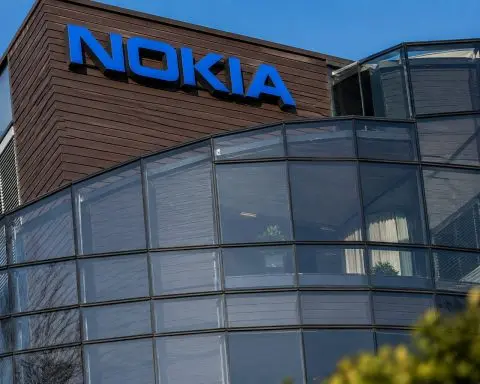
Nokia Oyj goes into Monday’s reopening on the back foot after a sharp, holiday-shortened pullback, even as the Finnish network equipment maker packed the week with AI, optical-network and licensing announcements. Nasdaq Helsinki was shut on Sunday and normally trades Monday to Friday, 10:00 a.m. to 6:25 p.m. local time.
The timing matters. Nokia shares have been treated less like a slow telecom-equipment name and more like a data-centre and AI-connectivity play this year, so a near-9% weekly drop says investors are again asking for cash flow, orders and margins, not just product language. In New York, Nokia’s American depositary receipts, U.S.-traded certificates representing foreign shares, closed Thursday lower for a third straight session and were 22.69% below their June 3 high.
The local tape was weak too, though less so. The OMX Helsinki 25, the main index of 25 heavily traded Helsinki shares, closed Thursday down 1.35% at 6,238.40. Across Europe, Reuters reported that the STOXX 600 slipped 0.3% the same day as investors weighed a more hawkish U.S. Federal Reserve tone.
There was no Friday U.S. trade in the ADR because the NYSE was closed for Juneteenth, while Helsinki’s calendar was also interrupted by Midsummer Eve. That leaves Thursday’s close as the last clean market print before the week ahead.
Nokia’s licensing arm gave the market one concrete item to assess: a multi-year, multi-technology patent cross-licence agreement with Lenovo. Terms were confidential. Susanna Martikainen, Nokia’s chief licensing officer, said the deal reflected the “strength of Nokia’s patent portfolio,” language that matters because licensing revenue can carry different margin characteristics from hardware sales. Nokia Corporation | Nokia
The company also leaned hard into the AI-network story. Nokia, t3 Broadband and Aureon announced an optical transport deployment linking a North Dakota data-centre development with the Chicago area, initially offering up to 100 terabits per second and scalable to 400 Tb/s; a terabit-per-second figure measures how much data a network can carry. Matt Young, vice president of sales at Nokia, said “AI is accelerating the need” for high-performance links between data centres. Nokia Corporation | Nokia
Other releases pointed in the same direction, though in different markets. Nokia Defense and KNDS announced a 5G deployable-network collaboration for soldiers and unmanned systems, while Nokia said Symphony Communication selected it to upgrade the Malaysia-Cambodia-Thailand subsea cable with optical systems for AI and cloud traffic.
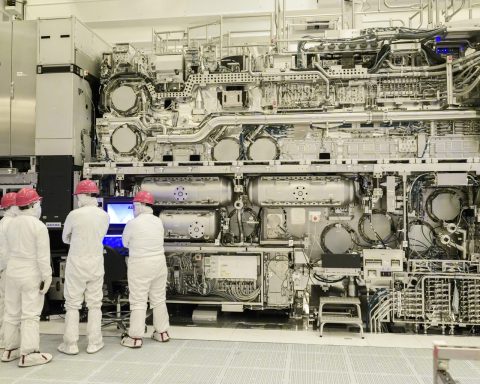
A U.S. manufacturing update added a longer-dated angle. Nokia said on June 16 it would expand advanced test and packaging operations in Allentown, Pennsylvania, nearly double its local workforce to more than 500 jobs and increase production capacity by up to 10 times; CEO Justin Hotard said the “AI supercycle” was reshaping network needs. Nokia Corporation | Nokia
Peer news gives investors a second Nordic reference point. Ericsson, Nokia’s closest listed rival in radio and network equipment, said last week that CEO Börje Ekholm would step down at the end of September and be replaced by Per Narvinger on Oct. 1; Reuters reported Ericsson shares were up 26% year-to-date at the time, and Narvinger said “AI continues to industrialise.” Reuters
For Nokia, the issue is not whether AI traffic exists. The company said in April that AI & Cloud customer sales rose 49% in the first quarter and that it booked €1 billion of AI & Cloud orders, while keeping its 2026 comparable operating-profit target at €2.0 billion to €2.5 billion. The harder question for Monday is whether investors think last week’s announcements bring that revenue forward, or simply keep the story alive.
But the downside case is plain. Nokia itself lists competitive pressure, customer network-investment decisions, component costs, supply-chain disruption and macro uncertainty among its risks. If carriers or cloud customers delay spending, or if margins thin as rivals chase the same AI-network budgets, the stock could stay under pressure before the July 23 results.
Related articles: HEX:NOKIA