
NEW YORK, June 21, 2026, 15:03 EDT
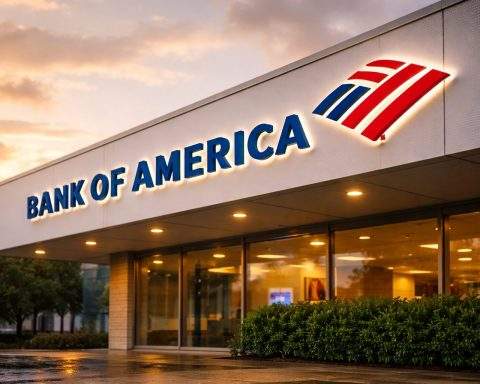
- Bank of America closed at $56.20 following the holiday-shortened week, holding close to Tuesday’s high.
- The NYSE opens again Monday following the Juneteenth holiday. The Fed posts its yearly bank stress-test results Wednesday.
- BAC holders are watching rate risk, credit costs, and capital returns in the near term.
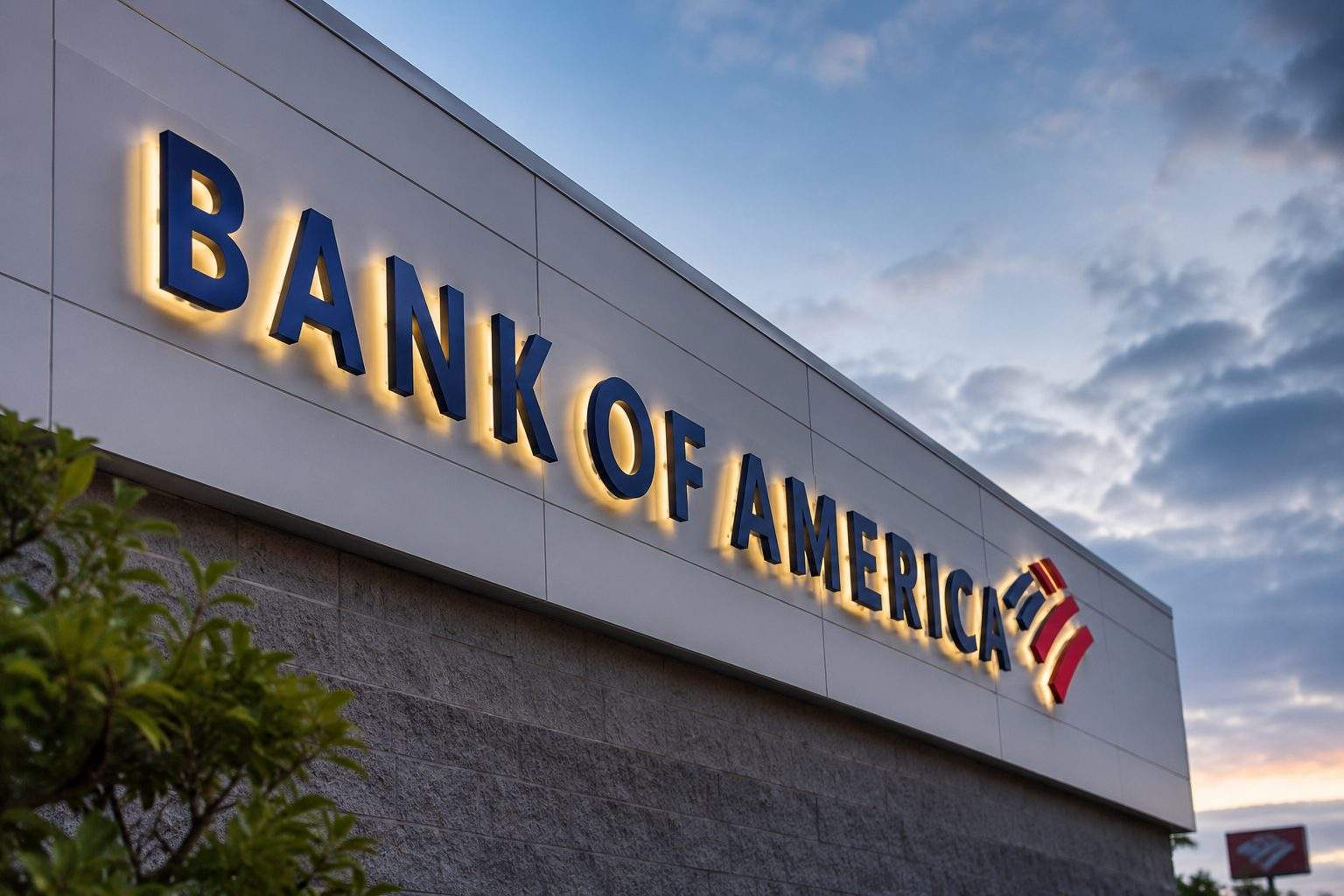
Bank of America Corp shares start the week a touch below year highs. BAC last traded at $56.20 on Thursday, off 0.58% for the session. The stock had closed at $56.84 Tuesday and hit $57.98 Wednesday. Markets were closed Friday for Juneteenth.
That’s relevant now as bank investors face two things: a more hawkish Federal Reserve, and the Fed’s comments on big-bank strength when it posts its yearly stress-test results Wednesday. Stress tests are regulatory checks where a severe recession is modeled to see if banks have the capital to keep lending.
Juneteenth National Independence Day closed NYSE markets on Friday, June 19, cutting the week short. Regular core trading on the NYSE usually goes from 9:30 a.m. to 4:00 p.m. Eastern.
Bank of America finished the four-day week up roughly 0.3% from its June 12 close at $56.02. Trading was choppy, with a drop on Monday, a bounce Tuesday, and more losses through Wednesday and Thursday as interest rates and fresh talk about bank capital pressed on the shares.
Peers were mixed. JPMorgan Chase dropped 2.5% last session and Wells Fargo slid 1.9%. The SPDR S&P Bank ETF rose 0.5%, but the Financial Select Sector SPDR ETF was down 0.9%. The moves suggest traders are making bets on certain names, not just the sector as a whole.
Bank of America’s latest bull case is still built on earnings strength and capital returns. The bank posted Q1 net income of $8.6 billion, or $1.11 per share, in April, with revenue net of interest expense coming in at $30.3 billion. Net interest income was up 9% to $15.7 billion. Payouts to shareholders through dividends and buybacks totaled $9.3 billion. CEO Brian Moynihan said EPS climbed 25% from a year earlier and called the start of 2026 a period of “strong momentum.” Bank of America Corporation
Wednesday’s Fed stress-test results drop at 4 p.m. EDT. The Fed is holding the current stress capital buffer rules until 2027, so big banks won’t have to add more common equity for now. That keeps this week’s direct capital rule effect limited, but banks’ dividends and buyback outlooks can still shift depending on the numbers.
Rates are still tough to predict. The Fed kept its target range at 3.5% to 3.75% on June 17, saying inflation is above its 2% target. Higher rates help asset yields for Bank of America, but they also put pressure on borrowers and drive up deposit costs, which can drag on loan demand.
Market pros were divided on risk from the Fed’s shift. Michael Pearce, chief U.S. economist at Oxford Economics, said the biggest message was that “roughly half” the Fed sees a rate hike this year. Brian Storey at Orion called the Fed tone “less upbeat.” Kay Haigh at Goldman Sachs Asset Management said the chance to dodge more hikes was “narrow.” Reuters
The risk here isn’t minor. If the next inflation readings force rate bets up again, or if credit quality dips, a stock trading close to its recent peak can drop fast. Bank of America booked $1.3 billion in Q1 for possible loan losses and logged $1.4 billion in net charge-offs. If those jump, it could hurt the capital-return angle.
BAC starts Monday mostly as a play on rates and capital, not much on new company news. The $0.28 common dividend goes to shareholders of record June 5, payable June 26. Next quarterly earnings expected July 14.
Related articles: NYSE:BAC



![US Stock Market Today 08/24/2026 [UPDATE: 02:06 EDT] [Memory Rout Accelerates as Micron and Sandisk Losses Double]](https://ts2.tech/wp-content/uploads/2026/08/US-market-dashboard-2026-08-24-0203-480x384.jpg "US Stock Market Today 08/24/2026 [UPDATE: 02:06 EDT] [Memory Rout Accelerates as Micron and Sandisk Losses Double]")