
NEW YORK, June 23, 2026, 16:11 (EDT)
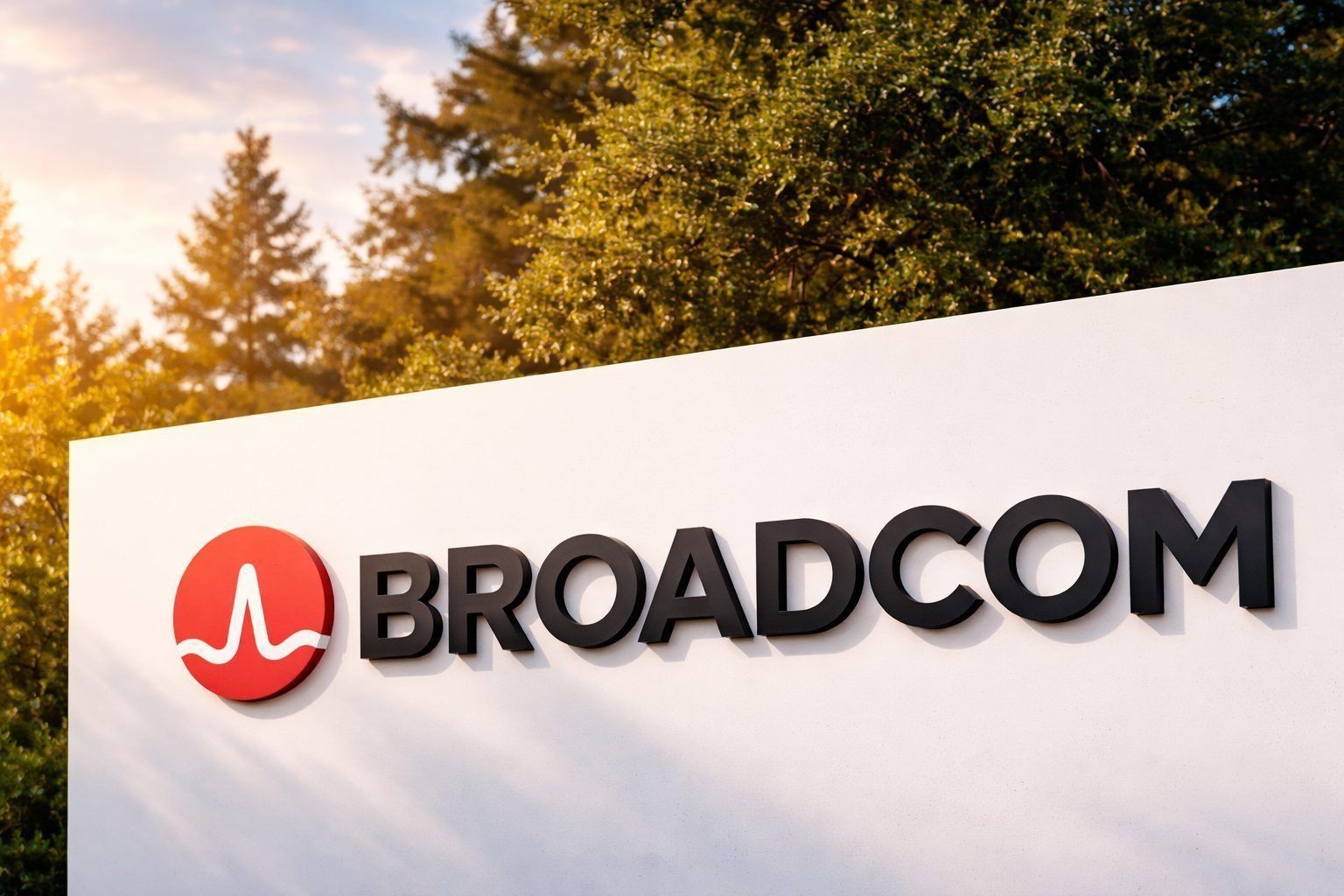
Broadcom fell about 2.8%, closing near $381 on Tuesday. The drop put focus on a risk away from Broadcom’s design teams—if its main cloud clients can keep up the spending for the AI expansion driving Broadcom’s fast growth.
Nasdaq slid 2.21% as investors questioned heavy AI investment tied to debt and braced for a more hawkish Fed. Hyperscalers keep funneling billions into AI hardware and software. But Globalt’s Thomas Martin said, “raises questions about all the spending that’s being done,” after the latest round of AI news. Reuters
The sector took a hit. The Philadelphia semiconductor index dropped 7.5% intraday, and Nvidia fell 3.4%. Ross Mayfield, investment strategy analyst at Baird, described the AI trade as “highly concentrated and flow-driven.” Lauren Hyslop, investment manager at Mattioli Woods, linked the selling to higher rates and the cash needed for the next round of investments. Reuters
Broadcom posted fiscal Q2 revenue up 48% at $22.2 billion. AI chip revenue jumped 143% to $10.8 billion in the quarter. CEO Hock Tan said “the momentum continues” and guided for $16 billion in AI chip sales this quarter. Free cash flow came in at $10.3 billion. Revenue from infrastructure software was $7.18 billion. Broadcom Inc.
Custom chips face a less obvious hurdle in how they get to market. Broadcom and Marvell both design ASICs—application-specific integrated circuits—for individual customers or specific tasks. These chips are pitched as an alternative to Nvidia’s general-purpose GPUs. But building an ASIC can take around two years and cost several hundred million dollars, Architect Labs co-founder Ebrahim Hussain said.
Broadcom says in a regulatory filing that its top five customers brought in roughly 45% of net revenue during the first half of the fiscal year. The company also flagged that AI buyers might be tight on capital, look for deferred payments, or hold off on orders if they cut capital spending or don’t have enough funding.
Broadcom is going the other way. The company took in about $2.9 billion of its 2037 and 2038 bonds through a cash tender, buying debt back from holders. Guaranteed-delivery settlement is set for Tuesday. The bonds were accepted at about 97 to 98 cents on the dollar. They pay a total of roughly $142 million in annual coupon payments.
Broadcom’s latest debt retirement helps, but it doesn’t move the needle much. As of May 3, the company and its subsidiaries had about $66.7 billion in debt outstanding, so the recently accepted tender is less than 5% of that. The difference is real: Broadcom is cutting back on long-term debt even as some customers may have to borrow more to keep up orders.
Broadcom delivered $22.19 billion in quarterly revenue, coming in roughly $80 million under Wall Street’s estimate. The company’s $16 billion AI forecast also landed just below the Visible Alpha consensus. “Nothing slows down what was estimated prior — they just didn’t raise it,” said Creative Strategies CEO Ben Bajarin. Direxion’s Ryan Lee said the response signaled the market “demands perfection.” Reuters
Bullish views on Broadcom are intact. J.P. Morgan analysts Harlan Sur and Mayur Ramdhani kept their Overweight rating and $580 target last week, calling themselves “aggressive buyers at current levels.” They pointed to Broadcom’s work in advanced packaging, its IP, track record, and long partnership with Google. Barron’s
But the risk isn’t one-way. If the big cloud providers keep up their spending and Broadcom hits its $16 billion quarterly AI goal, the selling, driven by flows, could snap back fast. If a big customer puts off a custom-chip order, Broadcom’s revenue could feel the hit before it gets much help from software cash flow or paying down debt. “A classic case of very high expectations,” said Matt Britzman, senior equity analyst at Hargreaves Lansdown. The market wanted perfection. Reuters
Related articles: NASDAQ:AVGO