
New York, June 23, 2026, 16:09 EDT
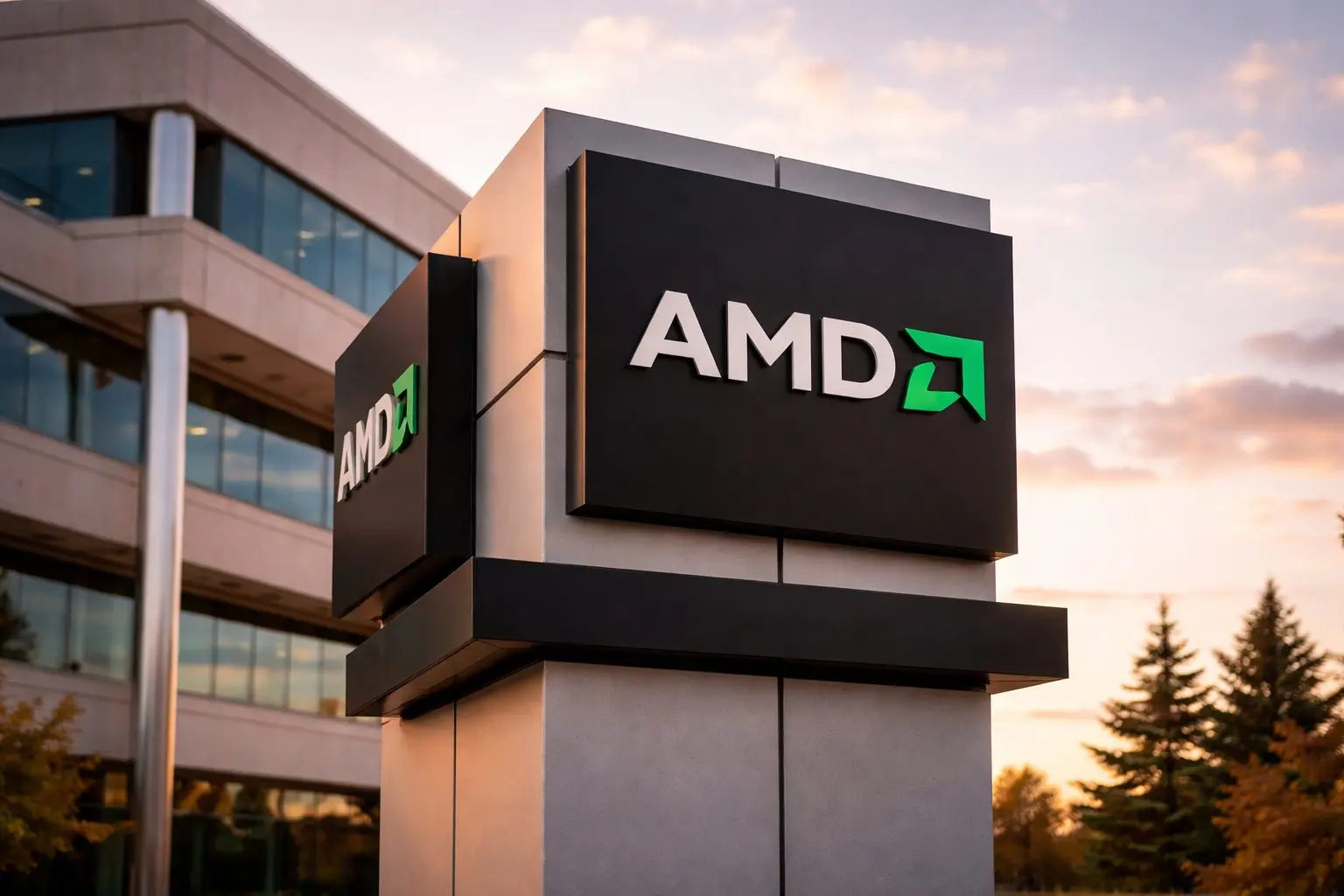
Advanced Micro Devices shares dropped almost 6% to finish near $520 on Tuesday, giving up most of Monday’s rally after a record close. A broad semiconductor selloff hit the market. AMD recovered off lows around $507 but couldn’t hold earlier gains.
AI jitters weren’t started by an AMD warning. Investors are starting to ask if all the AI spending—much of it paid for with debt—will pay off, especially as they expect the Fed to get tougher. Thomas Martin, senior portfolio manager at Globalt, noted that the latest AI news is stirring up questions about ongoing spending and new chip supply.
Why this is a bigger issue for AMD goes back to its deals with customers. Both OpenAI and Meta have performance warrants. That lets them buy as many as 320 million AMD shares later for just a penny each. This isn’t the usual sector drop.
That’s around 19.6% of AMD’s 1.63 billion shares outstanding as of March 28, before any warrant shares come in. At Tuesday’s price, this would give the full block a market value near $166 billion. None of the warrants had vested by the end of the first quarter.
The awards depend on customers buying chips and AMD meeting certain commercial and technical targets. To fully vest, purchases need to be linked to six gigawatts of GPU deployments, based on system power requirements. The last pieces only vest if AMD stock hits $600. OpenAI’s warrant is good through October 2030, while Meta’s runs out in February 2031.
This setup means investors get an uncommon per-share math problem. Big orders boost revenue but also add to the share count, so the gross profit from each deployment needs to be looked at against the stock issued for it. Just looking at headline contract value doesn’t resolve that.
AMD dropped along with a broad selloff in chips on Tuesday. The PHLX Semiconductor Index fell 7.75%. Nvidia slid about 3.8%. Intel was down around 6.1%. AMD traded weaker than Nvidia but didn’t drop as much as Intel.
Ross Mayfield, investment strategy analyst at Baird, called the trade “highly concentrated and flow-driven.” He said the selling looked like investors unwinding tech inflows instead of signaling a drop in the AI demand story. Reuters
AMD said its first-quarter data-center revenue jumped 57% to $5.8 billion. The company guided for second-quarter revenue of around $11.2 billion, give or take $300 million. CEO Lisa Su told analysts customer demand for MI450 chips and Helios systems is “exceeding our initial expectations.” Advanced Micro Devices, Inc.
Jake Behan, head of capital markets at Direxion, said after AMD’s May numbers that investors were now focused on “how efficiently they can convert that into high-margin revenue.” The warrants put even more focus on the per-share conversion. Reuters
The warrant risk here may be getting too much focus. Full vesting would only come with big customer buys and a stronger AMD stock. CFO Jean Hu said the Meta deal should be “accretive to our non-GAAP earnings per share,” so adjusted EPS is expected to go up. The risk is customers hold off on deployments, so sales don’t show up when priced for growth. If sales come in, AMD gets the revenue but has to manage a higher share count. Advanced Micro Devices, Inc.
Wall Street is looking to two short-term events after AMD. Micron is set to report its quarterly numbers Wednesday, giving investors a look at memory and AI infrastructure demand. On Thursday, the U.S. personal consumption expenditures inflation data comes out. The Fed tracks this index closely. A strong number could ramp up rate hike bets and add more pressure to expensive growth stocks.
AMD set its next big event, Advancing AI 2026, for July 23. The market wants more than just new capacity promises this time. Investors will be watching for deployment schedules, margin updates, and proof that customers are actually using AMD’s software. They’ll look to see if the warrants backed lasting share gains or if they just paid up for short-term headlines.
Related articles: NASDAQ:AMD



![US Stock Market Today 08/25/2026 [UPDATE: 01:08 EDT] [Memory Rally Builds as QQQ Reaches $709 Overnight]](https://ts2.tech/wp-content/uploads/2026/08/US-market-dashboard-2026-08-25-0104-480x384.jpg "US Stock Market Today 08/25/2026 [UPDATE: 01:08 EDT] [Memory Rally Builds as QQQ Reaches $709 Overnight]")