DUBAI, July 14, 2026, 19:13 GST
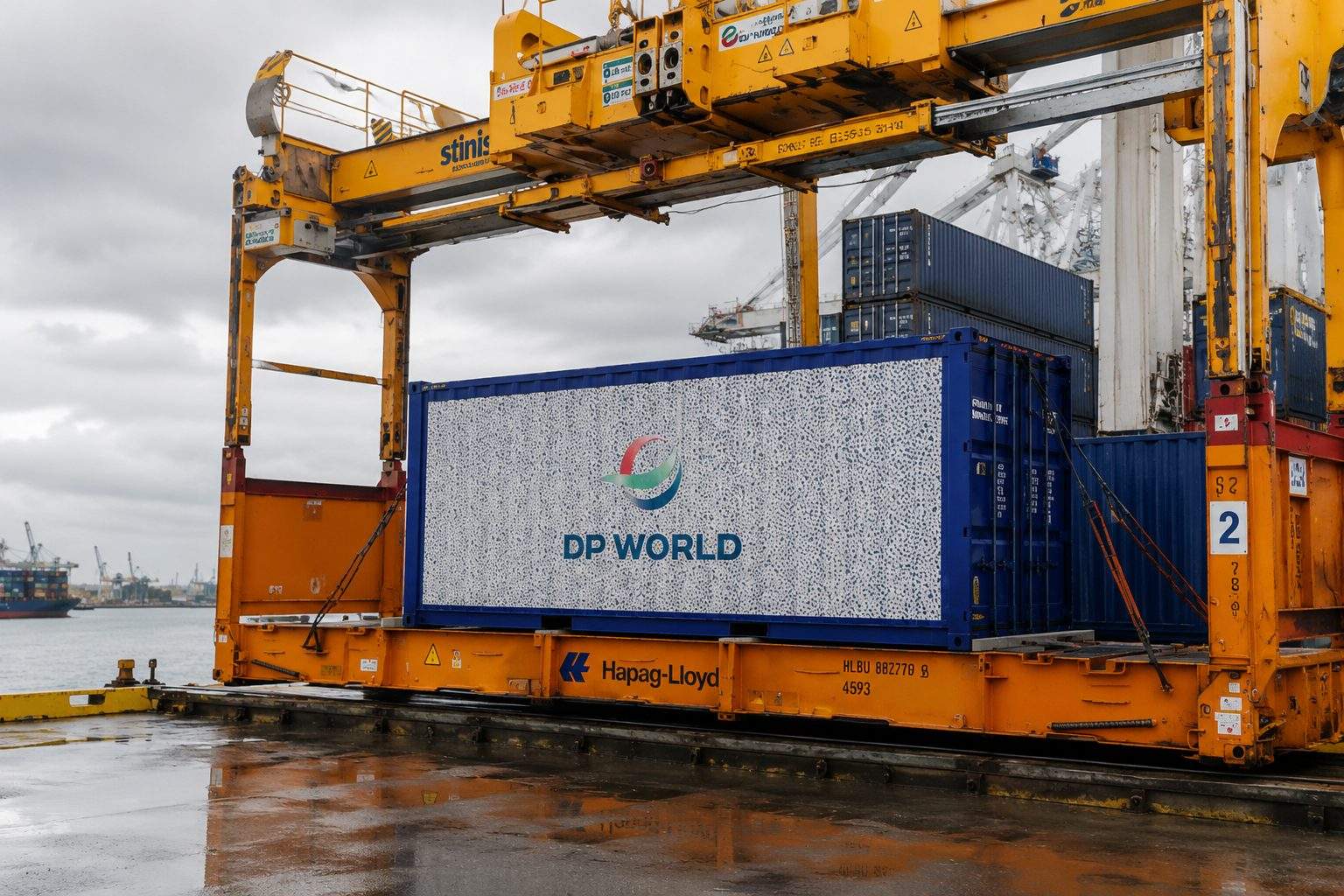
DP World’s reported Fujairah project targets a concentration masked by the port operator’s global scale: Jebel Ali handled 15.6 million twenty-foot equivalent units, or TEUs, the standard container measure, in 2025. That was 27.8% of DP World’s 56.1 million consolidated TEUs, but only 16.7% of its 93.4 million gross network volume. The narrower measure gives the Dubai hub far more weight. The diversification story is less broad than the headline number suggests.
| 2025 volume measure | DP World total | Jebel Ali volume | Jebel Ali share |
|---|---|---|---|
| Gross network throughput | 93.4 million TEUs | 15.6 million | 16.7% |
| Consolidated throughput | 56.1 million TEUs | 15.6 million | 27.8% |
That concentration matters now because U.S. President Donald Trump has proposed a 20% charge on cargo passing through the Strait of Hormuz as Washington reinstates its blockade of Iranian shipping. Brent traded at $86.19 a barrel on Tuesday, making the proposed charge equal to roughly $17 per barrel of crude before freight and insurance; Reuters estimated it could raise about $240 million a day if fully applied. Soni Kumari at ANZ Group Holdings ASX:ANZ said the previous U.S.-Iran agreement “did not last for even a few weeks” and saw oil holding between $85 and $90 if disruptions persist. Timing matters here. Reuters
DP World is in talks to develop a new multipurpose port in coastal Fujairah and a container terminal at the emirate’s existing harbour, according to the Financial Times report. The proposal has not been independently verified, and the reports gave no capacity or funding details. Lars Jensen, chief executive of consultancy Vespucci Maritime, told the FT that the impact on Jebel Ali was “likely going to be significant and permanent.” Capacity is the missing number. Reuters
The existing capacity gap is large. Jebel Ali has annual container capacity of 19.4 million TEUs and ran at about 80% utilisation based on last year’s throughput, while Khorfakkan can handle 5 million and Fujairah less than 1 million. Even combined, the two east-coast ports offer capacity equal to less than 39% of Jebel Ali’s latest annual volume. A relief valve is not a replacement.
| UAE port | Reported scale | Strait exposure | Scale relative to Jebel Ali’s 2025 volume |
|---|---|---|---|
| Jebel Ali | 15.6 million TEUs throughput; 19.4 million capacity | Inside the Gulf | Baseline; about 80% utilised |
| Khorfakkan | 5 million TEUs capacity | Outside Hormuz | About 32% |
| Fujairah, existing port | Less than 1 million TEUs capacity | Outside Hormuz | Less than 6.4% |
The project would hedge container and general cargo, not the full energy chokepoint. Saudi and Emirati pipelines have an estimated 3.5 million to 5.5 million barrels a day of spare bypass capacity, compared with nearly 20 million barrels a day sent through Hormuz in 2025. The International Energy Agency also says liquefied natural gas exports from Qatar and the UAE have no alternative route to world markets. By inference, a Fujairah terminal could let some cargo land outside the strait and move inland, but it would not add pipeline or gas-export capacity. That distinction matters.
DP World has room to invest, but its budget is not blank. The company generated $6.3 billion of operating cash flow in 2025, spent $3.1 billion on capital projects and set a roughly $3 billion budget for 2026; Fujairah was not among the priority projects it listed in March. For scale, about 13 days of the proposed $240-million-a-day systemwide fee would equal that full annual investment budget, though the charge would be borne by cargo interests rather than paid to DP World. The cost equation has shifted.
Container lines are already reducing the commercial value of routes inside the Gulf. Hapag-Lloyd ETR:HLAG, the world’s fifth-largest container carrier, called the proposed fee “fundamentally wrong” and said it had adjusted its network so vessels no longer pass through Hormuz. German Shipowners’ Association head Martin Kroeger warned: “Today it’s the Strait of Hormuz, tomorrow the Strait of Malacca.” Carriers are voting with their schedules. Reuters
The toll itself may never become enforceable. The International Maritime Organization said passage through Hormuz should remain free of charges under international law, while the U.S. Navy-led Joint Maritime Information Center said the renewed blockade would start at 2000 GMT on Tuesday. No collection mechanism, liability framework or treatment of mixed cargoes was detailed in the announcements reported on Monday and Tuesday. The charge remains a threat, not a bankable tariff.
But the investment case could weaken quickly if the fee is abandoned or normal shipping resumes. A small first phase would do little to protect Jebel Ali’s volumes, while a large build could open after emergency demand has faded. DP World Chief Executive Yuvraj Narayan said in March that reopening could happen “maybe in phases,” including through naval escorts. The political clock can outrun construction. Reuters
For investors, three disclosures now matter more than the project headline: first-phase capacity, whether funding sits inside the existing $3 billion budget, and firm commitments from container carriers. Until those numbers arrive, Fujairah remains a strategic option on a visible 28% consolidated-volume concentration rather than a quantified return project. The rationale is clear; the returns still need evidence.