
LONDON, July 14, 2026, 10:06 BST
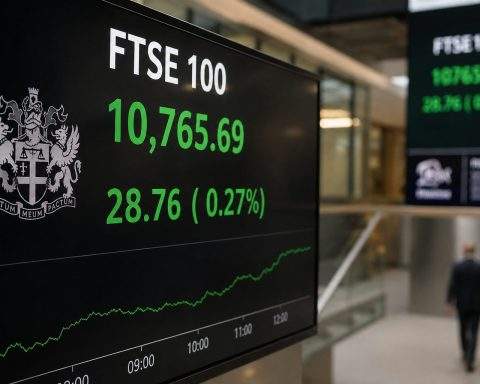
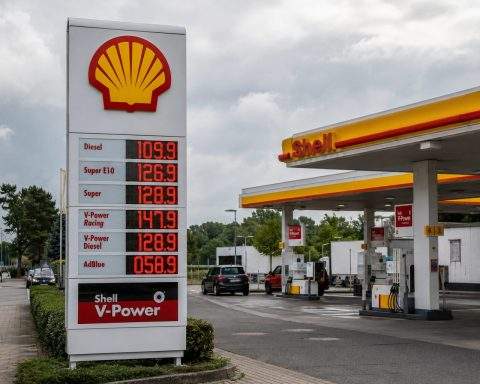
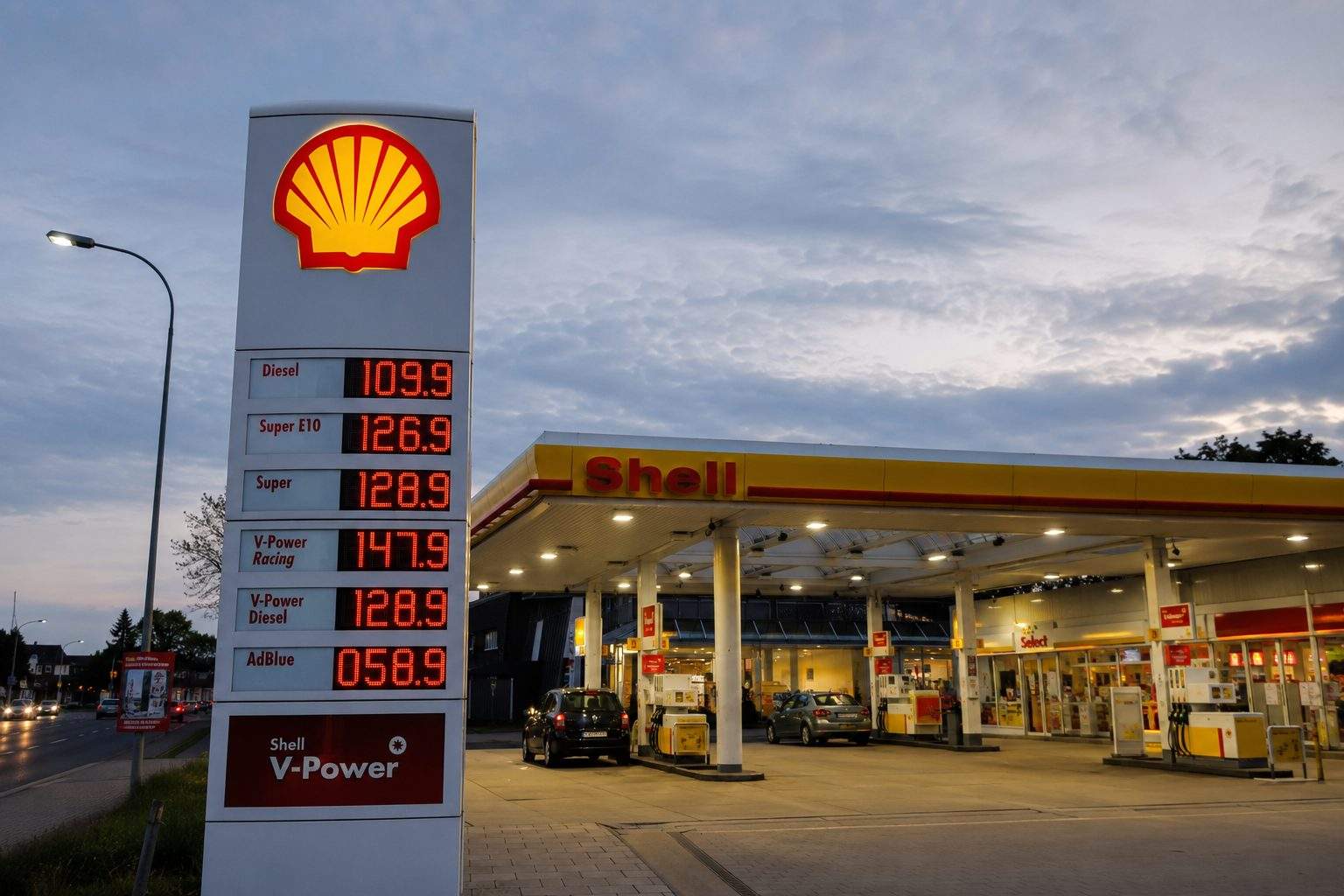
Shell Plc LON:SHEL rose 1.7% to 3,160.5 pence by 10:01 BST on Tuesday, outpacing a 0.7% fall in the FTSE 100 after the company agreed to sell its Indian renewables business and crude prices climbed. Brent gained 2.6% to about $85 a barrel as renewed U.S.-Iran tensions lifted European energy stocks.
The bigger point is the funding mix. Four disposals announced or completed since June 30 carry $5.8 billion of headline transaction value, about 1.7 times the $3.4 billion cash component of Shell’s agreed acquisition of ARC Resources Ltd TSE:ARX. The rest of ARC’s $13.6 billion equity consideration is being paid with Shell shares, while Shell will also assume about $2.8 billion of net debt and leases.
| Tuesday market comparison | Level or move | Time |
|---|---|---|
| Shell LON:SHEL | 3,160.5p, +1.66% | 10:01 BST |
| FTSE 100 | 10,424.67, -0.70% | 10:00 BST |
| European energy sector | +1.4% | 09:10 BST |
| Brent crude | About $85 a barrel, +2.6% | 09:10 BST |
| BP Plc LON:BP | +3.0% | 09:10 BST |
BP’s larger gain had an extra catalyst. The rival said higher oil and gas prices could add a combined $2.3 billion to $2.8 billion to second-quarter divisional earnings, while net debt was expected to drop to $22 billion-$23 billion from $25.3 billion at the end of March. Shell’s latest company-specific trigger was instead an asset sale, leaving its advance supported by both crude and capital recycling.
The recent exits cut across oil production, vehicle servicing, fuel retail and renewables. Only the $1.3 billion disposal of Jiffy Lube International and Premium Velocity Auto has completed; the other transactions are expected to close in late 2026 or 2027.
| Shell asset | Date announced or completed | Headline value | Status |
|---|---|---|---|
| Na Kika and Coulomb Gulf fields | June 30 | $1.7 billion | Closing expected by end-2026 Reuters |
| Jiffy Lube and PVA | July 1 | $1.3 billion | Completed PR Newswire |
| South African downstream business | July 7 | $1.0 billion enterprise value | Closing expected in 2027 ADNOC Distribution |
| Sprng Energy | July 13 | $1.8 billion | Closing expected by end-2026 Shell |
| Total | — | $5.8 billion | $1.3 billion completed so far |
Sprng provides a useful unit marker. The $1.8 billion price equals about $360 million for each gigawatt-peak, or GWp, of operating and contracted wind and solar capacity. GWp is nameplate output under standard conditions. It is only a rough measure: the value includes debt and remains subject to net-debt and capital-spending adjustments. Machteld de Haan, Shell’s president of downstream and renewables, said Shell was “high-grading our power portfolio and recycling capital.” Shell
ARC is the other side of that reshuffle. The Canadian acquisition would add about 370,000 barrels of oil equivalent per day, or boe/d, to Shell’s roughly 2.8 million boe/d production base—an increase of about 13% before other portfolio changes. Chief Executive Wael Sawan called ARC a “high-quality, low-cost” producer that “complements our existing footprint in Canada.” Reuters
ARC shareholders are due to vote later Tuesday, with at least 66% support required. Shell suspended its $3 billion share-buyback programme through July 14 because of securities-law rules linked to the transaction. Shares not repurchased during the pause may be carried into later 2026 programmes, subject to board approval, making the vote relevant to both production growth and the timing of capital returns.
But the $5.8 billion funding bridge is not cash in the bank. Three sales remain pending, Sprng’s value includes debt and closing adjustments, and the South African figure is enterprise value—the value of the operation including debt—before net-debt and working-capital adjustments. A failed ARC vote, delayed disposals or a sharp reversal in crude would leave less balance-sheet and earnings cover than Tuesday’s share move suggests.
Shell reports second-quarter results on July 30 at 07:00 BST. It has forecast a $1 billion-$6 billion working-capital inflow—working capital is current assets minus current liabilities—after an $11.2 billion outflow in the first quarter, alongside significantly stronger integrated-gas trading. Those figures will show whether the oil-price lift and disposal programme are translating into a sustained improvement in cash generation.
Related articles: LON:SHEL