Cincinnati, July 16, 2026, 08:06 EDT
- Second-quarter free cash flow rose 43% to $3.03 billion, but an $813 million year-on-year working-capital swing equalled almost 90% of the $907 million increase.
- Commercial Engines & Services revenue climbed 27%, while its operating margin fell 1.6 percentage points as deliveries of engines for new aircraft increased.
- The new $8.9 billion-$9.2 billion annual cash forecast requires $4.22 billion-$4.52 billion in the second half, below the $4.69 billion generated in the first six months.
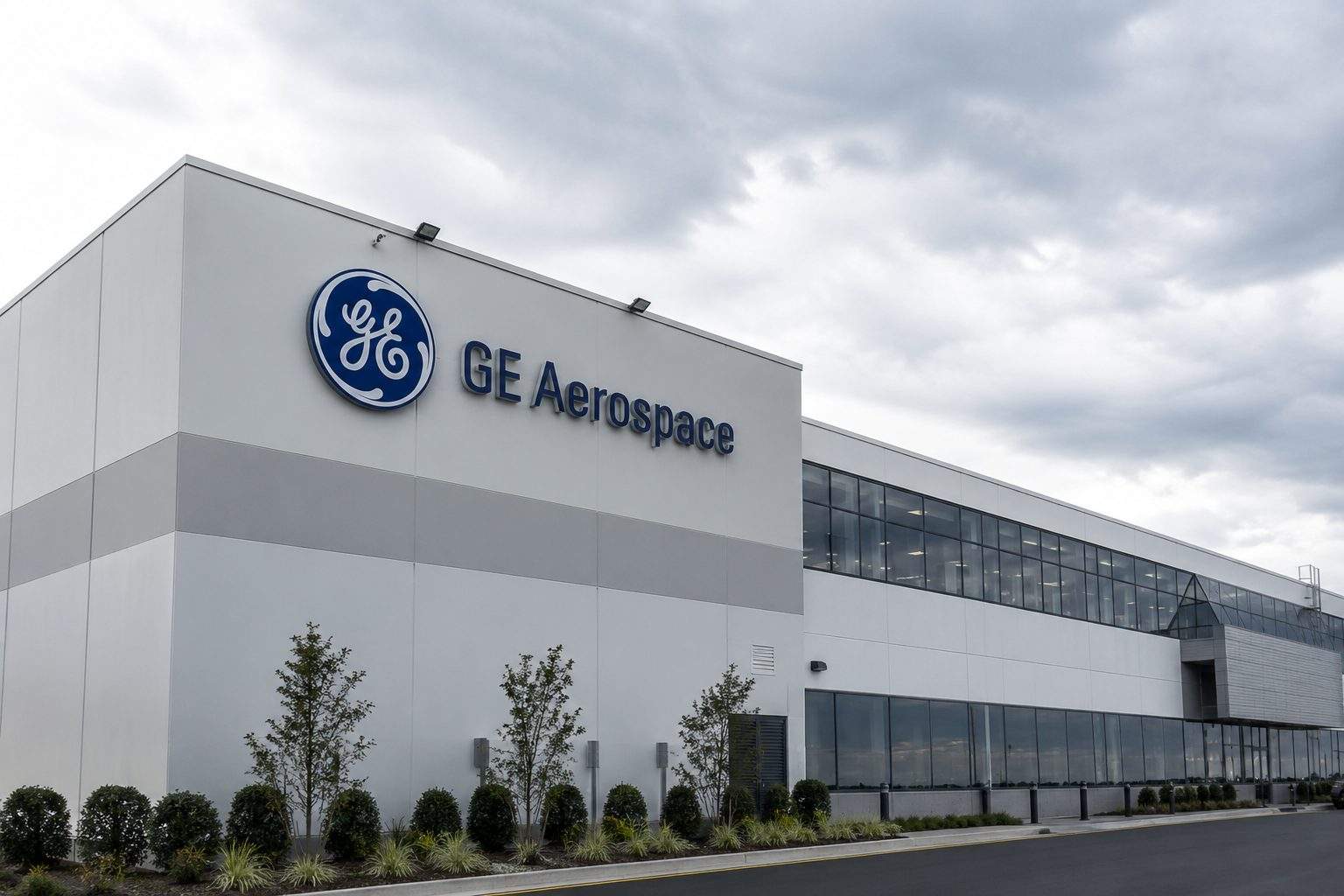
GE Aerospace NYSE:GE raised its 2026 outlook after beating second-quarter estimates, though the cash-flow statement shows that most of the year-on-year improvement came from working capital rather than a similar increase in earnings. Free cash flow, cash from operations after capital spending, grew by $907 million, with an $813 million swing in operating working capital accounting for about 90% of that rise.
That detail matters after the shares entered Thursday up 17% this year and 36% over 12 months, setting a high bar for how repeatable the gains must be. At the time of publication, the New York Stock Exchange was in its pre-opening session; core trading was due to start at 09:30 EDT.
The headline numbers were strong. Adjusted earnings reached $2.02 a share on $12.63 billion of adjusted revenue, compared with Wall Street expectations of $1.86 and roughly $11.9 billion, respectively. Orders increased 17% to $16.53 billion.
| Measure | Q2 2026 | Q2 2025 | Change |
|---|---|---|---|
| Adjusted revenue | $12.63 bln | $10.15 bln | +24% |
| Adjusted EPS | $2.02 | $1.66 | +22% |
| Free cash flow | $3.03 bln | $2.12 bln | +43% |
| Commercial Engines & Services margin | 27.3% | 28.9% | −1.6 pts |
| Working-capital contribution | $241 mln | $(572) mln | $813 mln swing |
Company disclosures show that working capital, the cash absorbed or released by customer bills, inventory and supplier payments, contributed $241 million in the quarter after using $572 million a year earlier. Net income rose a more modest 20%. The cash result remains real, but payment and collection timing did much of the work.
The other pressure point was the mix inside Commercial Engines & Services. Services produced $7.43 billion, or about 76% of segment revenue, and grew 26%. Equipment sales rose faster, at 30%, as unit volume increased 26%, but engines supplied for new aircraft typically carry lower initial margins. Segment profit gained 20%, less than revenue, and GE also cited investment costs and inflation.
Chief Executive Larry Culp said “revenue and EPS both up more than 20%” reflected commercial-services demand and record internal shop visits. He also cited “visibility for the remainder of the year” in raising guidance. First-half services revenue rose 32%, total engine deliveries increased 31% and LEAP deliveries gained 41%, the company said.
The revised forecast adds $850 million to the midpoint of the prior free-cash-flow range and 50 cents to the midpoint of adjusted earnings guidance.
| 2026 measure | Previous forecast | New forecast |
|---|---|---|
| Adjusted revenue growth | Low double digits | High teens |
| Operating profit | $9.85-$10.25 bln | $10.55-$10.75 bln |
| Adjusted EPS | $7.10-$7.40 | $7.65-$7.85 |
| Free cash flow | $8.0-$8.4 bln | $8.9-$9.2 bln |
The first-half cash total of $4.69 billion means GE needs between $4.22 billion and $4.52 billion during the rest of the year to reach the new target. At the midpoint, that is about 7% less than it produced in the first half. The forecast therefore carries some room for the working-capital benefit to fade.
Demand indicators still point higher. Quarterly orders exceeded adjusted revenue by 31%, while GE put its backlog at more than $210 billion. Management now expects 2026 commercial-services revenue to grow in the low-20% range and equipment revenue by about 20%, raising the commercial segment’s profit forecast to $10.25 billion-$10.35 billion.
But the risks run in both directions. A deeper reduction in airline departures as fuel costs rise could weaken future maintenance demand, working capital could reverse, and the faster delivery of lower-margin engines could keep pressure on profitability. GE has said the near-term service impact should remain limited because much of this year’s shop work is already secured and spare-parts demand continues to exceed supply.
The investor test is whether GE can keep free-cash-flow conversion above 100%, meaning cash exceeds adjusted net income, without another working-capital lift of similar size. The raised forecast lowers the second-half hurdle. It does not remove the margin and cash-timing questions.
Related articles: NYSE:GE