
NEW YORK, July 16, 2026, 08:09 (EDT)
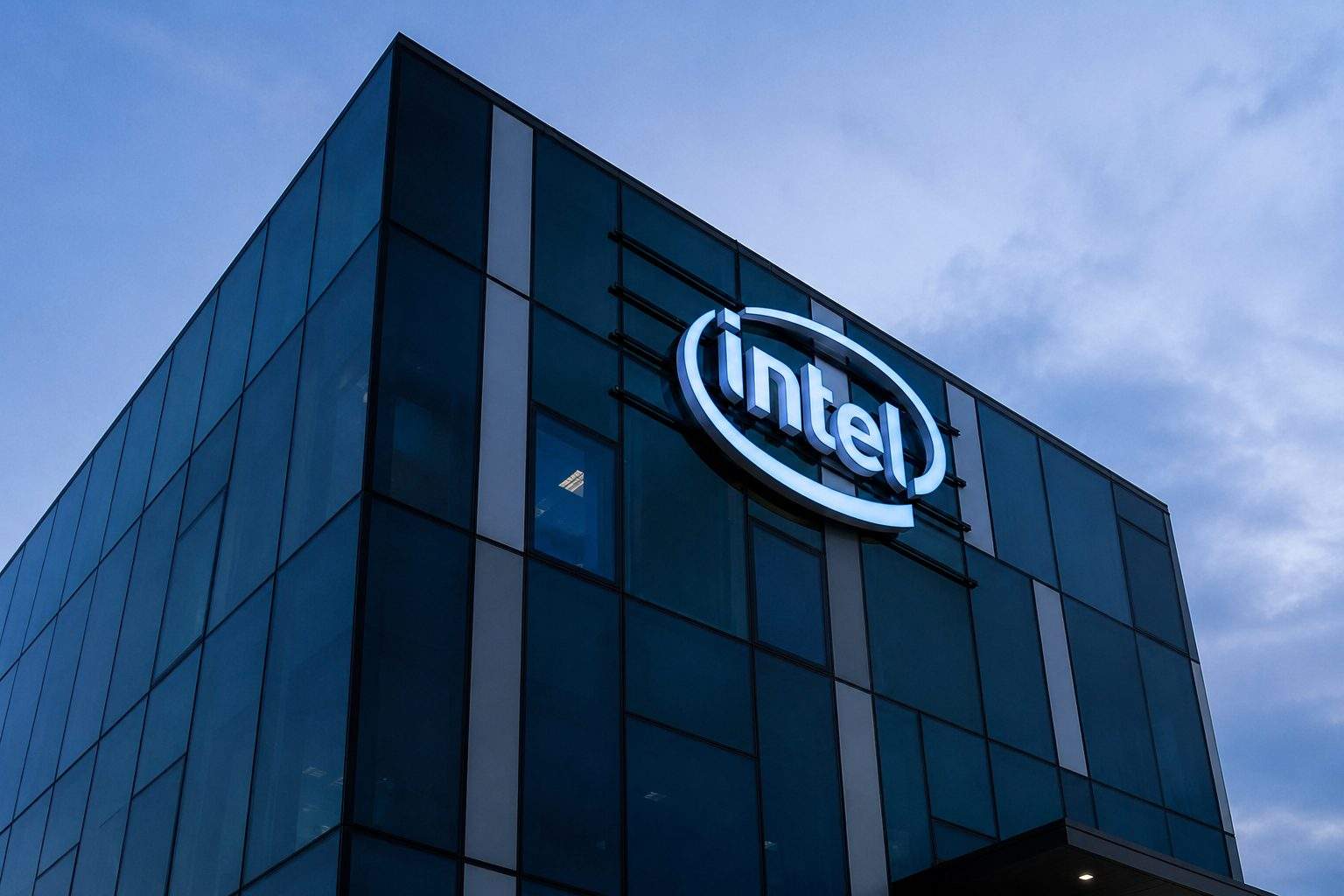
- Intel has become the first chipmaker to ship a high-volume logic product made with High-NA EUV, using the tech on certain layers of its Panther Lake processors.
- The $400 million sticker price for a single system is equal to 2.3 times what Intel brought in from external Foundry sales during the first quarter, and amounts to 8.1% of its total gross capital outlays.
- Intel is set to post its Q2 numbers after the close on July 23.
Intel Corporation NASDAQ:INTC is the first chipmaker to ship a mass-produced logic chip made with High-NA EUV, a lithography tool for making smaller circuit patterns. But there’s a bigger question for investors: can Intel use this $400 million machine to lower chip costs and bring in enough foundry business to cover its factory outlay? ASML
ASML Holding N.V. NASDAQ:ASML said Intel is running the system on select layers of some Core Ultra Series 3 chips, which it calls Panther Lake. The Intel 18A layers are dual-qualified, so they can run either on the new EXE tool or on ASML’s older NXE machines, and usable-chip yields are matching what NXE has delivered. This setup gives Intel a backup as it works out the new process.
Intel’s scale gap stands out. External Foundry revenue for the first quarter was $174 million—sales from chips made for outside clients. One High-NA system, based on the Reuters estimate, would count for 2.3 times that figure and 8.1% of the $4.963 billion the company spent on capital in the quarter. This is just a size comparison. Panther Lake is an internal product, and the High-NA gear also provides manufacturing data.
| First-quarter yardstick | Reported amount | Scale of one estimated $400 million system |
|---|---|---|
| External Foundry revenue | $174 million | 230% |
| Gross capital spending | $4.963 billion | 8.1% |
| Operating cash flow | $1.096 billion | 36.5% |
| Adjusted free cash flow | Negative $2.016 billion | Already in the red |
Based on Intel’s Q1 numbers and Reuters’ estimated costs for equipment. These comparisons aren’t tied to returns from a particular Intel tool.
Cash is the issue here. Gross capital spending ran 4.5 times operating cash flow in Q1, and Intel’s adjusted free cash flow—after capex and related changes—was negative $2.016 billion. Management still says it sees positive adjusted free cash flow in 2026, not counting the Fab 34 buyout. But every new production promise now has to line up for funding against other fab projects.
Intel traded at $102.99 ahead of Thursday’s open, down about 4.5% from its last close. The iShares Semiconductor ETF NASDAQ:SOXX was off 2.2%. ASML’s U.S. shares traded up 2.2%. Moves were mixed after Intel’s update. ASML also issued a higher 2026 sales outlook after beating Q2 estimates. Degroof Petercam analyst Michael Roeg called its numbers “blow-out results across the board.” Reuters
ASML CEO Christophe Fouquet said High-NA gives “increased resolution and better process control.” Intel Foundry’s Naga Chandrasekaran said the work proves the tech can be “integrated into advanced semiconductor manufacturing at scale.” Both execs pointed to technical readiness, but neither company shared cost per wafer details. ASML
Key numbers are still missing. Intel and ASML haven’t shared the layer count, the percentage of Panther Lake wafers with High-NA, throughput, machine uptime, or the number of skipped process steps. Matching yield on a few layers solves one risk, but it doesn’t answer the cost question.
| Investor test | What was disclosed | What remains undisclosed |
|---|---|---|
| Production scope | Just some Panther Lake layers, using parts of Intel 18A | Full number of layers and how many wafers this covers |
| Yield | Yield matched ASML’s NXE system | How long the test ran, size of production batch |
| Factory flexibility | Some layers are interchangeable on EXE and NXE | No word on time or cost to switch tools |
| Unit economics | Reuters pegs tool price near $400 million | Throughput, wafer cost, actual process savings still unshared |
ASML and Intel said on July 15 they hit a production milestone; the system price is a Reuters estimate and isn’t the official Intel purchase figure.
More factory projects are already lined up. Intel on Monday said it started a €5 billion, or $5.7 billion, expansion in Ireland. Most of that spending runs through the end of 2027. The build accounts for about 30% of Intel’s $17 billion capex plan for 2026. Server and AI demand are behind a “significant increase in the need for Intel 3 wafers,” Chandrasekaran said. Reuters
Panther Lake helps show the foundry strategy is feasible, but it’s not enough on its own. Intel Foundry logged $5.4 billion in first-quarter revenue, but just $174 million—about 3.2%—came from external customers. The segment lost $2.4 billion as Intel paid for early Intel 18A ramp costs and put more into its next-gen 14A process. A part built for Intel proves the process works, but doesn’t show outside demand.
But similar yields on some layers don’t always mean a chip is cheaper to make. High-NA EUV could bring bigger depreciation and tougher operations before a wider rollout, and standard EUV may stay the cheaper option for a lot of layers. Still, the better resolution and process control with High-NA could cut factory costs enough to counter the bigger price tag on equipment.
Intel is set to release Q2 numbers after the bell July 23. For anyone modeling the impact of the High-NA news, the missing data is still throughput, wafer cost, the portion of 18A on High-NA, and confirmed foundry orders from outside buyers. With those details still unavailable, this is a notable step forward for Intel on manufacturing, but the payoff is still not in the numbers.
Related articles: NASDAQ:INTC

![Australia Stock Market Today 26/08/2026 [UPDATE: 10:37 AEST] [Woolworths and Lovisa Lift ASX Before CPI]](https://ts2.tech/wp-content/uploads/2026/08/AU-market-dashboard-2026-08-26-1037-480x384.jpg "Australia Stock Market Today 26/08/2026 [UPDATE: 10:37 AEST] [Woolworths and Lovisa Lift ASX Before CPI]")