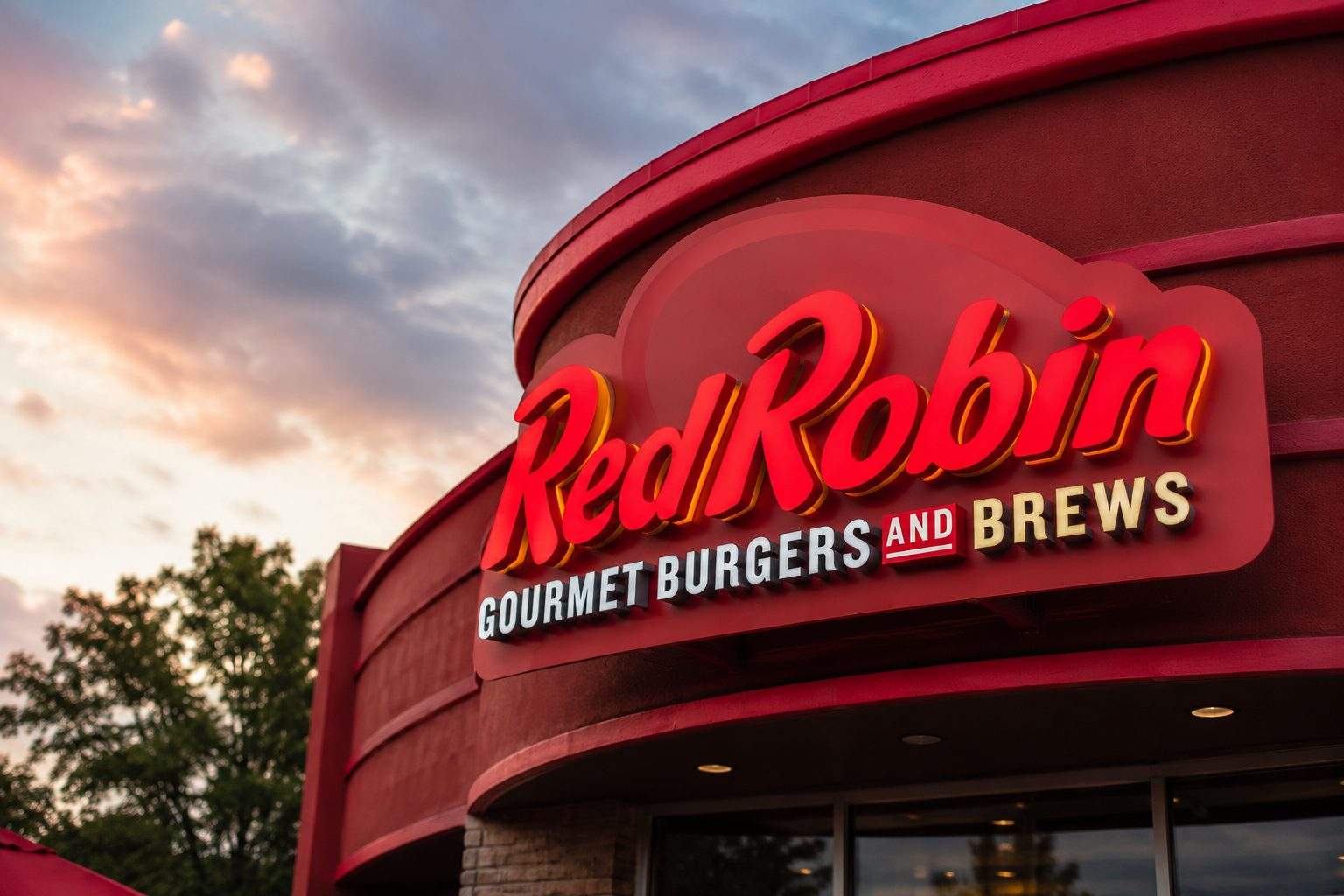

Red Robin NASDAQ:RRGB closed its Cary, North Carolina restaurant. The move comes as the company approaches a $96 million debt reset. CARY, North Carolina, July 16, 2026, 07:15 EDT
- Red Robin’s sale of a $3.3 million property in Cary pushes the total value for its latest and upcoming asset deals to $99.3 million. Still, just the $96 million refranchising package is tagged for paying down debt.
- The $96 million package comes to 54.6% of the company’s April borrowings and covers 75.4% of Red Robin’s current $127.4 million market cap.
- Handing off 116 restaurants would take the proportion of franchised locations in the April base from 19.2% up to 43.9%, if nothing else changed.
Red Robin Gourmet Burgers, Inc. NASDAQ:RRGB is shutting down its Cary location after selling the site for $3.3 million, but the move puts the spotlight on a bigger question for investors: Can $96 million in planned restaurant sales make a real dent in the company’s balance sheet? That amount is nearly 55% of the borrowings Red Robin listed in April, and about three-quarters of its equity before Thursday’s regular U.S. market session.
Red Robin’s first step is the 69-unit Op Burgers deal, which it set for completion around July 17. The Evergreen deal, covering 30 stores, is scheduled for August 21. The Kuber transaction, with 17 stores, is targeted for August 28. These refranchising moves would shift the stores from company operations to franchise groups, which will keep the Red Robin name and pay franchise fees.
As of April 19, Red Robin reported $175.7 million in borrowings, with a 13.4% weighted average effective interest rate and $7.8 million in interest expense over 16 weeks. Using a straight calculation, if the full $96 million gross from the deal was used to pay down debt, remaining borrowings would drop to $79.7 million, with annual interest expense cut by about $12.9 million. Actual net proceeds may end up smaller after adjustments and costs. This is a move affecting the balance sheet, not just a single property.
Deal values change a lot depending on the structure:
| Transaction | Sites | Gross value | Implied value per site | Status |
|---|---|---|---|---|
| Cary property | 1 | $3.3 million | $3.30 million | Deal done; restaurant shutting down The Business Journals |
| Op Burgers | 69 | $62.5 million | $0.91 million | Expected to close near July 17 Red Robin Gourmet Burgers, Inc. |
| Evergreen Dining | 30 | $23.5 million | $0.78 million | Expected to close on or about August 21 Red Robin Gourmet Burgers, Inc. |
| Kuber | 17 | $10.0 million | $0.59 million | Closing seen near August 28 Red Robin Gourmet Burgers, Inc. |
The 6,651-square-foot Cary building sold for about $496 a foot, putting the deal at $3.3 million. That’s about four times the average $0.83 million per store for the other restaurants in the refranchising batch. But Cary’s price includes real estate and it’s leaving the Red Robin system. The rest—116 units—stay as Red Robin restaurants. The price gap is more about different asset types than anything to do with the stores themselves.
The difference also divides closures from sales. TheStreet said the chain is planning about 20 closures in 2026, plus up to 27 more in later years, following upgrades at nearly 20 restaurants previously seen as possible exits. Red Robin hasn’t published a full list of closures yet, and the 116 refranchised restaurants are tied to deals that keep them running under the brand.
On April store counts, the transfers would take company-owned stores down from 379 to 263, with franchised restaurants rising from 90 to 206, if there aren’t other openings or closures. Franchise mix would go to 43.9% from 19.2%. About 30.6% of the stores the company operates would leave the company-run base. Sales from those units leave consolidated revenue, and the company would get royalties and ad money instead.
The company hasn’t managed a solid sales rebound yet. Fiscal Q1 revenue dropped 3.6% to $378.3 million. Comparable restaurant revenue was down 0.6%, with traffic off 1.6%—that was only partly offset by a 1% gain in average checks. Restaurant-level margin ticked up to 14.8% from 14.3%. Adjusted EBITDA, the profit measure before interest, tax, depreciation and some one-off costs, fell 2.1% to $27.3 million.
Chief Executive Dave Pace said the quarter had “continued progress in traffic trends and restaurant-level profitability.” In June, he said bolstering the financial foundation is still a main priority. Red Robin’s adjusted EBITDA outlook for 2026, set at $70 million to $73 million, was set before the June deals, and the company said it will update its guidance once the transactions close. SEC
The upside isn’t just sale proceeds minus debt. The final price can change on adjustments and the deals depend on getting landlord, liquor-license and lender sign-offs. Red Robin also loses cash flow from what it sells, and the company has pointed to risks around lease liabilities, refinancing, and whether it can get all the benefits it expects.
The Op Burgers deal is expected to close around July 17, marking the first concrete milestone. The $96 million gross from the sale is about 75% of Red Robin’s equity value. Investors are watching to see if the new guidance shows savings from lower financing can balance out the earnings lost from selling 116 company-owned sites.
Related articles: Restaurant Industry


![Australia Stock Market Today 26/08/2026 [UPDATE: 10:37 AEST] [Woolworths and Lovisa Lift ASX Before CPI]](https://ts2.tech/wp-content/uploads/2026/08/AU-market-dashboard-2026-08-26-1037-480x384.jpg "Australia Stock Market Today 26/08/2026 [UPDATE: 10:37 AEST] [Woolworths and Lovisa Lift ASX Before CPI]")