DALLAS, July 25, 2026, 10:17 CDT
- The stock closed Friday at $45.08, marking a 6.2% decline over the week.
- Adjusted unit revenue climbed by 20.1%, as capacity edged up only 0.2%.
- Initial projection: a 10-cent rise in fuel prices may reduce third-quarter EPS by around eight cents.
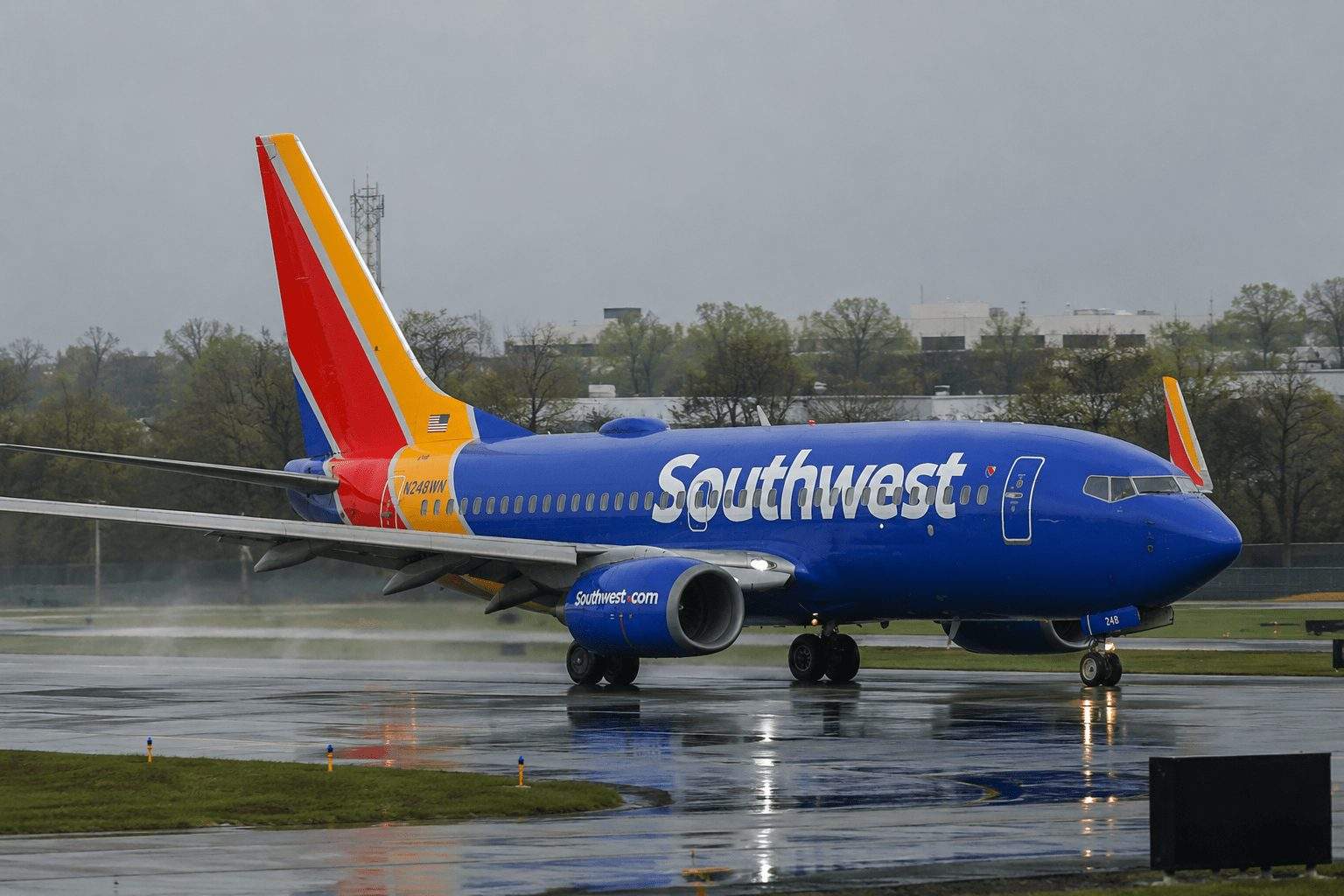
A 10-cent rise in fuel prices may reduce Southwest Airlines’ NYSE:LUV third-quarter earnings per share by roughly eight cents. This initial calculation is based on the airline’s second-quarter adjusted tax rate and diluted share count. The estimated impact is equivalent to 13% of the midpoint of management’s guidance.
The airline projects quarterly fuel usage at approximately 532 million gallons. Its submission states that every one-cent change equals $5.3 million pre-tax. Southwest will be entirely unhedged from 2025 onwards, after fuel hedges end.
The significance of that exposure lies in the fact that the commercial reset is delivering results. Adjusted unit revenue increased by 20.1% despite capacity remaining largely unchanged. Average fares paid by passengers jumped nearly 21%.
Fuel continued to take up a significant share of these improvements. Adjusted revenue rose by $1.47 billion compared to a year ago, while fuel expenses climbed by $889 million, representing roughly 60% of the total increase.
The adjusted operating margin rose by 3.3 points, reaching 6.7%. Adjusted earnings came in at 94 cents per share. Chief Executive Bob Jordan stated, “Second quarter results demonstrate the earnings power of our business.” Southwest Airlines Co.
Investors shifted their attention to Southwest’s updated outlook. The airline lowered its 2026 adjusted EPS projection to a range of $3.25 to $4.25, down from a previous minimum of $4. The revised lower end still exceeds analysts’ consensus estimate of $3.17.
Management projected adjusted earnings per share for the third quarter to be between 50 and 75 cents, below the 82 cents anticipated by analysts. The short-term outlook was more cautious.
The stock finished at $45.08 on Friday, marking a 6.2% decline over the week. During Friday’s session, shares rose 0.8%. U.S. equity markets will not trade on Saturday and resume trading on Monday, July 27.
Southwest’s valuation leaves limited apparent room for a fuel-related discount. As of Friday, its midpoint earnings multiples are close to those of Delta and United.
| Carrier | Q2 capacity, year-on-year | Q2 unit-revenue measure | Q2 adjusted operating margin | Price/2026 EPS midpoint |
|---|---|---|---|---|
| Southwest Airlines NYSE:LUV | +0.2% | Adjusted RASM advanced 20.1% | 6.7% | 12.0 times |
| Delta Air Lines NYSE:DAL | Roughly +1% | Adjusted TRASM climbed 12.4% | 8.8% | 12.2 times |
| United Airlines Holdings NASDAQ:UAL | +3.5% | TRASM rose 12.1% | 5.4% | 11.8 times |
RASM and TRASM track revenue for each available seat mile. Definitions may vary by company. Multiples reflect July 24 closing prices and the midpoint from 2026 adjusted EPS guidance.
Southwest posts the highest unit-revenue growth in this group. Despite this, its multiple of 12.0 times is almost the same as Delta’s 12.2 and United’s 11.8. The figures indicate minimal valuation protection against swings in unhedged fuel prices.
The next company event is scheduled for Tuesday. The Boeing Co. NYSE:BA will announce second-quarter earnings at 10:30 a.m. ET. Southwest anticipates receiving 64 Boeing 737-8 jets and retiring roughly 60 aircraft this year.
Adjustments to delivery schedules may impact capital expenditures and operational efficiency for the fleet. Southwest’s investor calendar shows the upcoming results call is set for October 22. Developments in fuel costs and news from Boeing are anticipated to be the next catalysts.
Risks are present on both sides. Lower fuel costs would rapidly boost profits. However, increased fare resistance or any delays in deliveries could counterbalance revenue improvements. Taking out six seats per 737-700 results in a 1.1 percentage point increase in nonfuel unit costs for the third quarter.