NEW YORK, July 25, 2026, 14:03 EDT — U.S. markets have finished trading for the day.
- Iovance ended Friday at $4.99, a decrease of 2.7%, remaining largely unchanged over the week.
- The stock reached a 52-week peak at $5.64 before declining.
- To reach the midpoint guidance, second-half revenue must be close to $101 million per quarter.
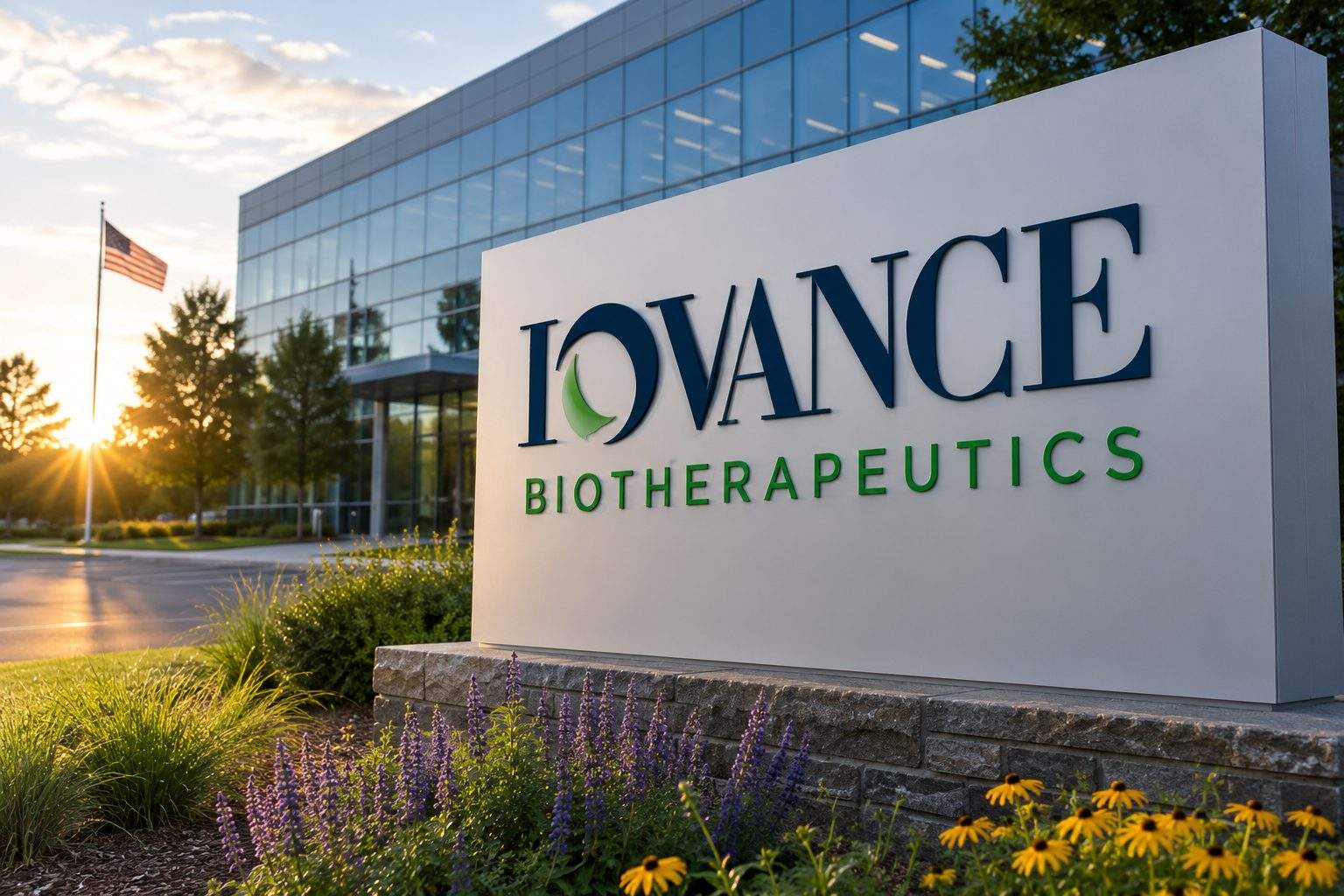
Iovance Biotherapeutics NASDAQ:IOVA closed at $4.99 on Friday, marking a 2.7% decline and finishing 0.2% lower than the previous Friday’s close. The stock had reached a 52-week peak of $5.64 during Wednesday’s session.
The week’s flat close conceals ongoing debate over execution. According to company guidance, the sales threshold increases significantly following June.
Iovance posted first-quarter revenue of $71.43 million. The company forecast second-quarter sales between $86 million and $88 million. Its full-year outlook stays at $350 million to $370 million.
Midway through the year, Iovance needs to bring in an additional $201.6 million in the latter half. According to company data, this amounts to $100.8 million each quarter.
| 2026 scenario | Full-year revenue | Q2 assumption | Required H2 quarterly average | Increase from Q2 |
|---|---|---|---|---|
| Low end | $350 million | $86 million | $96.3 million | 12.0% |
| Midpoint | $360 million | $87 million | $100.8 million | 15.8% |
| High end | $370 million | $88 million | $105.3 million | 19.6% |
Figures are based on Iovance’s first-quarter sales and stated outlook.
At the minimum, there must be a further marked increase quarter-on-quarter. The upper range calls for revenue to rise by nearly 20% compared to the second-quarter projection.
That raises the stakes for the upcoming report. Investors are looking for proof that Amtagvi’s rollout can deliver another boost.
Market calendars project Iovance to report results sometime between August 6 and August 10. The company has yet to confirm an official date, so this window is still tentative. As a result, the approaching week could be the last complete trading week prior to the release.
Trading last week reflected the strain in the market. Iovance shares rose 9.2% on Tuesday to $5.48, but then fell for the next three sessions.
On Friday, 9.43 million shares changed hands, equivalent to roughly 62% of the 65-day average volume, indicating that the late-week pullback occurred with relatively light trading activity.
The overall rerating has been significantly more pronounced. Iovance climbed 45.1% in three months, compared to a 12.9% gain for the SPDR S&P Biotech ETF (NYSEARCA:XBI). That difference increases the risk tied to a disappointing update.
Iovance closed Friday with a market capitalization of about $2.23 billion, which is approximately 6.2 times the midpoint of its projected full-year revenue.
The company continues to report losses. Its net loss for the first quarter reduced to $79.0 million, compared with $116.2 million in the same period last year. Gross margin stood at 41%, factoring in maintenance and expansion expenses.
In May, interim Chief Executive Frederick Vogt stated: “Internal manufacturing efficiencies, operational improvements, and cost reductions will benefit gross margin.” SEC
Iovance reported approximately $319 million in cash and equivalents as of March 31. The company’s management stated that cost-cutting efforts are expected to sustain business activities through at least 2028.
Commercial capacity will be a key factor in assessing if the sales ramp can be met. Iovance reported having over 90 authorized treatment centers and set a goal of at least 110 by the end of the year. Amtagvi’s turnaround time stood at 32 days or less.
Amtagvi continues to be the primary driver of growth. For the second quarter, the company expects revenue between $79 million and $81 million from Amtagvi, accounting for roughly 92% of projected total revenue at the midpoint of both estimates.
Risks are still focused. Reduced referral rates, lags in reimbursement, or limits in manufacturing may dampen the anticipated increase. Outcomes from clinical studies and regulatory outcomes present additional all-or-nothing risks.
The upcoming quarterly figure is just one challenge. Investors need to determine if approximately $87 million can soon exceed $100 million each quarter.
Related articles: NASDAQ:IOVA