SYDNEY, July 28, 2026, 09:05 (AEST) | Market: Pre-open
- ASX 200 futures declined 0.3%, following a 1.39% surge in the cash market on Monday.
- Brent fell 9.3%, but Australian futures also declined. Most oil relief could already be reflected in prices.
- Reserve Bank of Australia Governor Michele Bullock is scheduled to speak today, with June inflation figures due on Wednesday.
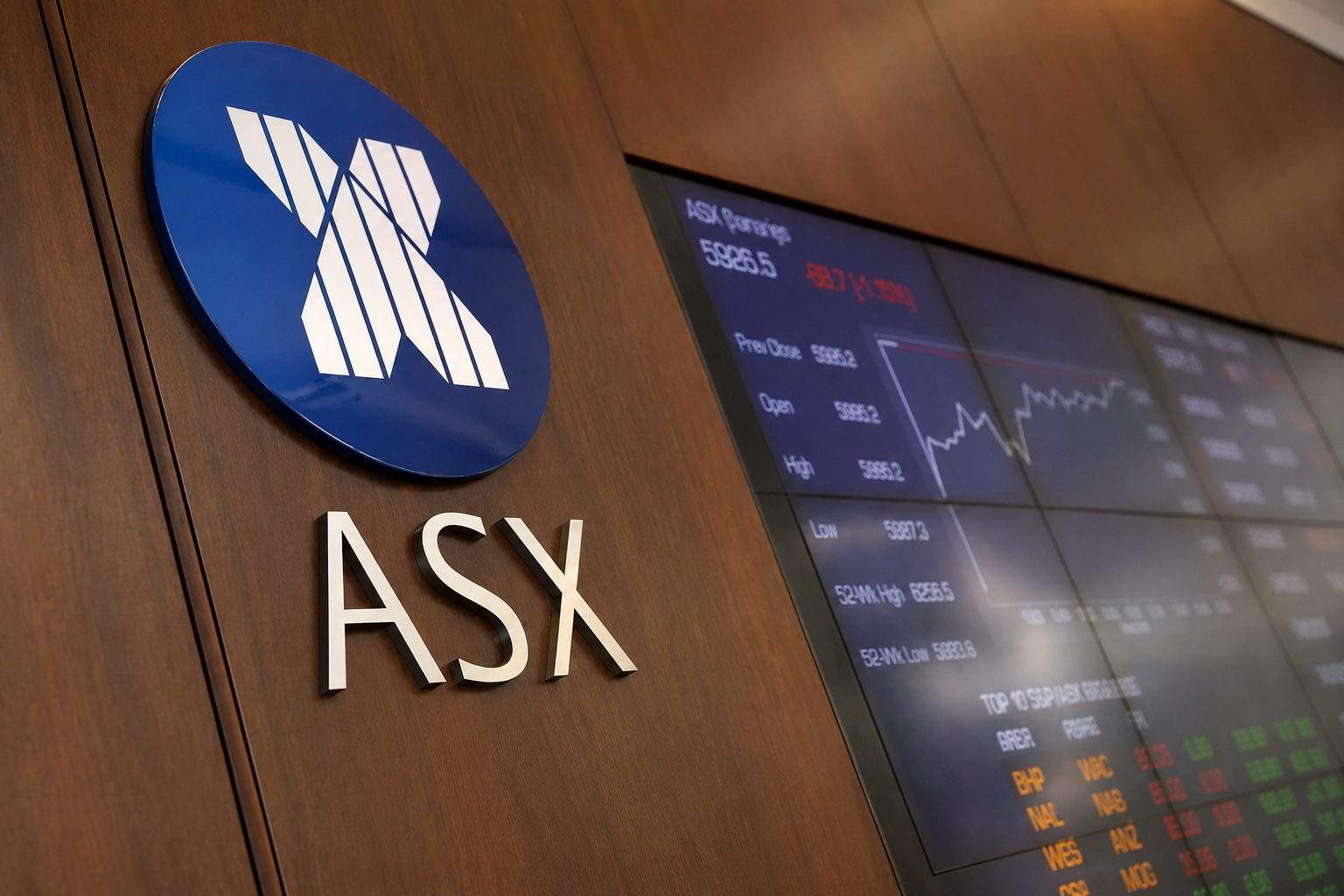
Australia’s stock market was expected to start down on Tuesday, even as oil prices recorded another steep decline. ASX 200 futures traded 0.3% lower at 8,818 ahead of the open.
This follows Monday’s 1.39% surge to 8,894.00, marking the index’s best single-day performance in six weeks.
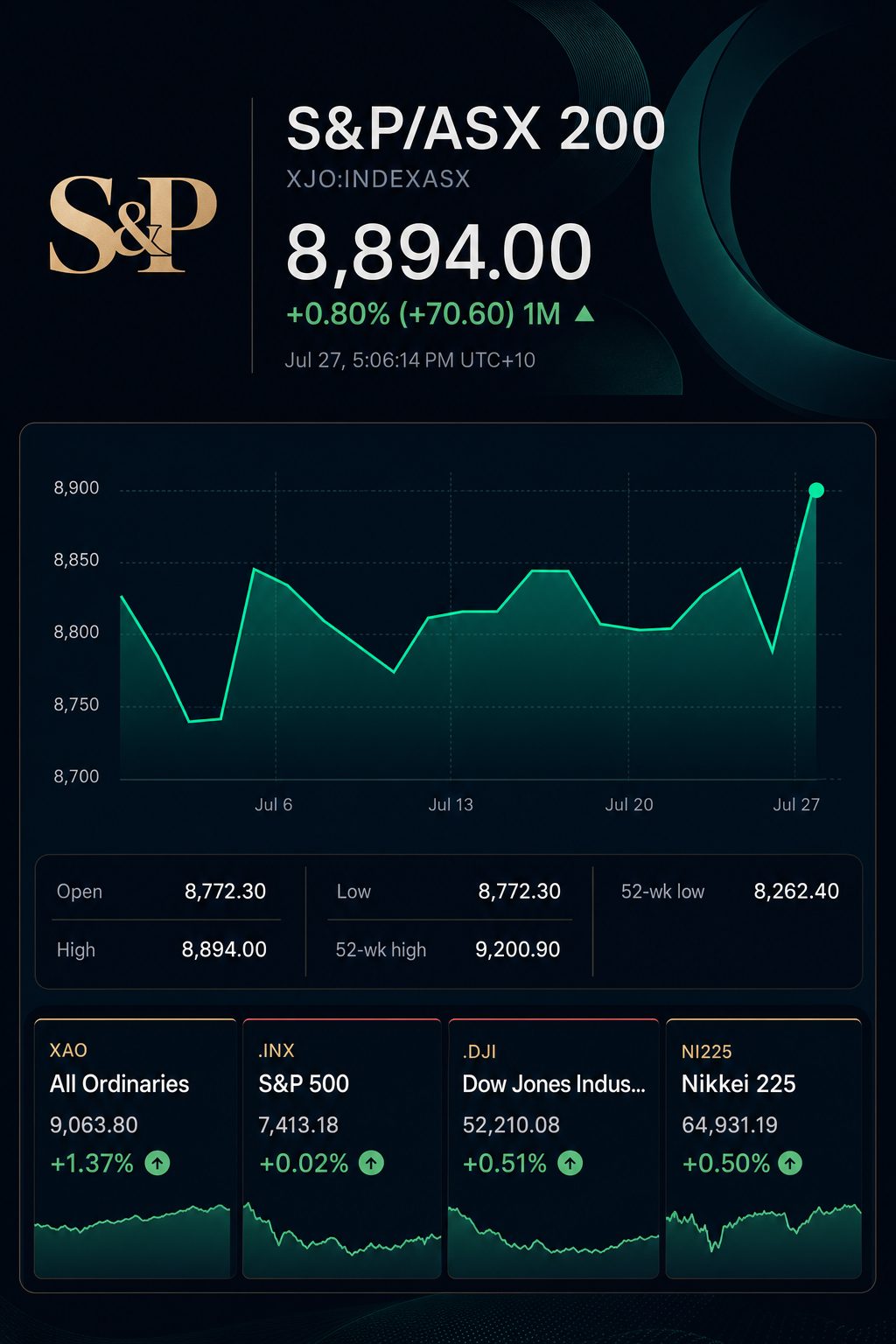
On Tuesday, the primary signal for investors is the divergence. Brent slid 9.3% overnight to $87.78 per barrel, yet futures also dropped. This indicates that the initial move in the oil-relief trade is mostly factored in.
Monday’s sector performance was in line with that assessment. Technology outperformed energy by roughly 7.5 percentage points, and gains were also posted by miners and banks.
| Market signal | Move | Level or context |
|---|---|---|
| ASX 200 cash, Monday | +1.39% | 8,894.00 |
| Information technology, Monday | +4.52% | Top sector for the day |
| Mining sector, Monday | +2.4% | Most influential sector by index weighting |
| Financials, Monday | +1.2% | Reached highest point in three months |
| Energy sector, Monday | -3.0% | Shares in oil producers dropped |
| ASX 200 futures, Tuesday | -0.3% | 8,818 |
| Brent crude, Tuesday morning | -9.3% | $87.78 per barrel |
ASX, Reuters and ABC provided information on Monday’s closing figures and pre-market activity.
BHP Group ASX:BHP, Rio Tinto ASX:RIO, and Fortescue ASX:FMG rose between 1.2% and 2.2% on Monday. Nonetheless, the mining sector overall has dropped by more than 8% since early June.
WiseTech Global ASX:WTC climbed 7%, and NEXTDC ASX:NXT gained 2.1%. These increases came after earlier sharp declines among Australian growth stocks.
Woodside Energy ASX:WDS and Santos ASX:STO posted their sharpest declines since mid-June. The roughly 3% drop in the energy sector came as crude prices slipped.
Tim Waterer, chief market analyst at KCM Trade, described Monday’s gains as “very much part of a global relief trade.” He added that if inflation comes in stronger, rate expectations could shift quickly. Indo Premier
Wall Street overnight offered weaker cues. The Nasdaq slipped 0.18%, and the PHLX semiconductor index dropped 2.2%. The chip index currently stands 21% under the record it set on June 22.
Domestic interest rates are becoming the main factor. Based on ASX pricing, there is a 37% chance of a rise to 4.60% in August, compared to the current 4.35% cash rate.
Early consensus forecasts suggest June’s headline inflation is close to 4.1% year on year. Trimmed-mean inflation is projected at 3.8%. The official release is scheduled for Wednesday at 11:30 AEST.
Bullock is scheduled to deliver remarks at 1:05 p.m. AEST on “Monetary Policy in an Era of Shocks.” Investors will look for insights on how the RBA balances lower oil prices with ongoing domestic inflation. Reserve Bank of Australia
Monday’s advance was about 4.6 times greater than the index’s 0.3% drop from the previous week. The magnitude highlights how quickly Australian market valuations adjusted as geopolitical risk faded.
Risks are balanced on both sides. Renewed conflict in the Gulf may push oil prices and rate forecasts higher. A stronger-than-expected CPI report could erase gains in technology and banking, while a weaker CPI result might allow those gains to continue.
Regular cash trading opens at approximately 10:00 AEST. The initial focus will be on how banks and miners handle any fresh volatility in energy and technology stocks.
Related articles: ASX:BHP