
NEW YORK, August 11, 2026, 19:50 EDT — Shares of CAVA advanced 12% after the company recorded a 60-basis-point reduction in margins, with growth in customer traffic outpacing the decline.
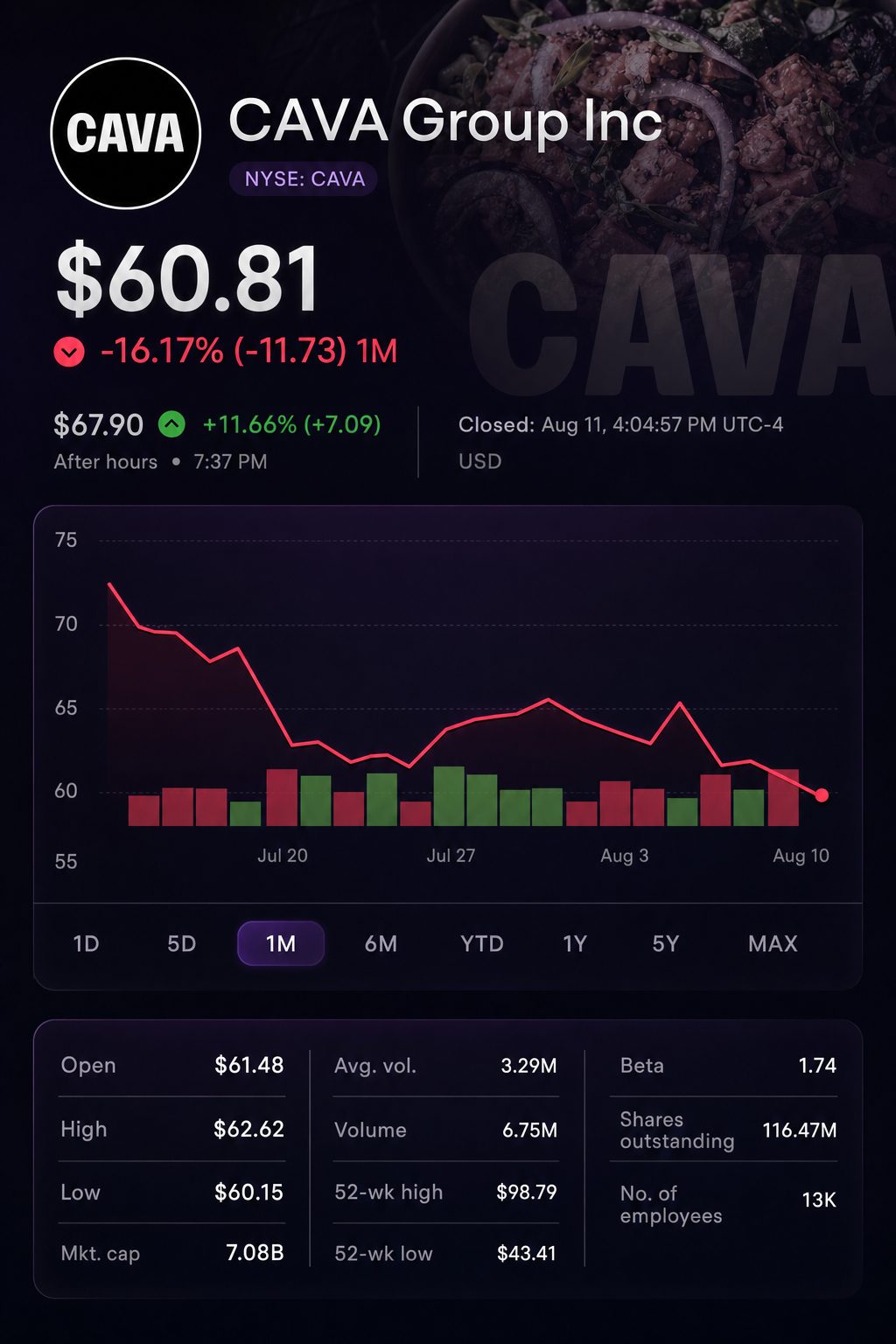
- CAVA stock climbed roughly 12% after the bell to $68.30.
- Same-restaurant sales rose 9.0%, with traffic up 5.3%.
- Restaurant-level margin declined by 60 basis points to reach 25.7%.
CAVA Group, Inc. NYSE:CAVA shares rose following Tuesday’s market close, as second-quarter traffic topped forecasts and offset a slimmer restaurant margin. The stock was last around $68.30 in after-hours trade, up roughly 12%.
The increase was fueled by strong growth quality. Guest visits accounted for 5.3 percentage points of the 9.0% same-restaurant sales rise, while price and product mix made up the other 3.7 points.
As a result, traffic accounted for 59% of the growth in comparable sales. This is important for investors, indicating that increased demand contributed more than pricing, despite a broader slowdown in restaurant spending.
| Fiscal Q2 measure | 2026 | 2025 | Change |
|---|---|---|---|
| CAVA revenue | $365.4m | $278.2m | +31.3% |
| Same-restaurant sales | +9.0% | +2.1% | +690 bps |
| Net income | $23.0m | $18.4m | +25.3% |
| Adjusted EBITDA | $54.7m | $42.1m | +30.0% |
| Restaurant-level margin | 25.7% | 26.3% | -60 bps |
The company reported total revenue of $368.4 million, exceeding the FactSet forecast of about $360 million. Per-share earnings came in at 19 cents, surpassing the consensus estimate of 18 cents.
Chief Executive Brett Schulman stated, “Our newest restaurants continue to outperform our expectations.” CAVA added 17 net new locations. The chain closed the quarter with 476 restaurants, marking a 19.6% increase compared to a year ago. CAVA Form 8-K
| Growth and margin bridge | Q2 contribution | Investor read-through |
|---|---|---|
| Guest visits | +5.3 pts | 59% of comparable sales increase |
| Pricing and product mix | +3.7 pts | 41% of comparable sales increase |
| Profit at restaurant level | +28.1% | Total dollar profit increased |
| Margin at restaurant level | -60 bps | Margin reduced from salmon, delivery and wage impacts |
Margins continue to provide offsetting balance. The introduction of Pomegranate Glazed Salmon increased food expenses. Margin rate was also pushed down by delivery composition and wage spending. Management said salmon and delivery maintained profitability, citing their higher guest price points.
CAVA maintained its full-year guidance, which was viewed as cautious following its sales outperformance. The outlook also allows for the possibility of increased expenses in the second half.
| Fiscal 2026 outlook | Low | High | Status |
|---|---|---|---|
| Net new restaurants | 75 | 77 | Confirmed |
| Same-restaurant sales growth | 4.5% | 6.5% | Confirmed |
| Restaurant-level margin | 23.7% | 24.3% | Confirmed |
| Adjusted EBITDA | $181m | $191m | Confirmed |
The surge late in the day came after a lackluster regular session. CAVA ended Tuesday at $60.81, falling 1.3% on the day and down 8.1% since August 5. The shares traded at $67.90 late in after-hours, erasing that weekly decline.
Analysts held a positive outlook before the results, though expectations varied considerably. The consensus target price was $93.04 ahead of Tuesday’s report.
| Analyst recommendation | Count | Share of 28 ratings |
|---|---|---|
| Strong Buy | 1 | 3.6% |
| Buy | 18 | 64.3% |
| Hold | 8 | 28.6% |
| Sell | 1 | 3.6% |
| Consensus | Moderate Buy | $93.04 average target |
Sales experienced a temporary impact from food-safety issues following the quarter, but Schulman stated that CAVA does not utilize iceberg lettuce or obtain leafy greens from Mexico. According to management, after the July 12 quarter ended, sales recovered to growth in the mid-single-digit range.
In the coming week, investors will monitor whether Wednesday’s regular session leads to further movement. Shifts in analyst targets are expected to provide another key indicator. The main operational challenges continue to be traffic resilience and the trade-off concerning salmon margins.
Risks: After-hours price movements may change direction when daytime trading volume increases. Increases in food and labor expenses could outweigh higher customer traffic, and aggressive expansion adds to execution risk.