
NEW YORK, August 14, 2026, 07:40 EDT — U.S. cash markets remained shut, while premarket trading was robust.
- Tyson stock climbed 1.5% in premarket trading following three beef plant closure announcements.
- The initial step increased Tyson’s equity value by roughly $240 million.
- This represents about 37% of Tyson’s maximum projected beef loss for 2026.
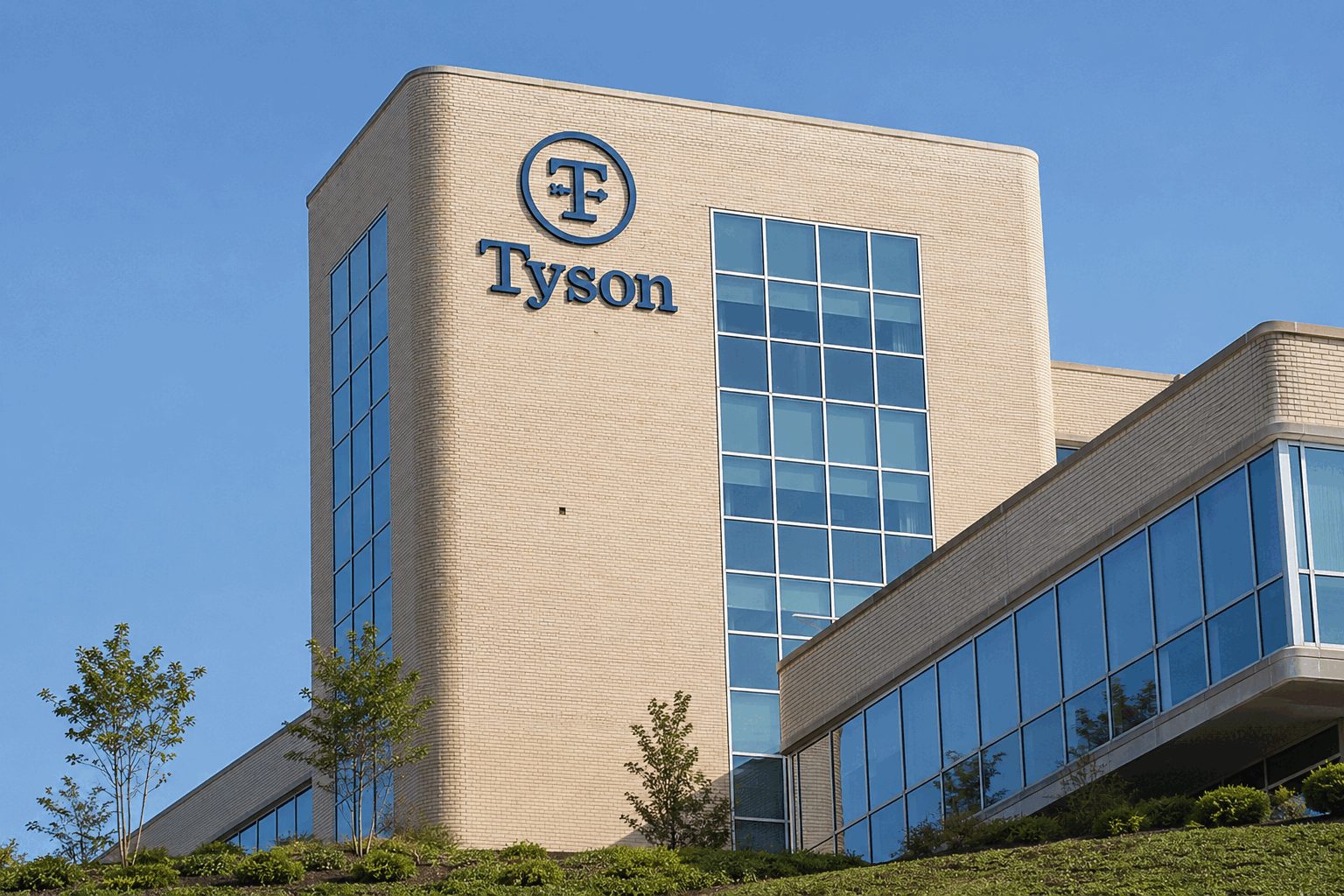
Shares of Tyson Foods, Inc. NYSE:TSN advanced 1.5% to $57.24 in premarket trade on Friday after the company announced intentions to shut down or divest three beef plants in the United States. Tyson ended the prior session at $56.39.
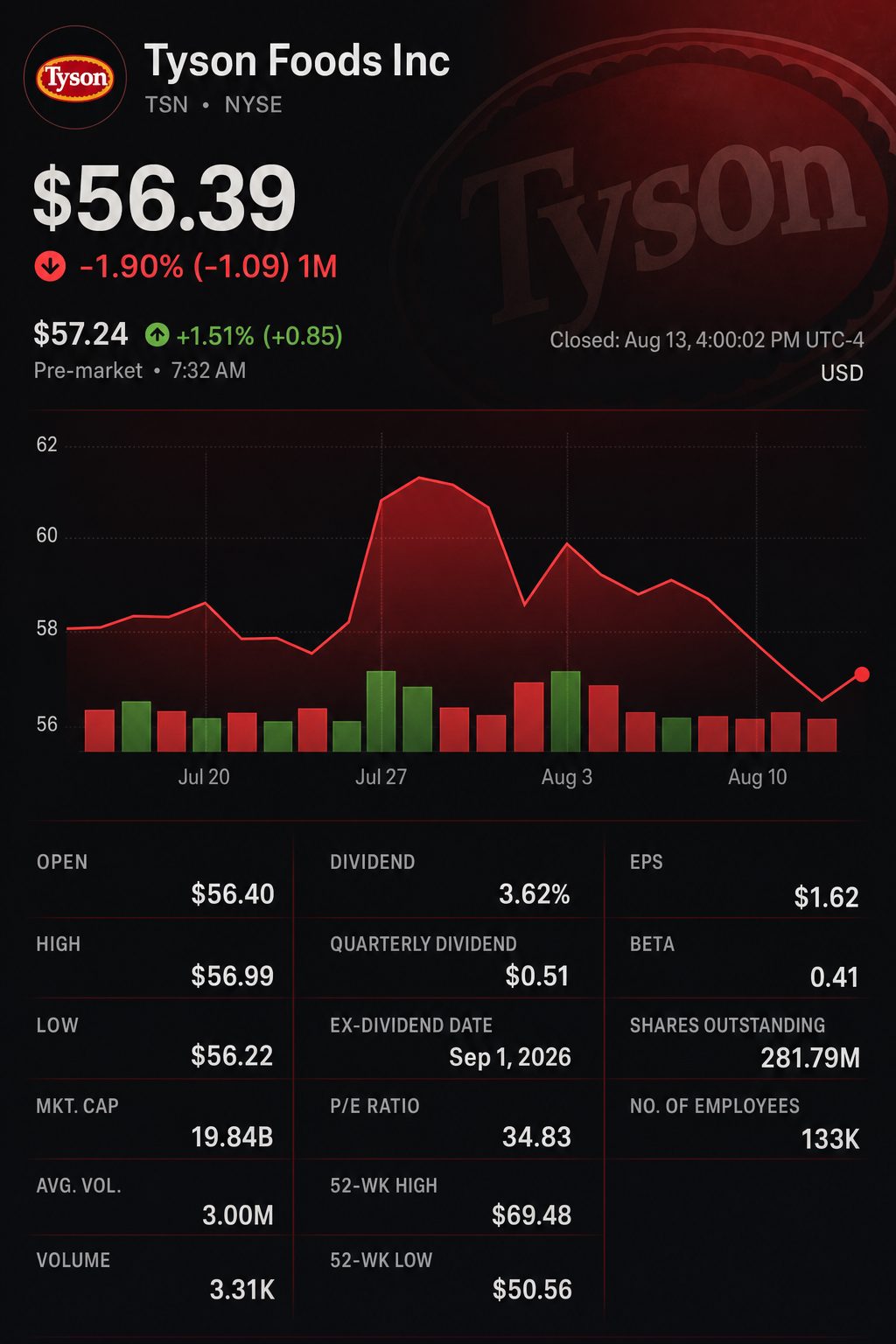
The $0.85 boost translates to an estimated $240 million rise in equity value. This initial estimate is based on Tyson’s 281.79 million shares in circulation. The sum represents nearly 37% of the company’s projected $650 million maximum beef-related loss.
The investor decision is set by that comparison. Tyson is cutting capacity to prevent struggling beef returns from offsetting profits in other areas. The cattle herd is still close to its lowest point in 75 years.
| Facility | Action | Reported capacity or role |
|---|---|---|
| Joslin, Illinois | Shut | Roughly 3,000 head of cattle per day; employs over 2,000 people |
| Pasco, Washington | Divest | Handles approximately 2,000 cattle each day |
| Eagle Mountain, Utah | Shut | Packing beef |
Joslin and Pasco process approximately 5,000 cattle each day. The Utah facility focuses on beef packaging, not cattle slaughter. Tyson stated that production will now be consolidated in Nebraska, Kansas and Texas.
The measures are significant. Along with prior reductions, they cut or relocate roughly one-third of Tyson’s former beef-processing capacity. Tyson’s beef unit posted an operating loss of $142 million last quarter. Beef prices increased 12%, but sales volume dropped by 16%.
| Company | Latest quoted price | Latest move |
|---|---|---|
| Tyson Foods NYSE:TSN | $57.24 premarket | up 1.51% |
| JBS N.V. NYSE:JBS | $13.47 premarket | up 1.13% |
| Hormel Foods Corporation NYSE:HRL | $24.31 premarket | down 0.53% |
| Pilgrim’s Pride Corporation NASDAQ:PPC | $27.60 Thursday close | up 2.76% |
| Smithfield Foods, Inc. NASDAQ:SFD | $22.47 Thursday close | up 0.19% |
Tyson projects a loss for its beef division of $500 million to $650 million in fiscal 2026, up from its previous estimate of $350 million to $500 million. The company’s forecast for adjusted operating income stands at $2.1 billion to $2.3 billion.
Chicken continues to provide balance. Tyson most recently posted a 1% increase in chicken volume. The segment’s margin climbed to 11.2%. However, poultry sector prices have softened as supply grows, capping chicken’s ability to make up for beef.
| Analyst and firm | Recommendation | Price target | Date |
|---|---|---|---|
| Peter Galbo, Bank of America NYSE:BAC | Hold | $65 | Aug. 13 |
| Alexia Howard, Bernstein | Hold | Not stated | Aug. 13 |
| Thomas Palmer, JPMorgan Chase & Co. NYSE:JPM | Hold | $65 | Aug. 4 |
| Leah Jordan, Goldman Sachs Group, Inc. NYSE:GS | Buy | $77 | Aug. 3 |
| Benjamin Theurer, Barclays PLC LON:BARC | Buy | $78 | Aug. 3 |
The analyst breakdown highlights the impact of the closures. The consensus price target suggests roughly 25% potential upside compared to Thursday’s closing price. However, out of eight analysts, five rate the stock as a hold. It is now up to the company to justify the capacity reductions through execution.
Tyson’s valuation provides a degree of income support. Shares have a yield of around 3.6% and are priced at roughly 35 times reported earnings. With a beta of 0.41, the stock has shown less historical volatility than the broader market. Operational risk remains, however.
Risks: Shutting plants may lead to costs from closures, labor issues, and reduced output. If cattle numbers rebound quickly, closed capacity may gain value. Soft chicken prices might dampen the advantages provided by Tyson’s diverse product mix.
The start of trading on Friday will put the premarket indicator to the test. Investors are advised to monitor if Tyson can maintain support near $57 and check if executives specify savings. At the core, the key issue is whether reduced beef capacity can cut losses more rapidly than it diminishes potential profit generation.