
SPRINGDALE, Arkansas, August 13, 2026, 16:35 CDT
- Tyson stock climbed 1.6% in after-hours trading, following a 1.04% increase during the regular session.
- The company plans to either shutter or divest three beef plants that each process a minimum of 5,000 head per day.
- Tyson projects its beef division will record a loss between $500 million and $650 million for the current fiscal year.
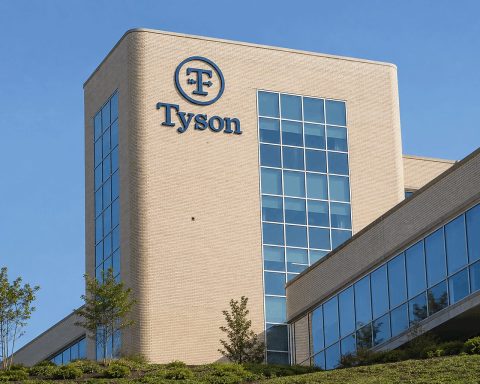
Shares in Tyson Foods NYSE:TSN climbed in after-hours trading on Thursday after the meat producer announced a further significant reduction in beef processing capacity. The cut comes as the beef division recorded a $142 million loss in the previous quarter.
The stock rose 1.6% to $57.29 following the announcement. Earlier, it had settled 1.04% higher at $56.39, snapping a four-day losing run. The S&P 500 climbed 0.65% to finish at a record high.
| Market measure | August 13 reading | Comparison |
|---|---|---|
| Tyson regular close | $56.39 | up 1.04% |
| Tyson after hours | $57.29 | rising 1.60% post-close |
| S&P 500 | 7,798.99 | gaining 0.65% |
| Tyson versus 52-week high | trailing by 18.8% | Peak: $69.48 |
Tyson’s market value increased by approximately $317 million after hours, based on its closing capitalization of $19.84 billion. This amount is around 2.2 times the most recent quarterly beef segment loss. The figures indicate investors placed tangible value on eliminating loss-making production.
Tyson announced it will shut down its beef facility in Joslin, Illinois, which has a workforce exceeding 2,000. The plant is capable of handling around 3,000 cattle each day. Tyson also intends to divest its Pasco, Washington, facility and will close a major beef packaging site in Utah.
| Facility | Planned action | Known scale |
|---|---|---|
| Joslin, Illinois | Shut down | Roughly 3,000 cattle per day; over 2,000 positions |
| Pasco, Washington | Divest | Approximately 2,000 cattle per day |
| Utah packaging site | Shut down | Major beef-packaging operation; capacity not provided |
| Known slaughter total | Leave or reassign | Minimum 5,000 cattle processed daily |
The moves extend a restructuring effort that had previously involved shutting down operations in Nebraska and scaling back production in Texas. Combined, Tyson has reduced about a third of its former beef-processing capacity. The company intends to increase production in Texas once more.
The decline is due to a limited cattle supply, not lower demand for steak. The U.S. cattle herd has reached its lowest point in 75 years after droughts impacted grazing land. In its most recent quarter, Tyson reported a $575 million year-on-year increase in cattle expenses.
| Operating measure | Latest result or outlook | Investor comparison |
|---|---|---|
| Quarterly sales | $13.87 billion | Short of $14.12 billion LSEG estimate |
| Quarterly net income | $182 million | $61 million in the previous year |
| Beef adjusted operating result | -$142 million | Negative outcome |
| Beef volume | -15.9% | Price up 12.1% |
| Fiscal 2026 beef outlook | -$500 million to -$650 million | Previously: -$350 million to -$500 million |
| Fiscal 2026 adjusted operating income | $2.1 billion to $2.3 billion | Previously: $2.2 billion to $2.4 billion |
Rising beef prices failed to counteract the pressure. Tyson reported a 15.9% drop in beef volume for the last quarter, even as its average beef price increased by 12.1%. Chief Executive Donnie King stated, “Beef hasn’t performed the way we expected, and we’re not pretending otherwise.” Reuters
Chicken continues to act as a stabilizing factor. Last quarter, its volume increased by 1% and the adjusted operating margin hit 11.2%. This combination supports Tyson’s cash flow as beef capacity contracts.
Wall Street sentiment is still cautious. According to Google Finance, analysts issued three buy and five hold ratings over the past three months, with no sell recommendations. The consensus price target of $70.50 was 25% higher than Thursday’s closing price.
| Analyst | Firm | Recommendation | Target | Date |
|---|---|---|---|---|
| Alexia Burland Howard | Bernstein | Hold | Not listed | August 13 |
| Thomas Palmer | JPMorgan | Hold | $65 | August 4 |
| Leah Jordan | Goldman Sachs | Buy | $77 | August 3 |
| Peter Galbo | Bank of America | Hold | $65 | August 3 |
| Benjamin Theurer | Barclays | Buy | $78 | August 3 |
| Eight-analyst consensus | Multiple firms | 3 buy, 5 hold, 0 sell | $70.50 average | Past three months |
The stock declined approximately 1.3% between Monday’s close and Thursday. The near 2.5% jump on earnings day last week has also diminished. Capacity reductions have become more significant than the quarterly outperformance.
Smithfield Foods NASDAQ:SFD issued an additional alert for investors in the protein sector this week, lowering its yearly sales and profit outlooks as consumers remained hesitant. Tyson is contending with separate challenges, yet both firms continue to experience pressures that higher prices have not alleviated.
Investors will look out next week for updates on timing, closure costs, and details of any Pasco sale. While Mexican cattle imports could provide support in the future, Tyson anticipates no significant impact before 2027.
Risks: Shutting plants may result in costs from severance, impairment and transition. Prolonged recovery in cattle supply could leave beef margins in the red, and a surplus in chicken supply might erode Tyson’s primary earnings support.
The “tyson foods” query surged by over 200% and stayed elevated into Thursday evening, U.S. Google Trends data show. Investors are watching to see if this capacity adjustment trims cash losses at a quicker pace than the cattle cycle recovers. Google Trends