
SEATTLE, August 14, 2026, 06:42 PDT — U.S. markets remained open.
- Online retail accounted for 70% of the $4.47 billion drop in sales recorded in July.
- Nonstore sales increased by 7.7% compared to the same period last year.
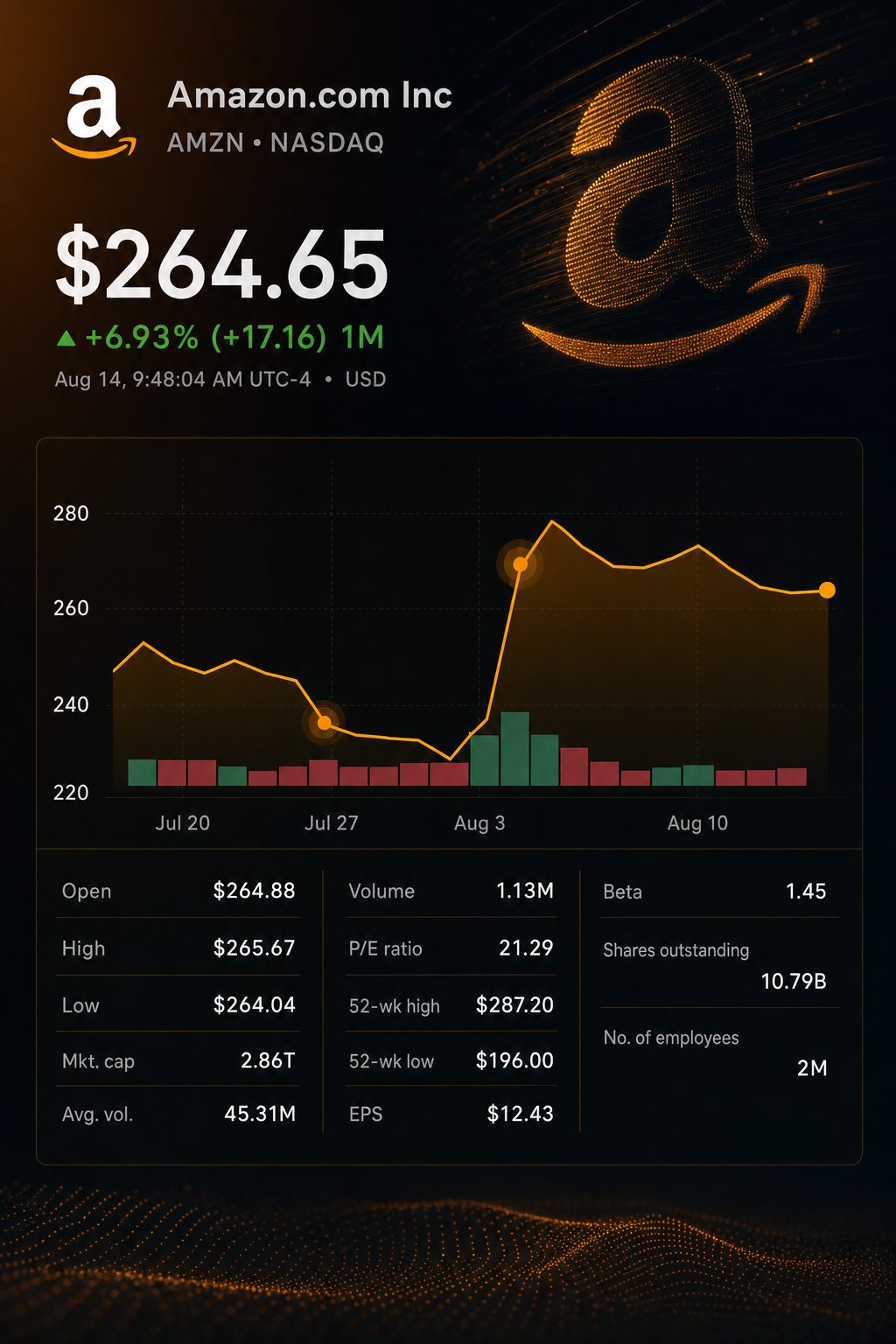
- Amazon stock showed minimal movement ahead of Friday’s market open.
Amazon.com, Inc. NASDAQ:AMZN shareholders saw a disappointing July sales figure. However, the result appears to reflect a timing issue rather than a sharp decline in online demand.
Retail and food-service sales in the U.S. dropped by 0.6% to $763.6 billion. Analysts had predicted a 0.1% rise. The increase in June stayed at 0.2%.
| July retail measure | Actual | Consensus | June |
|---|---|---|---|
| Monthly headline sales | -0.6% | +0.1% | +0.2% |
| Core control group sales, month over month | -0.4% | +0.3% | +0.4% revised |
| Annual headline sales | +5.0% | — | — |
The key point is found within nonstore retail. Sales in this category dropped by $3.15 billion compared to June, making up 70.4% of the $4.47 billion total decrease, according to Census data.
| Category | July sales | Monthly change | Change in dollars |
|---|---|---|---|
| Nonstore retailers | $136.90 billion | -2.2% | -$3.15 billion |
| Motor vehicles and parts | $141.43 billion | -1.8% | -$2.56 billion |
| Gasoline stations | $59.88 billion | -0.9% | -$0.55 billion |
| Clothing stores | $28.31 billion | +1.9% | +$0.53 billion |
| Food services and drinking places | $103.56 billion | +0.5% | +$0.54 billion |
Amazon scheduled Prime Day this year between June 23 and June 26, instead of its usual timing in July. According to Reuters, competing sales were rescheduled to earlier dates as well, resulting in reduced activity in July.
The yearly comparison tells a different story. Nonstore sales rose 7.7% from July 2025, surpassing the 5.0% uptick recorded for total retail and food services.
| Calendar check | Nonstore sales | Change |
|---|---|---|
| June 2026 | $140.05 billion | Up 0.9% from May |
| July 2026 | $136.90 billion | Down 2.2% from June |
| July 2025 | $127.11 billion | July 2026 rose 7.7% |
This is significant for Amazon’s stock. One month of category decline could exaggerate actual softness. Executives have already cited almost four percentage points of Prime Day timing impact in their third-quarter growth assessment.
Amazon projects sales between $197 billion and $202 billion for the third quarter, indicating growth of 9% to 12%. Without the timing effect from Prime Day, growth would be close to four percentage points greater.
| Amazon operating measure | Q2 2026 | Year-on-year change |
|---|---|---|
| Net sales | $200.6 billion | +20% |
| North America sales | $116.2 billion | +16% |
| AWS sales | $42.2 billion | +37% |
| Operating income | $27.5 billion | +43% |
| Trailing free cash flow | -$7.6 billion | Down from +$18.2 billion |
The business outlook is solid, despite significant spending. Revenue for the second quarter increased 20% to $200.6 billion. Operating income rose 43% to $27.5 billion. Free cash flow dropped into negative territory as Amazon boosted spending on artificial intelligence.
Amazon CEO Andy Jassy stated the company “again set record delivery speeds for Prime members.” Quicker shipping encourages repeat purchases, particularly for regular-use products. Amazon second-quarter results
Amazon ended Thursday trading at $265.13. The stock ticked up 0.05% to $265.25 in premarket activity ahead of Friday’s open. U.S. markets started the day mixed, trending slightly higher.
| Analyst | Firm | Latest rating | Price target | Date |
|---|---|---|---|---|
| Eric Sheridan | Goldman Sachs | Buy, reiterated | $375 | Aug. 10 |
| Doug Anmuth | JPMorgan | Buy, reiterated | $365 | Aug. 4 |
| Sachin Mittal | DBS | Buy, reiterated | $332 | Aug. 11 |
| Lloyd Walmsley | Mizuho | Buy, reiterated | $330 | Aug. 4 |
| Justin Post | BofA Securities | Buy, reiterated | $320 | Aug. 12 |
Analysts maintain a positive outlook, but target estimates vary significantly. The lowest forecast stands at $250, which is under the recent closing price. The highest forecast is $400.
Risks: The timing issue does not grant unchecked opportunity. Core retail sales dropped 0.4%, marking the lowest level since January 2024. Consumers are contending with increased costs. At the same time, Amazon’s AI expansion has resulted in negative free cash flow.
The key point for investors is limited. July’s significant drop in online numbers heavily influenced the report. Due to year-on-year growth and the impact of the Prime Day timing change, the data does not provide a clear indicator of Amazon demand on its own.
Related articles: NASDAQ:AMZN