
NEW YORK, August 5, 2026, 12:15 p.m. EDT — U.S. markets open
- Meta reported a 58% increase in total stock compensation for the second quarter, reaching $7.66 billion, which represented 12.6% of its revenue.
- Amazon posted non-operating pre-tax income of $53.4 billion, driven chiefly by its stake in Anthropic. Microsoft, in comparison, recorded a $3.2 billion gain tied to Anthropic.
- Turnover among researchers is now affecting both operational expenses and the reliability of reported earnings.
Last quarter, Meta Platforms NASDAQ:META reported the highest apparent equity-based compensation expense among four leading U.S. AI platforms, highlighting a new cost risk amid heightened competition for talent in the sector.
Meta’s stock-based compensation amounted to 12.6% of its revenue, almost double Alphabet’s NASDAQ:GOOGL level and approximately four times that of Microsoft NASDAQ:MSFT or Amazon.com NASDAQ:AMZN.
The gap is significant as leading researchers continue to switch companies. Reuters verified that John Jumper left Google DeepMind for Anthropic, while Ruoming Pang moved from Meta to OpenAI. Pang had started at Meta about seven months prior.
Axios noted an additional senior exit from Thinking Machines. The report’s statement about Amodei was based on a single anonymous source and did not include an official comment.
Filings indicate two avenues for investors. The exit of key staff may result in new retention incentives. Meanwhile, valuation increases at private labs can boost earnings even if core operations remain unchanged.
Quarterly cost of equity-based compensation
| Company | Revenue | Stock compensation | Year-on-year change | Compensation/revenue |
|---|---|---|---|---|
| Meta | $60.80B | $7.66B | up 58.4% | 12.6% |
| Alphabet | $119.80B | $8.00B | up 33.3% | 6.7% |
| Microsoft | $90.01B | $3.12B | increase of 1.6% | 3.5% |
| Amazon | $200.60B | $6.04B | down 7.6% | 3.0% |
Recent quarters ended June 30. Microsoft reported for its fiscal fourth quarter. Data reflects total company compensation, not limited to AI personnel.
The comparison serves as a proxy, rather than an AI payroll. Still, Meta allocated $6.76 billion—approximately 89% of its RSU expenditure—to research and development. Meta reported that R&D expenses increased 67% due to higher compensation, infrastructure investments, and spending on third-party AI tokens.
Second-quarter accounting entries related to Anthropic
| Public company | Disclosed item | Company classification |
|---|---|---|
| Amazon | $53.4B | Non-operating pre-tax other income, mainly resulting from Anthropic investments |
| Microsoft | $3.2B | Profit from an Anthropic investment, recorded under quarterly special items |
The Anthropic entries add to the complexity. Amazon revealed a non-operating gain nearly double its $27.5 billion in operating profit. Microsoft, meanwhile, included its gain as one of several non-core quarterly positives.
Therefore, talent retention at private laboratories affects not just reported earnings but also strategic value. This goes beyond being merely a human resources concern.
Capital expenditure requirements and cash flow conversion
| Company | Capex or net PP&E | Free cash flow | FCF margin | Operating margin |
|---|---|---|---|---|
| Meta | $31.08B | $0.78B | 1.3% | 31.0% |
| Alphabet | $44.90B | -$5.90B | -4.9% | 34.0% |
| Microsoft | $35.80B | $19.64B | 21.8% | 45.1% |
| Amazon | $53.08B | -$7.69B | -3.8% | 13.7% |
Based on reported quarterly cash flows. Amazon’s PP&E outlay reflects deductions for asset sales and incentives. Meta and Alphabet disclosed free cash flow figures. Definitions may vary by company.
Microsoft reported the highest cash conversion, generating quarterly free cash flow of $19.64 billion and posting an operating margin of 45.1%. CEO Satya Nadella said customers are able to “turn tokens into business results.” Microsoft
Meta achieved much lower conversions. The company reported free cash flow of $784 million following capital expenditures totaling $31.08 billion. Josh Gilbert, eToro’s lead analyst for Asia-Pacific, said Meta is “spending like a hyperscaler without a hyperscaler’s business model.” Meta Investor
Alphabet reported a 32% increase in R&D costs, attributing the rise in part to salaries for AI talent and higher depreciation expenses. The operating margin remained steady at 34%, while free cash flow for the quarter was negative $5.9 billion.
Amazon provided the strongest indication of cloud demand. Revenue at AWS increased by 37%, marking its quickest growth rate in 18 quarters. Free cash flow for the quarter, based on reported cash flows, stood at negative $7.69 billion.
Highlighted analyst ratings
| Date | Company | Broker | Rating | New target | Previous | Implied upside |
|---|---|---|---|---|---|---|
| Aug. 5 | Microsoft | Daiwa Securities | Buy | $595 | $572 | 21.7% |
| Aug. 4 | Meta | Daiwa Securities | Buy | $687 | $790 | 17.8% |
| Aug. 4 | Amazon | President Capital Management | Buy | $379 | $345 | 38.7% |
Prices as of 12:15 p.m. EDT. Analyst price targets represent their projections and not official company guidance.
Broker sentiment holds firm, though Meta’s price target dropped. Daiwa lowered its Meta target by 13% but kept a Buy rating. The firm increased Microsoft’s target by 4%, and President Capital raised Amazon’s by close to 10%.
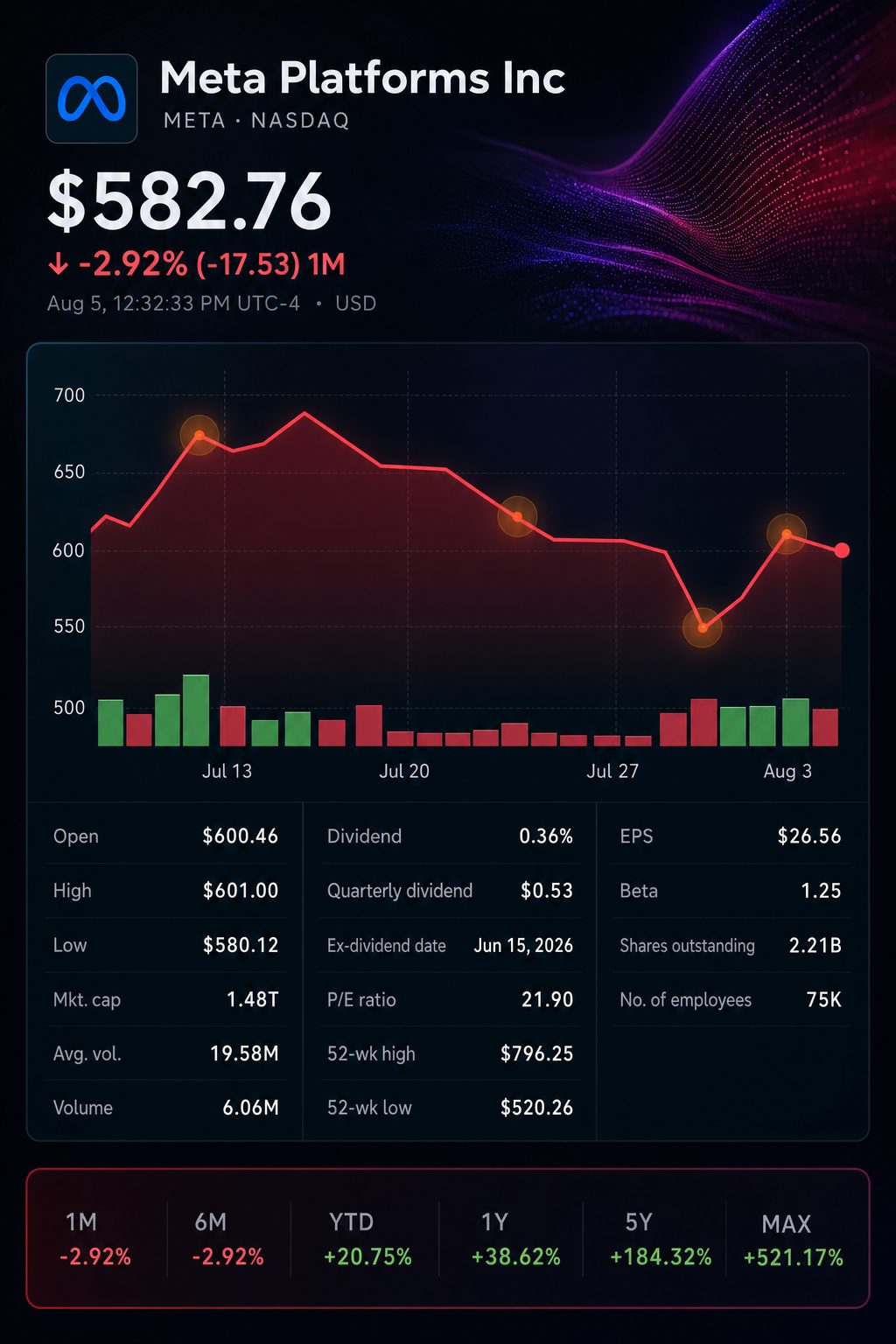
U.S. markets were trading at 12:15 p.m. EDT. Shares of Meta slipped 0.8% to $583.19. Alphabet was down 0.9%, Microsoft retreated 0.8%, while Amazon slid 1.5%.
Risks: Companywide stock compensation reflects just a proxy for AI pay. Departures may be individual occurrences, and forfeited awards could help lower future expenses. Robust advertising and cloud performance might help balance out increased labor and infrastructure spending. The Amodei allegation is still based on anonymous sources.
Related articles: NASDAQ:META