
LONDON, August 15, 2026, 13:26 BST — Global cash markets are closed for the weekend.
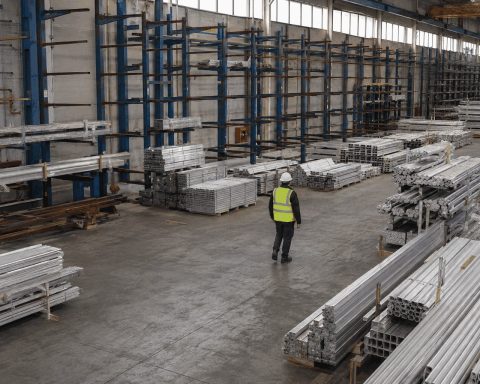
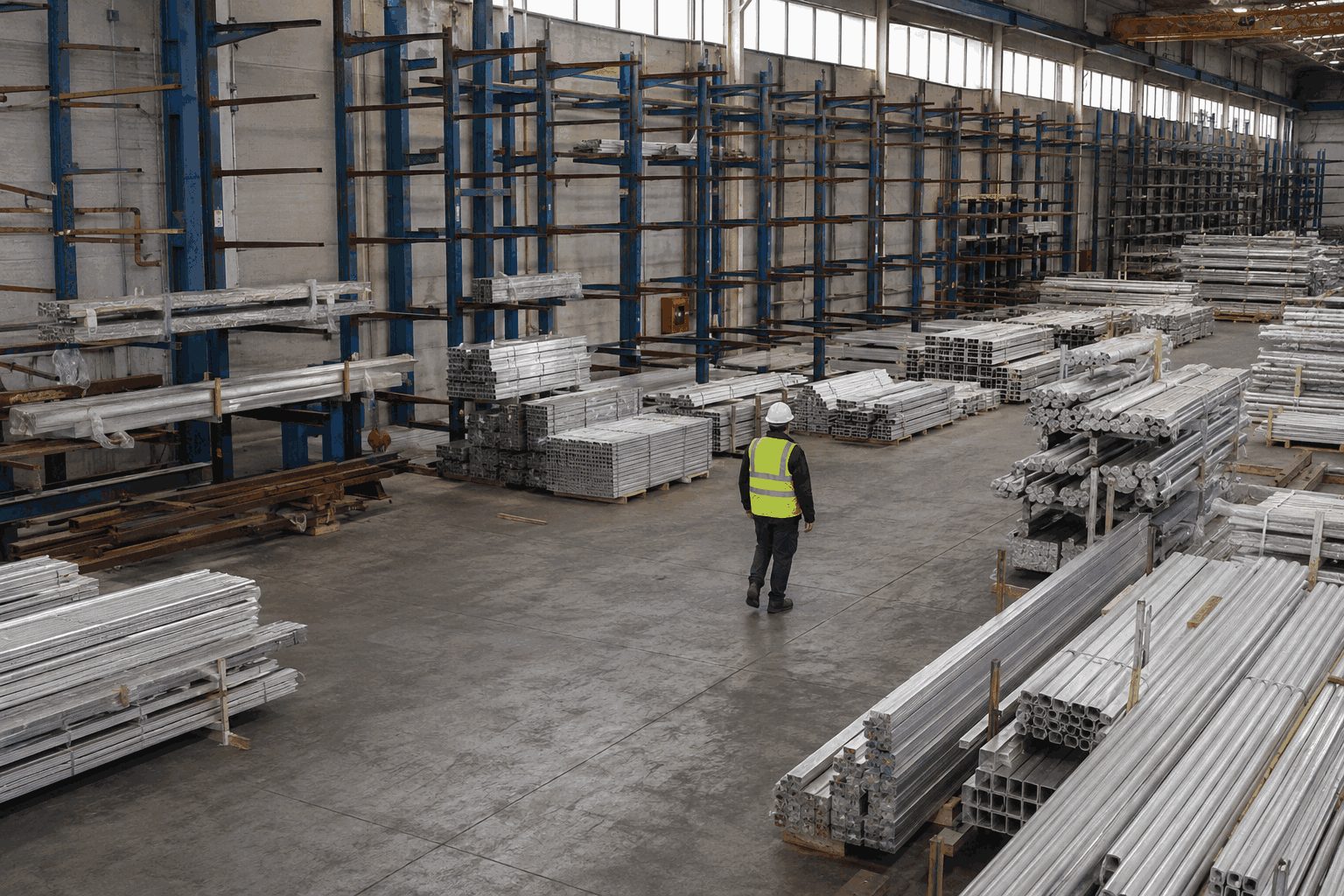
- LME aluminium stocks have fallen to 250,000 tons, their lowest since 1990.
- That pool equals only 12.5% of annualised Gulf production losses.
- Monday’s August delivery date will test a heavily concentrated market.
Aluminium enters the new week with its smallest London Metal Exchange buffer in 36 years. Yet the futures curve still signals only mild stress. That gap is now the market’s main risk.
Registered LME stocks have halved during 2026 to about 250,000 metric tons. Gulf output has meanwhile fallen by an annualised 2 million tons. Exchange stocks therefore cover roughly one-eighth of that lost production.
| Supply gauge | Latest verified figure | Investor reading |
|---|---|---|
| LME registered stocks | 250,000 tons | Lowest since 1990 |
| 2026 stock draw | About 50% | Buffer is shrinking fast |
| Annualised Gulf output loss | 2.0 million tons | Eight times LME stocks |
| LME off-warrant stocks | 85,645 tons | Shadow buffer also depleted |
The calm curve looks increasingly fragile. Cash aluminium traded only $8 above the three-month contract in Thursday’s snapshot. LME lending rules have helped restrain nearby spreads despite scarce deliverable metal.
Availability matters more than the headline tonnage. Russian brands represented 95% of available LME aluminium at July’s end. Western buyers cannot use much of that metal, while many Asian buyers avoid it.
| Availability measure | Figure | What it shows |
|---|---|---|
| Russian share of available LME stocks | 95% | Nominal stock overstates usable supply |
| Indian registered stocks | 12,450 tons | Down from 236,000 tons in 12 months |
| Asian Q2 physical premium | $350–$353 per ton | Eleven-year high |
| Cash-to-three-month spread | $8 backwardation | Curve remains unusually calm |
The tightness is visible outside London. Asian second-quarter premiums settled at $350 to $353 per ton, an 11-year high. The physical market is paying for access that futures still discount.
Analyst views remain unusually wide. Citi NYSE:C and Goldman Sachs NYSE:GS raised forecasts during the Gulf disruption. Bernstein, part of AllianceBernstein NYSE:AB, later kept a lower target as regional output recovered.
| Analyst or institution | Date | Recommendation or forecast | Main assumption |
|---|---|---|---|
| Citi | March 4 | $3,600 near-term target; $4,000 bull case | Long shipping and restart delays |
| Goldman Sachs | March 25 | $3,200 Q2 average; upside to $3,400 | Middle East losses and low stocks |
| Bernstein | July 9 | $3,100 second-half forecast | Faster Gulf recovery and new Asian supply |
| Mercuria | April 21 | At least 2 million-ton 2026 deficit | Limited restart and inventory buffers |
Mercuria metals research head Nick Snowdon called the shock a “black swan.” His minimum deficit estimate was 2 million tons. Visible global inventory then stood near 1.5 million tons. Reuters interview
Regional exposure is uneven. Middle Eastern suppliers provided nearly 22% of U.S. aluminium imports last year. Their share of European imports was 18.5%. China has little room above its 45 million-ton annual output ceiling.
| Regional gauge | Verified share or capacity | Market implication |
|---|---|---|
| Middle East share of global supply | About 9% | Disruption has global reach |
| Middle East share of U.S. imports | Nearly 22% | High premium exposure |
| Middle East share of European imports | 18.5% | Limited replacement capacity |
| China annual output limit | 45 million tons | Domestic relief is constrained |
Governments are treating smelting capacity as strategic. Australia pledged A$2.5 billion to keep Rio Tinto’s ASX:RIO Tomago smelter open beyond 2028. The package supports a 3-gigawatt renewable power transition.
Monday brings the immediate test. One short position represents at least 155,000 tons and perhaps 225,000 tons. The upper estimate equals 90% of current registered stocks. Delivery can settle that position, but suitable metal may be difficult to source.
Risks: Faster Gulf restarts, Indonesian shipments and Chinese exports could rebuild supply. Weak construction or vehicle demand would also ease pressure. Renewed transport disruption would instead expose the thin LME buffer.
Investors should watch Monday’s prompt, cancelled warrants and Asian premiums together. A wider backwardation would confirm that physical scarcity is reaching futures. Stable spreads would show the exchange’s lending rules still contain the squeeze.
Related articles: NYSE:C