
NEW YORK, August 17, 2026, 09:30 EDT — U.S. cash markets are now open.
- Nokia ADRs were seen at $15.37, falling 7.52% shortly before the market opened.
- AI and cloud orders in the second quarter were 6.3 times greater than quarterly sales to those clients.
- No new Nokia corporate statement was seen as the direct catalyst.
Nokia Corporation NYSE:NOK was the most actively traded US-listed stock shortly after Monday’s market open. Its ADRs dropped $1.25 to $15.37, pulling back after last week’s surge in optical networking stocks.
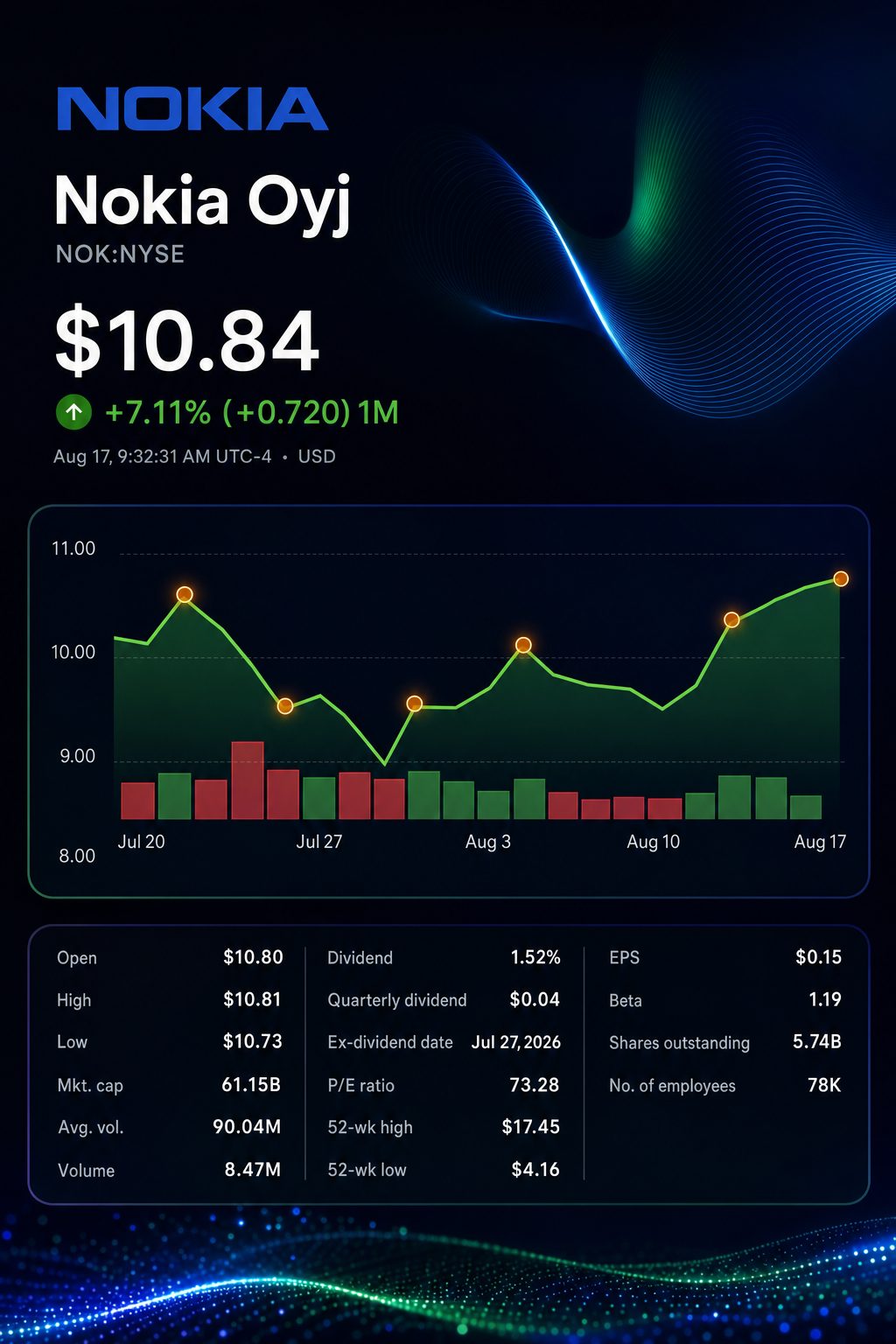
The development is notable as Nokia continues to be associated with AI, maintaining a robust narrative. However, its stock price has grown reactive to even minor industry expectation shifts. On Monday, the stock saw significant focus despite no fresh earnings update or revised outlook from Nokia.
The likeliest explanation is profit-taking instead of a fresh fundamental shock. This is an inference. Nokia rose 9.6% on August 12 following Lumentum’s outlook, which boosted optical-networking stocks.
| Most-active snapshot | Price | Change | Volume |
|---|---|---|---|
| Nokia Corporation NYSE:NOK | $15.37 | -7.52% | 53.83m |
| Keel Infrastructure Corp. NASDAQ:KEEL | $5.26 | -11.30% | 49.13m |
| NVIDIA Corporation NASDAQ:NVDA | $211.52 | -3.26% | 47.03m |
The foundational order book is strong. Nokia registered €2.8 billion in AI and cloud orders during the second quarter. Revenue from these clients reached €446 million. This means order intake was 6.3 times higher than the sales in this segment during the quarter.
Chief Executive Justin Hotard stated that demand continued to be robust, with supply as the primary limiting factor. Customers are committing to longer-term agreements. Nokia anticipates that around half of AI and cloud bookings will translate into revenue over the next 12 months.
| Q2 2026 metric | Result | Year-on-year change |
|---|---|---|
| Net sales | €4.815bn | +8% reported |
| Comparable operating profit | €434m | +18% |
| Comparable operating margin | 9.0% | Up 70 bps |
| AI and cloud customer sales | €446m | +105% |
| AI and cloud order intake | €2.8bn | Not disclosed |
Network Infrastructure showed the strongest operating leverage, with sales increasing by 12% and its margin widening by 170 basis points. Mobile Infrastructure’s growth was slower, and its margin decreased by 60 basis points.
| Q2 segment | Sales | Sales change | Operating margin |
|---|---|---|---|
| Network Infrastructure | €2.037bn | +12% | 8.1% compared with 6.4% |
| Mobile Infrastructure | €2.680bn | +6% | 11.6% compared with 12.2% |
| Portfolio Businesses | €94m | +6% | 0.0% compared with -12.4% |
Accounting standards continue to act as the balancing factor. While comparable profit increased, reported operating profit turned into a €50 million loss. The accelerated restructuring process accounted for most of this difference.
| Profit measure | Q2 2026 | Q2 2025 | Change |
|---|---|---|---|
| Comparable operating profit | €434m | €367m | +18% |
| Reported operating profit/(loss) | -€50m | €147m | -€197m |
| Comparable EPS | €0.07 | €0.04 | +75% |
| Reported EPS | €0.00 | €0.02 | -100% |
Nokia maintained its operational forecast. Adjustments to its presentation increased the comparable operating profit guidance to €2.1 billion–€2.6 billion, up from the previous €2.0 billion–€2.5 billion range.
| Analyst recommendation snapshot | Count | Share |
|---|---|---|
| Buy | 13 | 72% |
| Hold | 3 | 17% |
| Sell | 2 | 11% |
| Consensus | Moderate Buy | |
The most recent consensus snapshot showed an average target of $12.57, with projections spanning $5 to $21. These figures were compiled prior to Monday’s movement and might not capture real-time updates.
The main consideration for investors is now timing. While Nokia is seeing strong momentum in AI order growth, only a fraction of these orders are realized swiftly. Earnings benefits may be postponed due to supply limitations and ongoing restructuring.
Risks: A fresh surge in optical shares might swiftly undo Monday’s losses. However, a slowdown in order conversion, rising component costs, or higher restructuring expenses could push the correction further.
Related articles: NYSE:NOK