
TOKYO, August 19, 2026, 11:10 JST – Toyota stock slid 3.1% following a recall linked to the Tacoma, but the fall still outperformed the sector average by 0.5 points.
Shares of Toyota Motor Corporation (TYO:7203) declined 3.1% by mid-morning Wednesday after a Tacoma recall in the U.S. received renewed focus. However, the stock’s fall was 0.5 percentage point smaller than that of a balanced basket tracking three Japanese automotive rivals.
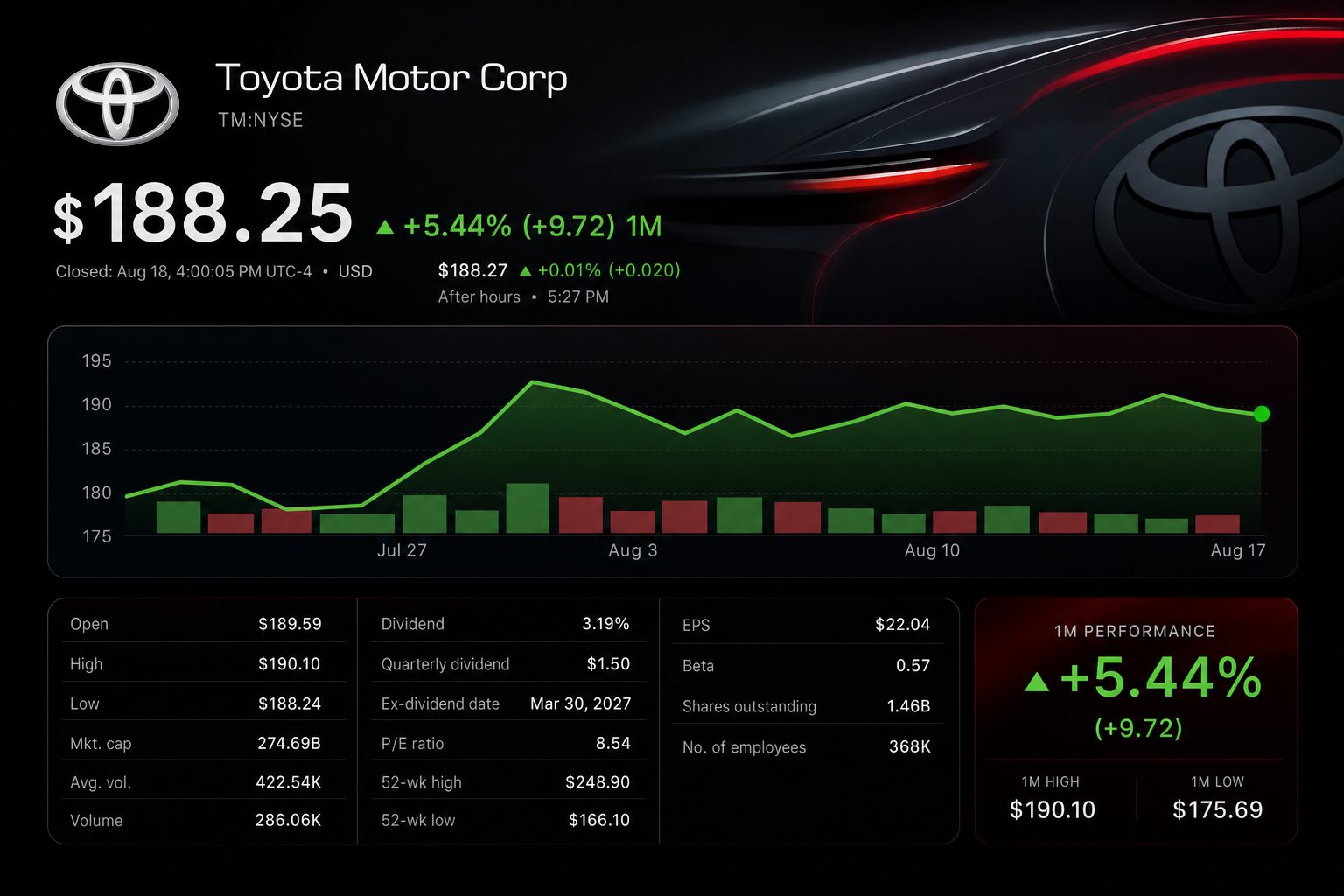
The gap is more significant than the headline suggests. At a delayed 11:10 JST reading, Toyota shares stood at ¥2,929, while shares in Honda, Nissan and Suzuki each dropped by an average of 3.6%. The widespread sell-off indicates investors were not singling out Toyota with a specific recall-related impact at that time.
| Tokyo-listed automaker | Price | Day | One month | Market value |
|---|---|---|---|---|
| Toyota (TYO:7203) | ¥2,929.0 | down 3.1% | up 2.2% | ¥35.68tn |
| Honda Motor (TYO:7267) | ¥1,660.5 | down 3.1% | up 7.8% | ¥6.57tn |
| Nissan Motor (TYO:7201) | ¥317.3 | down 4.8% | down 2.5% | ¥1.15tn |
| Suzuki Motor (TYO:7269) | ¥2,018.5 | down 3.0% | down 0.3% | ¥4.10tn |
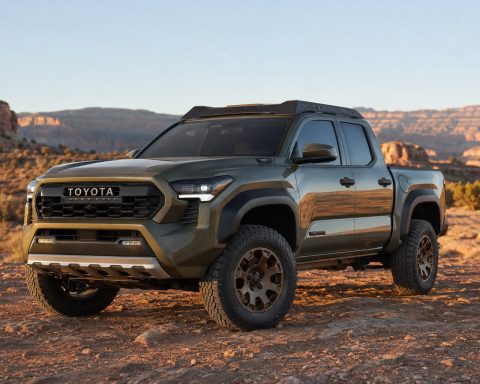
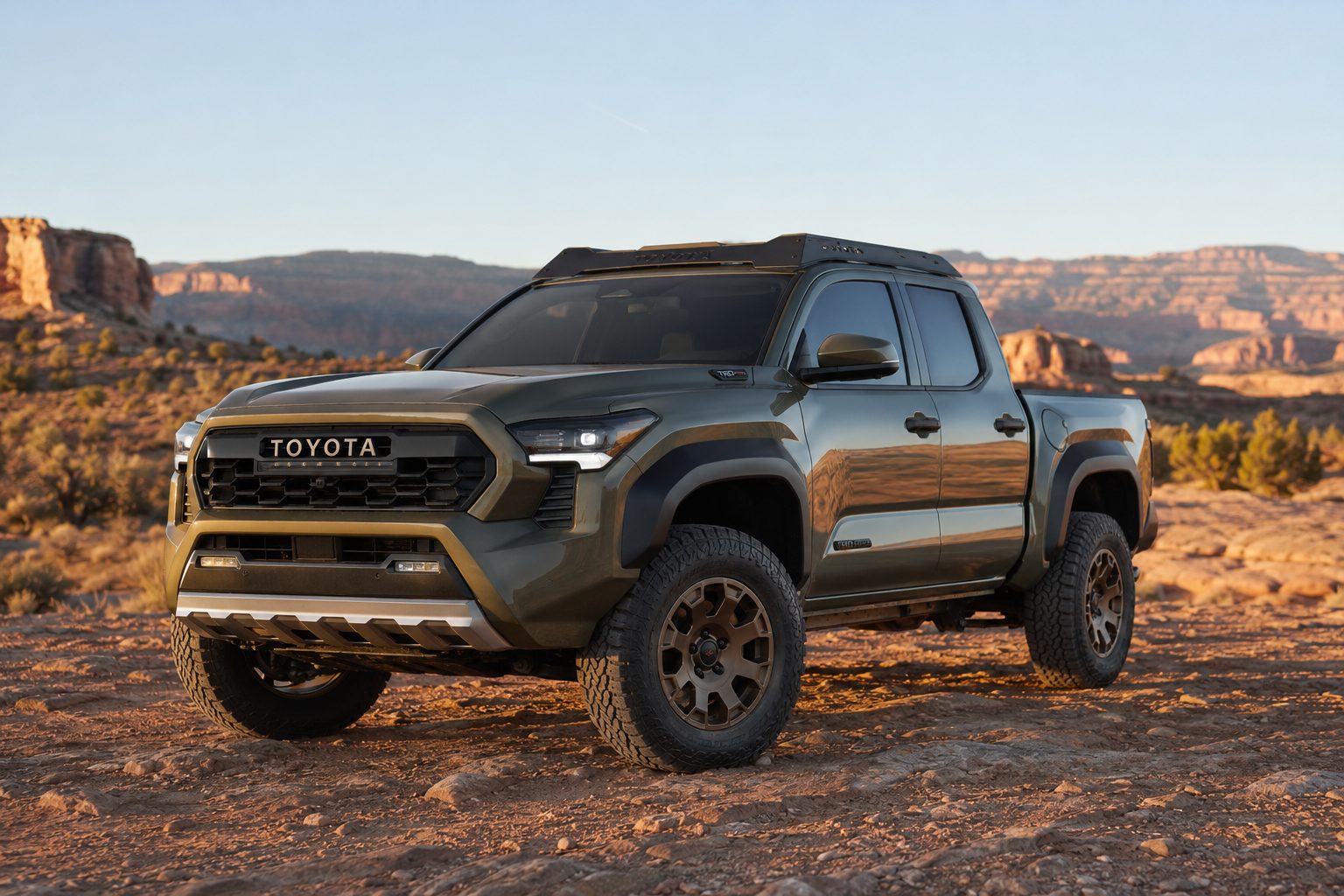
Toyota will recall 48,280 vehicles in the United States, as stated in a federal filing. This recall involves select 2024 Tacoma Hybrid models and 2024-2025 Tacoma trucks. The issue concerns a metal flange on either the front or rear shock absorber, which may corrode and break.
The oil reservoir could separate. The NHTSA stated: “An oil reservoir that detaches can create a road hazard, increasing the risk of a crash.” Dealers will check and replace impacted shock assemblies at no cost. NHTSA recall record
| Recall measure | Value | Investor context |
|---|---|---|
| Vehicles included in recall | 48,280 | Ongoing U.S. recall effort |
| Portion of Toyota Q2 U.S. sales | 7.2% | For scale reference, not reflecting costs |
| Percentage of previous Tacoma recall | 21.7% | Relative to 222,000 vehicles recalled in 2025 |
| Anticipated notification mail date | September 21, 2026 | Deadline for informing affected customers |
The number impacted represents around 7.2% of Toyota Motor North America’s 673,971 sales in the second quarter. The percentage signals possible service requirements rather than implications for profits. Final costs will be influenced by inspection uptake, necessity for replacements, and supplier reimbursements.
The current recall affects fewer vehicles than Toyota’s earlier Tacoma campaign. That 2025 recall was broadened to approximately 222,000 four-wheel-drive trucks due to potential rear brake-hose issues. The number of vehicles involved in the new action represents about 22% of that figure.
Analysts keep a positive outlook. Out of 19 analysts surveyed, 14 rated the stock as buy, while five rated it hold and none recommended selling. The consensus target of ¥3,647.1 was 24.5% higher than the current intraday level. Citi increased its price target to ¥3,800 on Tuesday.
| Analyst view | Rating | Target | Upside to ¥2,929 |
|---|---|---|---|
| Consensus from 19 analysts | 14 buy / 5 hold / 0 sell | ¥3,647.1 | 24.5% |
| Citi, August 18 | Buy | ¥3,800 | 29.7% |
| Nomura, August 5 | Hold | ¥3,250 | 11.0% |
| CLSA, July 23 | Buy | ¥3,250 | 11.0% |
Valuation provides some buffer. Toyota was valued at roughly 8.3 times trailing earnings, according to the same lagging data. However, its operating margin declined to 7.4% for the year ended March 2026, compared to 10.0% the previous year.
| Investor measure | Latest | Comparison |
|---|---|---|
| Share price | ¥2,929.0 | down 14.1% this year |
| Trailing P/E | 8.3x | Suzuki at 7.5x |
| FY2026 operating margin | 7.4% | 10.0% expected in FY2025 |
| Recall size | 48,280 vehicles | 7.2% of U.S. sales in Q2 |
The immediate challenge is execution. Investors will monitor parts availability, dealer efficiency, and any growth in population. The September mailing deadline also establishes a clear service timeline.
Risks: Discovery of further corrosion may expand the campaign or increase repair expenses. Fluctuations in currency, tariffs, and weaker vehicle demand could have a greater impact on earnings than the effects of this recall.
At present, the relative-price indicator remains subdued. Toyota’s stock declined, though the drop was smaller compared to the group of peers. This positions the recall as a quantifiable cost, rather than an isolated catalyst for a valuation shift.
Related articles: Stock Market

Recall headline, sector-sized move
Tokyo market open · TradingView data delayed 20 minutes