
TORONTO, August 25, 2026, 03:01 EDT — North American stock markets did not open for trading.
- WestJet cabin crew have ratified a three-year agreement that includes wage increases exceeding 18%.
- The agreement includes pay for ground tasks, broadening the scope of compensated hours in the industry.
- A basic basket of U.S. airline stocks climbed 0.62% on Monday, while the S&P 500 fell 0.28%.
WestJet’s recently negotiated contract for cabin crew sets a new cost standard among North American airlines. The major change is not just the highlighted pay raise, but the broadened scope of paid time that now extends past actual flight hours.
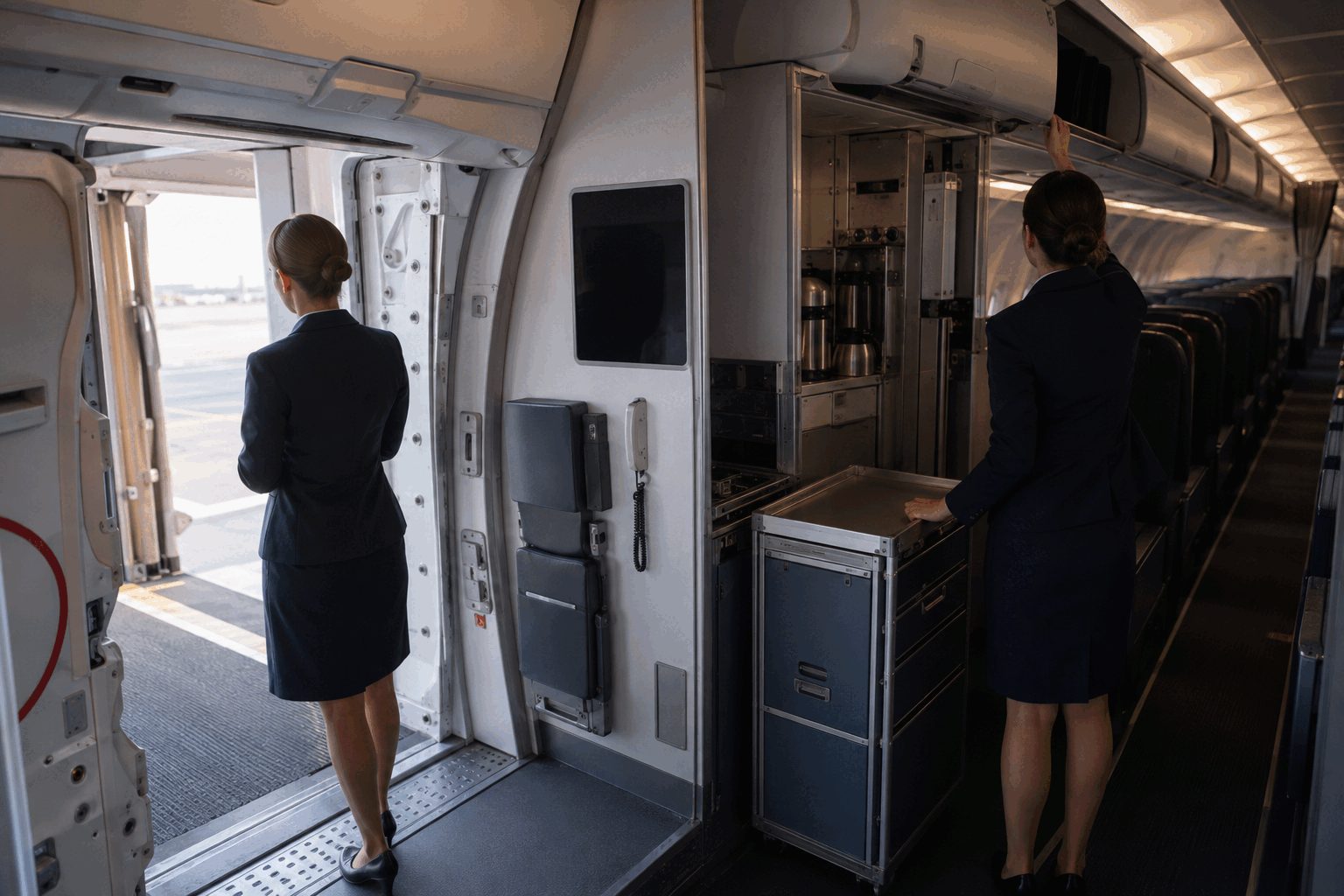
After an August walkout, flight attendants have voted in favour of the deal, with 90.2% backing. The agreement, which applies to roughly 4,400 employees, will boost wages by over 18% across three years. Additionally, it introduces a duty-period premium for tasks that were not previously included in regular flight pay.
The pay scale begins with a 13% raise in October, followed by a 2.75% increase in January and a 2.5% boost at the start of 2028. When compounded in sequence, these gains total roughly 18.85%.
The new premium is significant since attendants begin work prior to the aircraft doors closing. Tasks such as check-in, boarding and duties after landing can extend a shift, though they do not add to airborne hours. WestJet has not revealed details of how the premium is calculated, leaving its impact on unit costs undetermined for now.
| Canadian cabin-crew benchmark | WestJet | Air Canada |
|---|---|---|
| Number of employees covered | Roughly 4,400 | Roughly 15,000 |
| Main wage path | 13%, followed by 2.75%, followed by 2.5% | First year: 8%–12% for mainline staff; 13% for Rouge unit |
| Subsequent increases | Applies through December 2028 | 3%, then 2.5%, then 2.75% |
| Compensation for ground duty | Introduced a new premium for duty periods; formula not disclosed | Set at 60% of the hourly wage, increasing to 70% in 2028 |
Air Canada TSE:AC currently provides pay for specified ground time, starting at 60% of hourly wages, increasing to 70% in 2028. American Airlines NASDAQ:AAL, Alaska Air Group NYSE:ALK, Delta Air Lines NYSE:DAL, and United Airlines Holdings NASDAQ:UAL also offer compensation for boarding duties or designated ground activities.
The WestJet deal now stands as a benchmark for the industry. It restricts management’s leeway to classify ground tasks as a static unpaid period. Investors will require transparency regarding compensated duty hours, beyond simply knowing wage increase rates in contracts.
Markets showed limited reaction. Onex Corp. (TSE:ONEX), which holds a majority stake in WestJet, ended Monday at C$114.15, rising 0.67%. A straightforward, equally weighted group of four U.S. airline stocks advanced 0.62%. The S&P 500 slipped 0.28%.
| Listed exposure | August 24 close | Daily move |
|---|---|---|
| Onex (TSE:ONEX) | C$114.15 | up 0.67% |
| JetBlue Airways NASDAQ:JBLU | $4.95 | gained 1.23% |
| Southwest Airlines NYSE:LUV | $40.71 | rose 0.82% |
| Delta Air Lines NYSE:DAL | $82.48 | added 0.08% |
| United Airlines NASDAQ:UAL | $113.57 | increased 0.35% |
| S&P 500 | 7,652.86 | fell 0.28% |
The agreement eliminates the threat of immediate disruption. WestJet halted scheduled Boeing 737 and 787 services on August 2. A tentative agreement was finalized between the airline and the union on August 3, enabling flights to restart.
Chief Executive Alexis von Hoensbroech stated the deal “modernizes how cabin crew are compensated.” The company described it as establishing a basis for ongoing operations and service dependability. WestJet statement
Operating leverage is the next investor test. Airlines can handle increased labor costs by flying fuller planes, maintaining stronger ticket prices, or improving schedule efficiency. If these measures are unsuccessful, higher costs will impact cost per available seat mile and margins.
Risks: The premium calculation is not public. Fluctuations in fuel costs, shifts in demand, and unexpected disruptions may outweigh labor-related impacts. Rapid schedule normalization could mitigate the earnings hit; further staffing strains would intensify it.
As Toronto and U.S. markets resume trading Tuesday, focus will be on Onex and airline sector counterparts. Key indicators will follow, including completed WestJet scheduling, fare adjustments, and any updates regarding paid duty hours.
Related articles: NASDAQ:UAL