
LONDON, August 25, 2026, 10:56 BST
- Ticketmaster cancelled a small batch of Olivia Rodrigo tickets that breached sale terms.
- Recovered seats will return at original prices; the company did not disclose the count.
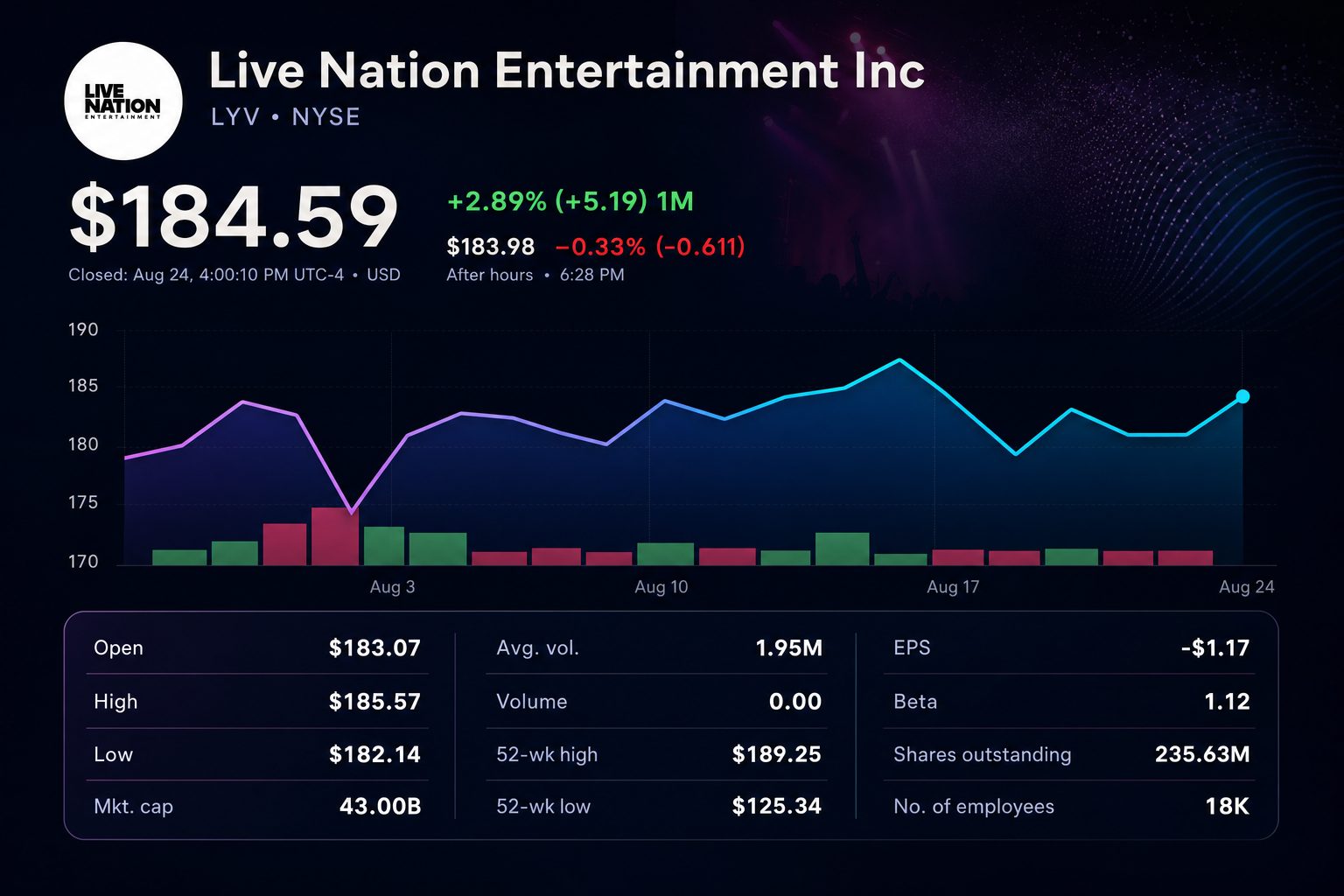
- Live Nation closed Monday at $184.59, 2.5% below its 52-week high.
- Ticketing revenue grew 15% on 8% more fee-bearing tickets in the second quarter.
Ticketmaster’s latest ticket recovery puts anti-scalping controls back at the centre of the investment case for parent Live Nation Entertainment, Inc. (NYSE: LYV). The group is defending a fast-growing, high-margin ticketing engine while courts test its market power.
The operating leverage is clear. Second-quarter Ticketmaster revenue rose 15% while fee-bearing ticket volume increased 8%. On the reported figures, revenue per fee-bearing ticket was about $9.47. That is roughly 6.5% higher year on year, although mix and timing also affect the calculation.
Ticketmaster cancelled a small batch of tickets for Olivia Rodrigo’s Unraveled Tour. It said the purchases broke sale rules. The seats are being offered again at original prices, with successful applicants due to hear by August 28.
Recovered tickets “are ticket purchases that broke the rules of the sales and are being released directly back to fans,” Ticketmaster said. The company did not give a cancellation total. Music Business Worldwide
That enforcement matters beyond one tour. Ticketmaster said North American secondary-ticket volume was flat last quarter. The business now represents a low-double-digit share of gross transaction value, after efforts to curb bots and scalpers.
The regulatory backdrop is less settled. A Manhattan jury found in April that Live Nation and Ticketmaster operated an illegal monopoly. Live Nation is seeking judgment in its favour or a new trial, and the judge has not ruled on those motions. A fresh Wall Street Journal report renewed scrutiny of the Justice Department’s earlier settlement.
Investors have so far looked through that risk. Live Nation rose 1.52% on Monday to $184.59. Volume was 1.7 million shares, about 26% below its 50-day average. The close was 2.46% under the August 14 high of $189.25.
Ticketmaster produced $852 million of quarterly revenue and $331 million of adjusted operating income. Its 38.8% adjusted margin was nearly unchanged. Ticketing generated only 11.1% of group revenue, yet its adjusted operating income equalled about 40% of the consolidated total.
Analysts remain mostly positive after July’s results. Their targets leave differing buffers for legal remedies and continued ticketing growth.
| Firm | Date | Rating | Target | Upside vs. $184.59 |
|---|---|---|---|---|
| Citigroup | Aug. 3, 2026 | Buy | $212 | 14.8% |
| Guggenheim | July 31, 2026 | Buy | $218 | 18.1% |
| Oppenheimer | July 31, 2026 | Outperform | $210 | 13.8% |
| Susquehanna | July 31, 2026 | Hold | $187 | 1.3% |
The consensus target is $201.96, about 9.4% above Monday’s close. That spread is modest for a company carrying material remedy risk. It implies investors are paying mainly for execution, not a wide margin of safety.
Live Nation reported $9.07 billion of cash at June 30 and $9.20 billion of debt. Much of the balance sheet reflects ticketing client funds, deferred revenue and venue financing. The company also had $7.33 billion of deferred revenue.
Risks: A tougher court remedy could restrict Ticketmaster contracts, fees or ownership. Erroneous cancellations could also damage trust. Strong concert demand, however, may keep volumes and pricing firm.
The next checkpoints are practical. Rodrigo applicants should receive allocations by August 28. Investors then need the judge’s rulings and evidence that anti-scalping controls preserve growth without adding costly friction.
Related articles: NYSE:LYV