
Druckenmiller warns $4 billion Treasury buybacks could undermine market confidence

Druckenmiller warns $4 billion Treasury buybacks could undermine market confidence

WASHINGTON, August 25, 2026, 06:27 EDT – Investor Stanley Druckenmiller said $4 billion in Treasury buybacks create risks for market credibility.

  • Stanley Druckenmiller warns that increasing long-bond buybacks could undermine the credibility of the Treasury market.
  • From September 9, the liquidity-support ceiling increases to a minimum of $4 billion per operation.
  • The cap represents 16% of the $25 billion 30-year auction in August, but accounts for 3.2% of the total $125 billion refunding.
  • The 30-year yield hovered around 5.21% early Tuesday, having reached highs previously seen in 2007.

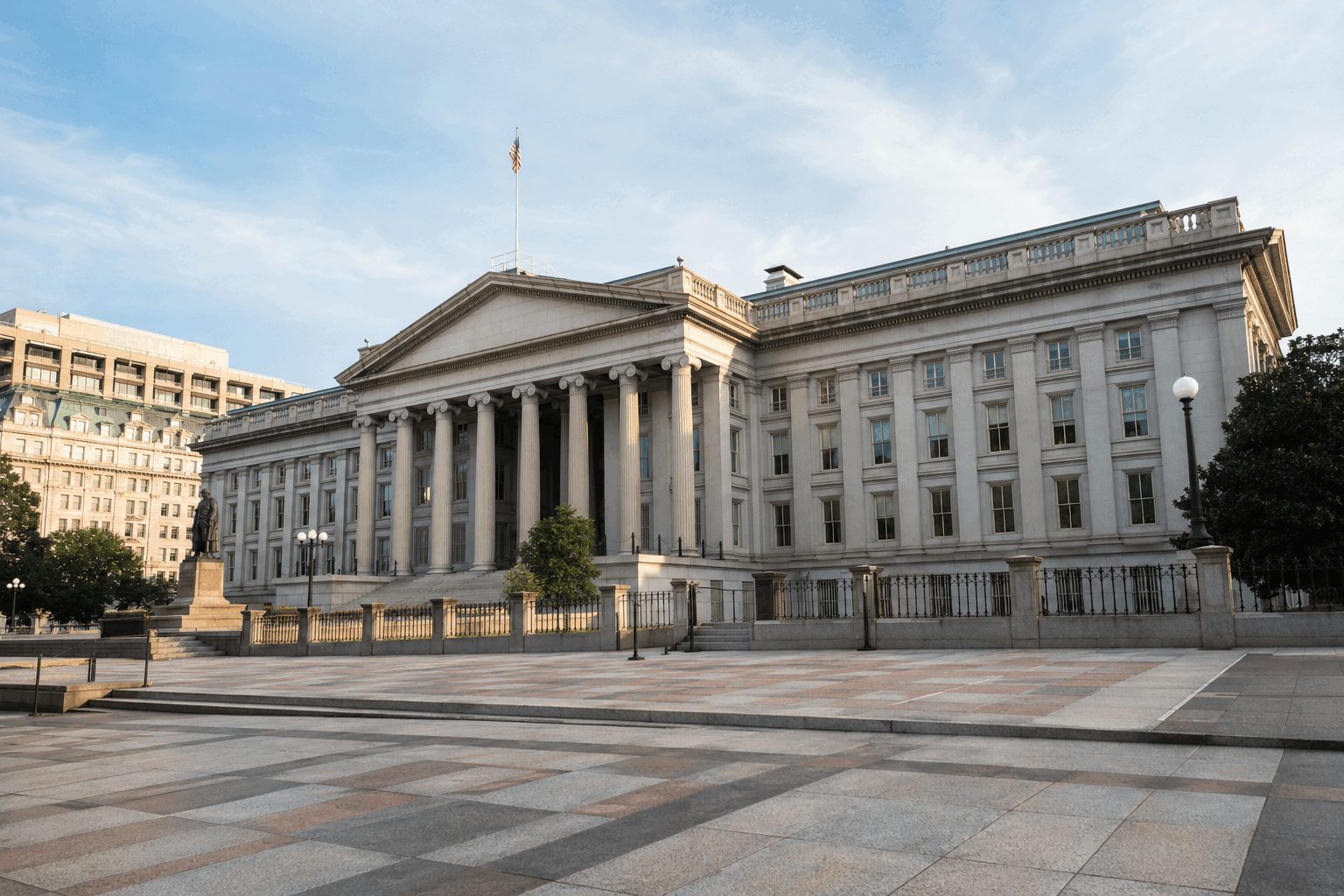
Stanley Druckenmiller criticized the U.S. Treasury’s decision to expand long-bond buybacks on Tuesday, describing it as a step that undermines credibility by attempting to control prices following a spike in long yields. His comments are significant since investors influence borrowing costs for mortgages, corporations, and the federal government.

The Treasury states that these operations aim to provide liquidity assistance rather than manage yields. The cap for each purchase will rise from $2 billion to a minimum of $4 billion. The timetable includes 10-to-20-year and 20-to-30-year nominal coupon bonds, spanning September 9 to November 4.

The figures highlight the main source of investor unease. With $4 billion, the operation lacks scale to steer the Treasury market, though its timing can obscure the boundary between maintaining market function and influencing prices.

Funding measureAmountNew buyback cap as share
Previous cap for long-end buybacks$2 billion200%
Revised single operation capAt minimum $4 billion100%
30-year auction in August$25 billion16.0%
Quarterly refunding in August$125 billion3.2%
Estimated Treasury cash holdingsRoughly $940 billion0.4%
Sources: U.S. Treasury refunding documents and Reuters; calculations use the stated $4 billion cap.

The U.S. Treasury’s August refunding generated $28.7 billion in new cash from private investors, including $58 billion in three-year notes, $42 billion in 10-year notes, and $25 billion in 30-year bonds. This volume of issuance far exceeds any individual buyback.

Druckenmiller’s concern relates to signalling rather than the scale alone. “You can’t buy your way out of a solvency conversation with liquidity tools,” he said. Increased operations came as the 30-year yield stayed close to its highest in almost twenty years.

Date2-year10-year30-year30s–2s spread
August 194.19%4.65%5.19%100 bp
August 214.24%4.74%5.27%103 bp
August 244.24%4.70%5.23%99 bp
Official par yields at the daily close. Source: U.S. Treasury.

The curve stays sharply sloped. On Monday, the 30-year yield exceeded the two-year rate by 99 basis points. When Treasury revealed the expanded operations on August 19, the spread stood at 100 basis points.

Bond yields slipped early on Tuesday as oil prices declined. The 10-year yield hovered around 4.68%, while the 30-year yield was close to 5.21% as of 06:27 EDT. The drop failed to reverse the repricing seen at the long end.

Treasury Secretary Scott Bessent emphasized that the standard auction timetable is unchanged. “We haven’t bought a single bond yet,” he said Monday. Authorities are able to support upcoming actions using a cash reserve nearing $940 billion. Reuters

Investor testEvidence to watchLikely market signal
Liquidity support proves effectiveNarrower bid-ask spreads and robust offersReduced volatility and no persistent yield depression
Worries about price-management intensifyBuybacks consistently follow sharp yield risesIncreased term premium, lower demand for long bonds
Fiscal concerns take precedenceAuctions require greater concessionsHigher mortgage rates and strain on long-dated assets

Initial operations will offer the most reliable test. Investors ought to assess accepted pricing against secondary-market values and auction concessions. A brief rally by itself would not confirm sustained demand.

Risks: Light trading volumes typical of late summer may amplify market swings. A drop in inflation or slower economic growth could also reduce long yields on their own, obscuring any impact tied to credibility.

Macro / Policy Dashboard

Stanley Druckenmiller and the $4 Billion Treasury Buyback Test

The investor question is not whether one operation can overpower the bond market. It is whether the expanded tool adds liquidity without adding a credibility premium.
New long-end cap
$4B+
Per liquidity-support operation, doubled from $2 billion. Effective September 9, 2026.
30-year yield
5.21%
Market snapshot at 06:27 EDT on August 25, 2026; about 2 basis points lower on the session.
Curve signal
+99 bp
30-year minus 2-year par yield at the August 24 close. A steep curve keeps the term-premium debate alive.
Official U.S. par yield curve
1Y2Y5Y10Y20Y30Y4.04%4.24%4.41%4.70%5.21%5.23%
Official close, August 24, 2026. The 20-to-30-year sector is the focus of the enlarged operations.
What moved yields today
Oil −2.8%10Y −2.2 bp30Y −2.0 bp

Lower crude eased inflation pressure early Tuesday. The structural question remains fiscal supply and long-end demand.

Scale: liquidity tool versus funding needs
Old buyback cap
$2B
New buyback cap
$4B+
30-year auction
$25B
Quarterly refunding
$125B
Possible cash balance
~$940B
Linear comparison. The $4 billion cap is 16% of one $25 billion 30-year auction and 3.2% of August’s $125 billion refunding.
Policy calendar
August 19Treasury announces the doubled long-end cap.
September 9Enlarged 10-to-30-year operations begin.
November 4Scheduled program window ends; reassessment follows.
Druckenmiller’s test
Plumbing or price support?
If purchases repeatedly follow yield spikes, investors may demand a larger term premium even when market liquidity improves.
Market transmission
MortgagesLong yields feed housing finance. A lasting term premium lifts affordability pressure.
Duration assetsHigher discount rates weigh on growth equities and long-dated cash flows.
Dollar & goldCredibility concerns can weaken the dollar case while supporting hard assets.
Bank portfoliosLong-bond volatility changes unrealized losses, hedging costs and deposit economics.
Decision table
OutcomeWhat confirms itInvestor read-through
Liquidity successTighter spreads; strong offers; no lasting yield suppressionLower volatility, neutral credibility effect
Mixed resultBetter liquidity, but buybacks cluster after selloffsTerm premium stays elevated
Credibility lossWeak auctions need concessions while operations expandHigher long yields and broader duration pressure
Shan Ahmed Khan

Shan Ahmed Khan is a senior markets reporter at TS2.tech. His coverage ranges from stocks and technology to economic developments across global markets. He worked in investment research and market analysis before becoming a financial journalist and is a graduate of the Lahore University of Management Sciences (LUMS).

US Stock Market Today Updates

AI PORTFOLIO

Top Stock Picks

Today’s highest-ranked model selections.

#1 STRONG BUY

Kodiak Gas Services

NYSE:KGS • Energy infrastructure 88/100 • ★★★★☆
#2 STRONG BUY

Neurocrine Biosciences

NASDAQ:NBIX • Healthcare 87/100 • ★★★★☆
#3 STRONG BUY

Alphabet Class A

NASDAQ:GOOGL • Communication services 85/100 • ★★★★☆
#4 BUY ON WEAKNESS

Applied Materials

NASDAQ:AMAT • Semiconductor equipment 84/100 • ★★★★☆
#5 ACCUMULATE

JPMorgan Chase

NYSE:JPM • Financials 80/100 • ★★★★☆
View full portfolio
Editorial model selection. Not personalised advice.
MARKET CALENDAR

Key Events Today

The catalysts most likely to move markets.

#1

Consumer Confidence • 10:00 ET

A large surprise can reset expectations for household spending and near-term growth, with read-through to Treasuries, USD and cyclical stocks.

#2

New Home Sales • 10:00 ET

Housing remains highly rate-sensitive; the print can move homebuilders, mortgage-sensitive names and the long end of the Treasury curve.

#3

Intuit earnings • After close

Guidance can influence software multiples and sentiment around U.S. small-business activity.

View full calendar
Times and estimates may change. Verify before trading.
Sony’s PlayStation Boycott Puts to the Test a Digital Volume 34-Fold Greater Than Physical Game Sales
Previous Story

Sony’s PlayStation Boycott Puts to the Test a Digital Volume 34-Fold Greater Than Physical Game Sales

Australia Capital Gains Tax Draft Tests A$372 Billion of Super Assets
Next Story

Australia Capital Gains Tax Draft Tests A$372 Billion of Super Assets