
SANTA CLARA, California, August 25, 2026, 16:15 EDT
- Oklo stock finished at $44.26, rising 11.5%, with 11.9 million shares traded.
- The increase boosted Oklo’s market capitalization by approximately $850 million.
- Ontario’s premier listed uranium as one of the Canadian exports that could be leveraged in the ongoing U.S. trade dispute.
- As of June 30, Oklo reported holding $3.01 billion in cash and marketable securities.
Shares of Oklo Inc. NYSE:OKLO rose 11.5% on Tuesday, as renewed U.S.-Canada trade friction renewed concerns over uranium supply, impacting advanced-nuclear stocks. Oklo finished the session at $44.26, an increase of $4.57.
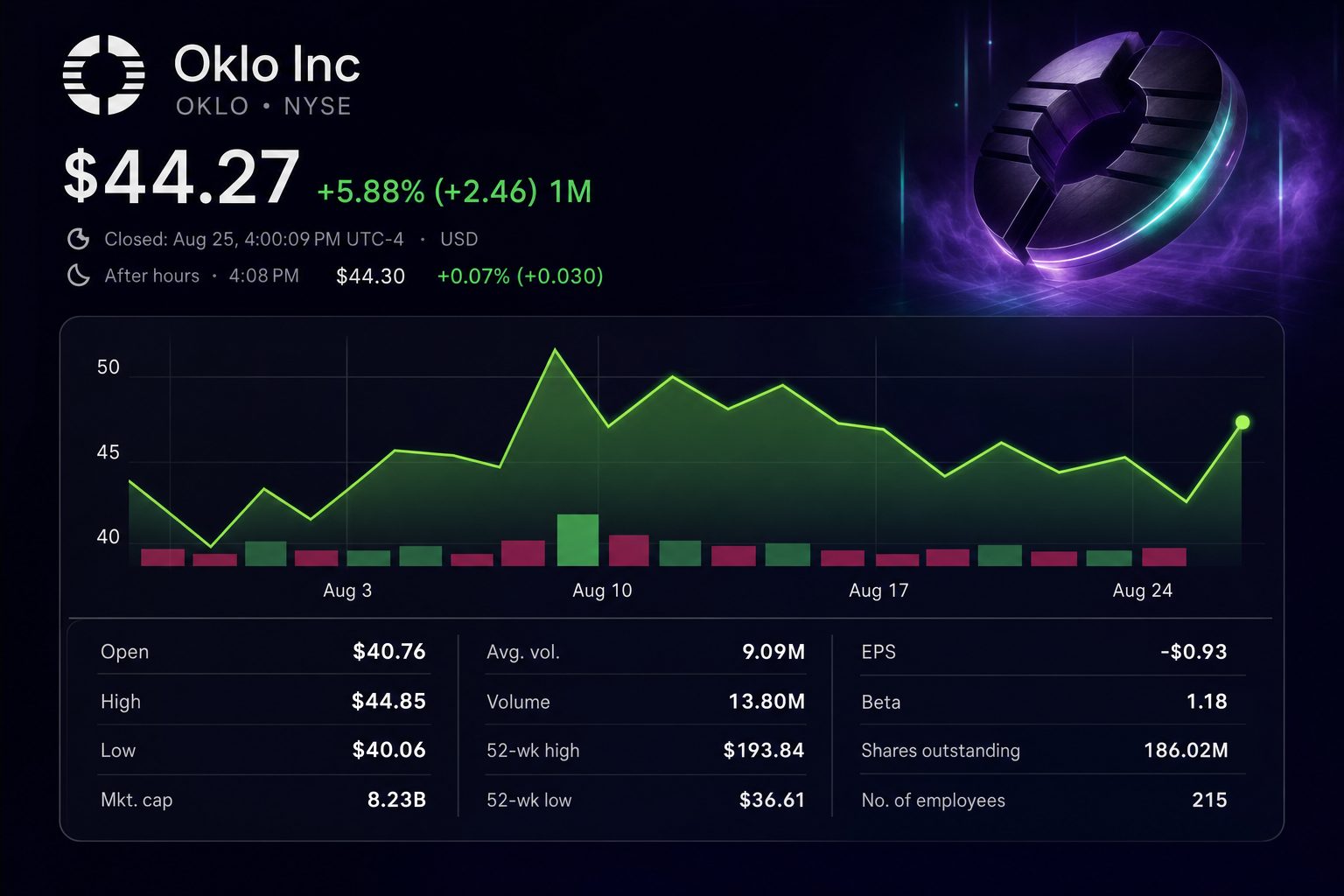
Oklo’s market capitalization increased by approximately $850 million following the move, using its closing market value. Trading volume hit 11.9 million shares, about 11% higher than its recent average daily volume.
The adjustment in value stands out as it was driven by political leverage instead of additional contracted revenue. Oklo’s benefit amounted to roughly 6.7 times the $126.9 million it invested in property and equipment in the first half.
Ontario Premier Doug Ford stated that Canada may rely on its electricity, oil, nickel, uranium and potash if the conflict escalates. He clarified this was not an export directive. Meanwhile, Ottawa introduced retaliatory tariffs on approximately $20 billion worth of U.S. imports in response to Washington’s recent actions.
The difference is significant. Uranium supply impacts fuel availability and the scheduling of projects, yet a provincial threat alone does not immediately affect Oklo’s customer backlog or its short-term cash flow.
However, Oklo’s approach to fuel keeps the signal significant. The Aurora reactors depend on advanced fuels, and Oklo aims to expand into isotope and fuel-cycle operations. Its most recent filing highlights risk factors linked to securing high-assay low-enriched uranium, plutonium, and recycled fuels.
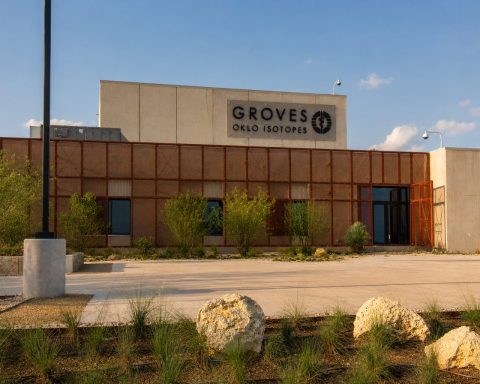
Operational data has strengthened. Oklo’s Groves low-power test reactor achieved initial criticality on August 5, within a year following construction start. It became the first privately located reactor in the Energy Department’s demonstration scheme to achieve this milestone.
Chief Executive Jacob DeWitte said, “Reaching criticality in less than a year is an incredible milestone for our team.” The Groves reactor is designed to enable future commercial isotope production. Oklo’s August 6 announcement
Investors have provided significant funding. At June 30, Oklo reported $3.01 billion in cash and marketable debt securities, following $1.85 billion raised from at-the-market share offerings during the first half.
Expansion costs stay high. Operating cash outflow in the first half reached $65.5 million, and the firm projected $120 million to $150 million for 2026. The company anticipates full-year expenditures on property and equipment will total between $400 million and $500 million.
Wall Street sentiment is optimistic yet split on valuation. The consensus target suggests an upside of around 80% from Tuesday’s closing price, but the lowest target is significantly under that level.
| Analyst measure | Current reading | Signal versus $44.26 close |
|---|---|---|
| Consensus rating | Buy: 15 / Hold: 9 / Sell: 1 | Majority positive, no full agreement |
| Average target | $79.88 | 80% potential increase |
| Median target | $81.50 | 84% potential upside |
| Target range | $14 to $130 | Extensive valuation spread |
| Recent calls | Truist Hold $51; Canaccord Buy $100; H.C. Wainwright Buy $90 | Forecasts differ markedly |
The valuation differential indicates Oklo is at an early growth stage with a sizable balance sheet and a short track record. As of Tuesday’s close, Oklo was trading at roughly 2.7 times its liquidity in June, excluding any value from reactor developments or prospective isotope production.
Risks: Canada’s uranium alert could simply be bargaining language. Oklo is also exposed to regulatory, construction, fuel supply and dilution risk, while commercial reactors have yet to generate operating income.
The following assessment is if worries over uranium will result in a policy shift or diminish following talks. Should supply limits not be imposed, investor attention is expected to return to reactor progress and Oklo’s efforts to turn its $3 billion in funding into usable assets.
Related articles: NYSE:OKLO