
NEW YORK, July 19, 2026, 18:06 EDT
- Oklo shares finished at $41.11 on Friday, recording a 15.8% decline over the week.
- NuScale dropped 14.6%, while the VanEck nuclear fund declined by 9.0%.
- As of March 31, Oklo reported holding $2.537 billion in cash and securities.
U.S. cash markets did not open on Sunday, following Oklo’s steep fall over the previous week. The stock hit a low of $39.53 on Friday before ending the session at $41.11.
The shift outpaced the broader decline in nuclear stocks. The results also distinguished reactor makers from a long-standing plant operator.
| Security | July 17 close | July 10–17 move |
|---|---|---|
| Oklo Inc. NYSE:OKLO | $41.11 | -15.8% |
| NuScale Power Corp. NYSE:SMR | $7.72 | -14.6% |
| VanEck Uranium and Nuclear ETF (NYSEARCA:NLR) | $104.20 | -9.0% |
| Constellation Energy Corp. NASDAQ:CEG | $252.39 | +0.4% |
Weekly movements reflect closing prices on July 10 and July 17. Constellation runs the biggest nuclear fleet in the U.S.
The gap indicates investors are placing a higher premium on timetable risk. The balance sheet does not indicate an imminent liquidity crunch.
Oklo disclosed $2.537 billion in cash and marketable securities as of March 31. The company used $17.9 million in operating cash in the first quarter. Spending on property and equipment totaled $32.8 million.
Initial estimate: the combined cash expenditures amounted to approximately $50.7 million. Disclosed resources were equivalent to about 50 quarters if using the first quarter’s rate. This does not represent a forecast for runway.
The buffer was largely provided by shareholders. Oklo issued 12.38 million shares in the quarter, generating $1.182 billion in net proceeds.
The company set up a new $1 billion at-the-market offering program in May. The move allows for greater flexibility, though it could result in additional dilution.
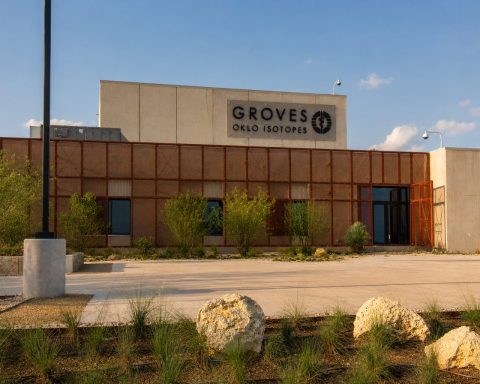
Execution now serves as the clearer immediate test. The U.S. Energy Department cleared Groves’ final safety analysis on July 1. A readiness review and final startup approval are still required prior to fuel loading and achieving criticality.
Chief Executive Jacob DeWitte stated that Groves “now moves into the final phase before startup, including readiness review, fuel loading, and criticality.” Oklo aimed for initial criticality in July. Oklo
Groves does not operate as a commercial power facility. According to the Energy Department, it is a zero-power, 100-watt critical assembly that assists with prospective isotope production.
Achieving criticality would remain significant. It would demonstrate Oklo’s ability to build and navigate regulations, but would not establish Aurora’s viability as a commercial product.
The overall market provided scant backing on Friday. The S&P 500 slipped 1.0% and the Nasdaq dropped 1.4%. Over the week, they were down 1.55% and 2.9%, respectively.
The coming week hinges on confirmed regulatory developments. Clarity on a readiness review or formal startup approval may reduce uncertainty regarding the July schedule.
Risks: Groves may fall short of its goal. Returns could face pressure from challenges such as fuel availability, licensing, construction expenses, and potential additional share offerings.
Currently, liquidity is not the main concern. Oklo lagging behind the nuclear fund indicates that investors are seeking proof it will meet its deadlines.
Related articles: NYSE:OKLO