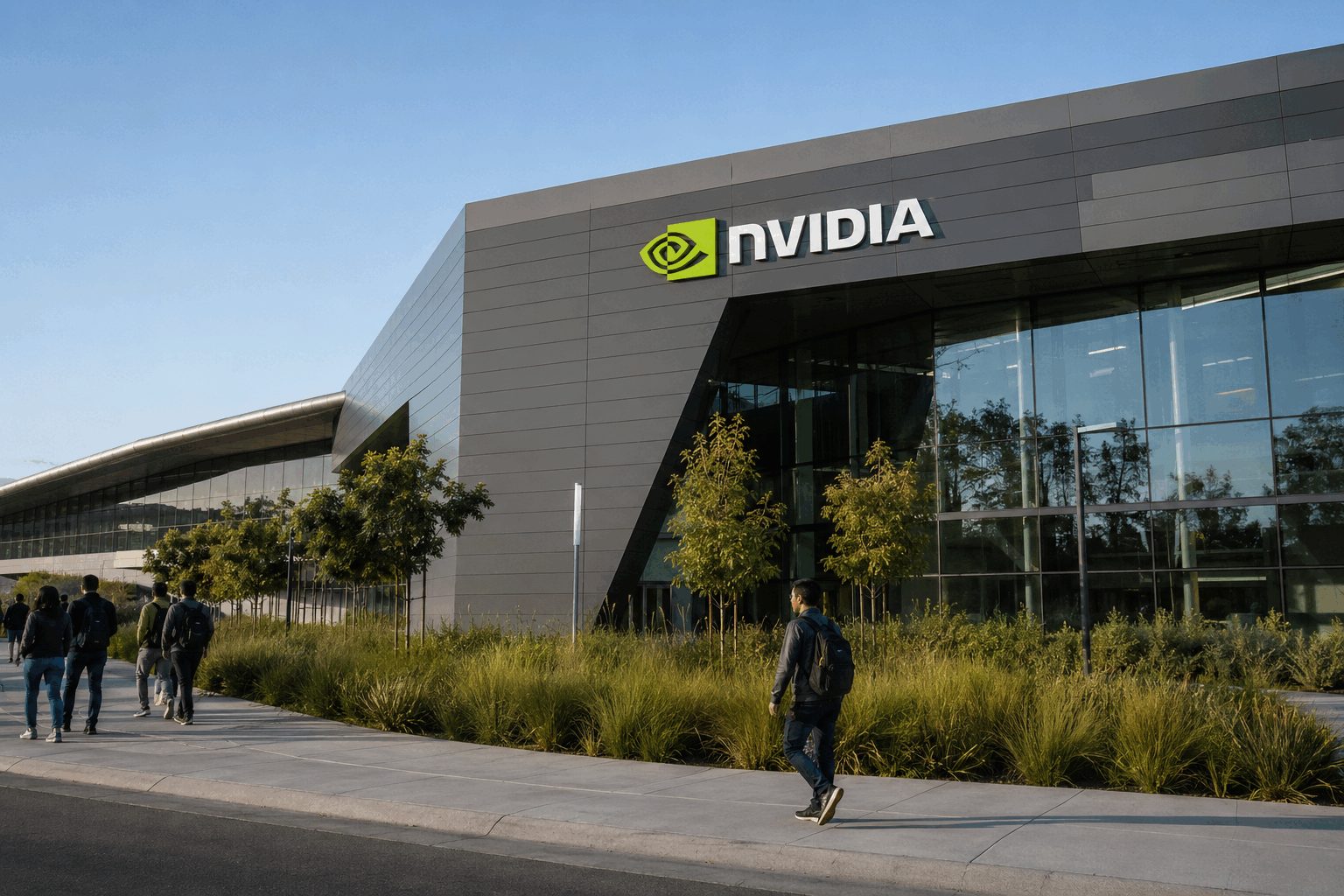

SANTA CLARA, August 28, 2026, 17:50 (EDT). Nvidia shares closed down 4.6%, losing $253 billion in market value, as investors focused on margin risks despite the company issuing a $108 billion revenue forecast.
- Nvidia finished at $217.55, falling 4.57% following an 8.74% rise on Thursday.
- The drop wiped out roughly $253 billion in equity value.
- Guidance for fiscal third-quarter revenue stood at $108 billion, while gross-margin guidance eased to 74%.
Nvidia stock dropped 4.57% on Friday, even after reporting better-than-expected quarterly results and issuing higher guidance. The decline came after shares surged 8.74% following Thursday’s earnings, as investors reassessed the company’s margin outlook.
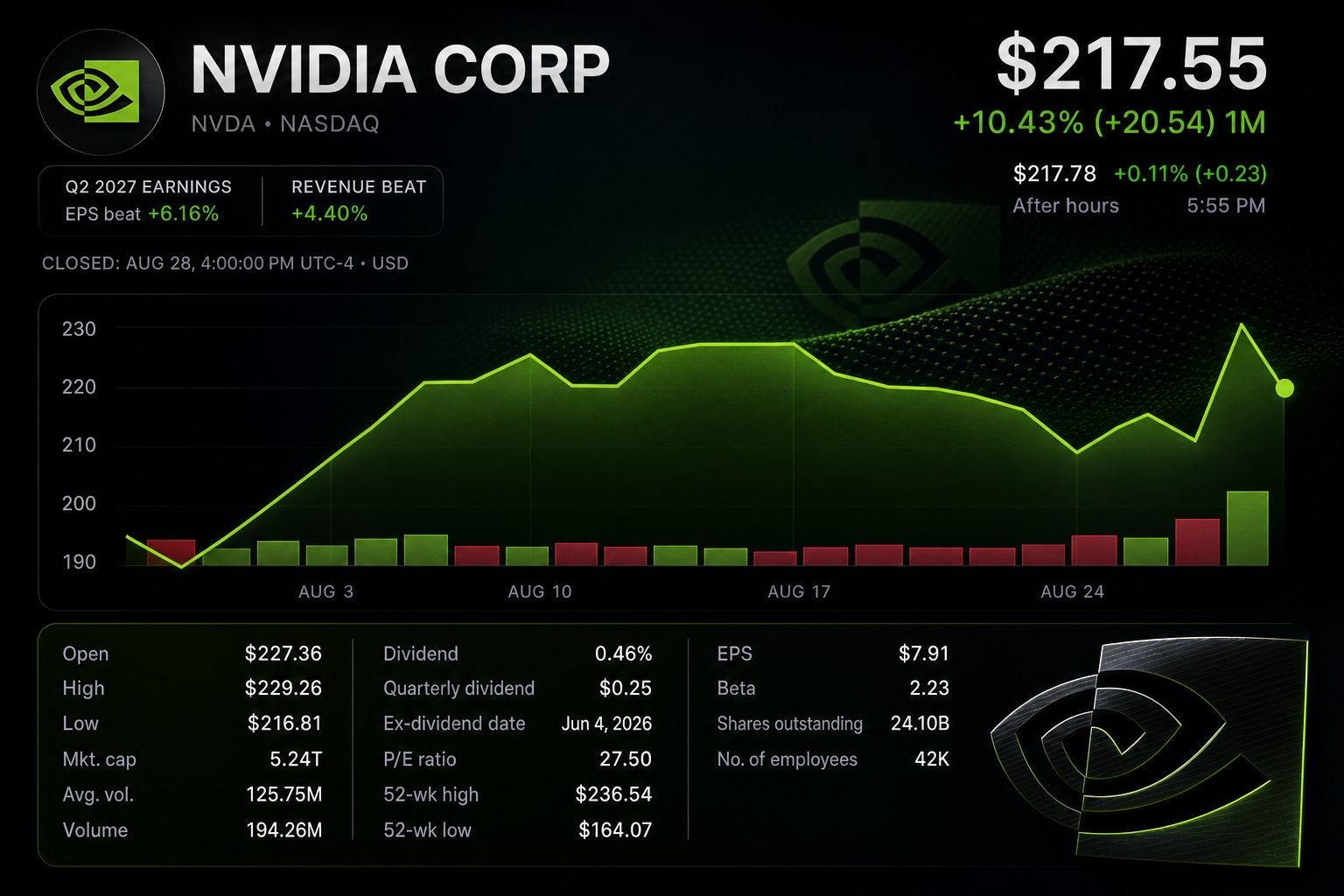
Shares ended the session at $217.55, with trading volume reaching 194.1 million shares—36% higher than its 65-day average. The decline erased about $253 billion from Nvidia’s market capitalization closing market data.
The reversal is significant as operational performance continued to be outstanding. NVIDIA Corporation (NASDAQ: NVDA) posted fiscal second-quarter revenue of $96.2 billion, marking a 106% rise on the year. Revenue from the data-centre segment climbed 117% to $89.0 billion company results.
Adjusted earnings were $2.22 per share, surpassing Wall Street’s forecast of approximately $2.09. The company projected current-quarter revenue at $108 billion, give or take 2%.
| Fiscal period | Revenue | Sequential growth | Gross margin |
|---|---|---|---|
| Q1 FY2027 actual | $81.6B | 20.0% | 74.9% |
| Q2 FY2027 actual | $96.2B | 17.9% | 75.0% |
| Q3 FY2027 guide | $108.0B ±2% | 12.2% at midpoint | 74.0% ±0.5 pt |
The outlook suggests an additional $11.8 billion in sequential revenue. However, the projected growth rate decelerates to 12.2%. Investors also noted a one-point decline in margin.
A single percentage point in gross margin amounts to roughly $1.08 billion on projected quarterly sales. This calculation helps clarify why even a forecast for record revenue has not resolved the ongoing debate over valuation.
The management outlook does not include any data-center compute revenue from China. Persistent supply constraints are another restriction. Still, Nvidia projects revenue to grow by roughly 70% in fiscal 2028, sending shares higher on Thursday Reuters.
Capital returns offer another layer of support. Nvidia distributed approximately $26 billion via dividends and share repurchases last quarter. Nearly $99 billion is still available in its buyback authorization.
Financing is another issue. Nvidia has halted a revenue-sharing credit initiative for smaller AI cloud firms, Reuters reported, referencing another outlet. While this move might ease worries about circular demand, it risks cutting off support for marginal purchasers Reuters.
Analysts continue to hold a positive outlook. According to FactSet data, there are 57 Buy ratings, seven Overweight, two Hold recommendations, and one Sell. The median price target stands at $316.60, representing an increase of roughly 46% over Friday’s closing price.
Nvidia closed with a market value close to $5.28 trillion and traded at 27.3 times its trailing earnings. At that level, every margin point becomes significant, even in the context of revenue doubling.
Risks: A rebound in Rubin supply or increased spending from hyperscalers may mean Friday’s drop is short-lived. However, weaker customer financing, restrictions in China, or ongoing margin pressure could put the present earnings multiple at risk.
Related articles: NASDAQ:NVDA




![Australia Stock Market Today 29/08/2026 [UPDATE: 08:36 AEST] [Weekly Recap + Week Ahead: Tech Rebounds Before GDP]](https://ts2.tech/wp-content/uploads/2026/08/AU-market-dashboard-2026-08-29-0830-480x384.jpg "Australia Stock Market Today 29/08/2026 [UPDATE: 08:36 AEST] [Weekly Recap + Week Ahead: Tech Rebounds Before GDP]")