
New York, August 31, 2026, 04:30 (ET) – Nokia (NOKIA.HE) stock dropped 3.6% as the company’s €732 million cash burn put added pressure on the telecom equipment maker’s efforts to grow in AI and cloud, putting focus on whether its current investments can deliver future returns.
- Nokia ADRs ended Friday at $10.21, falling 3.59%, with 50.6 million shares traded.
- Sales from AI and cloud jumped 105% on a constant currency basis, reaching €446 million.
- Free cash flow for the quarter stood at negative €732 million, even though comparable margins increased.
- The operating margin stood at minus 1.0% following accelerated restructuring.
Shares in Nokia Oyj NYSE:NOK dropped 3.6% on Friday, with investors assessing swift AI-network expansion alongside cash outflows and restructuring expenses.
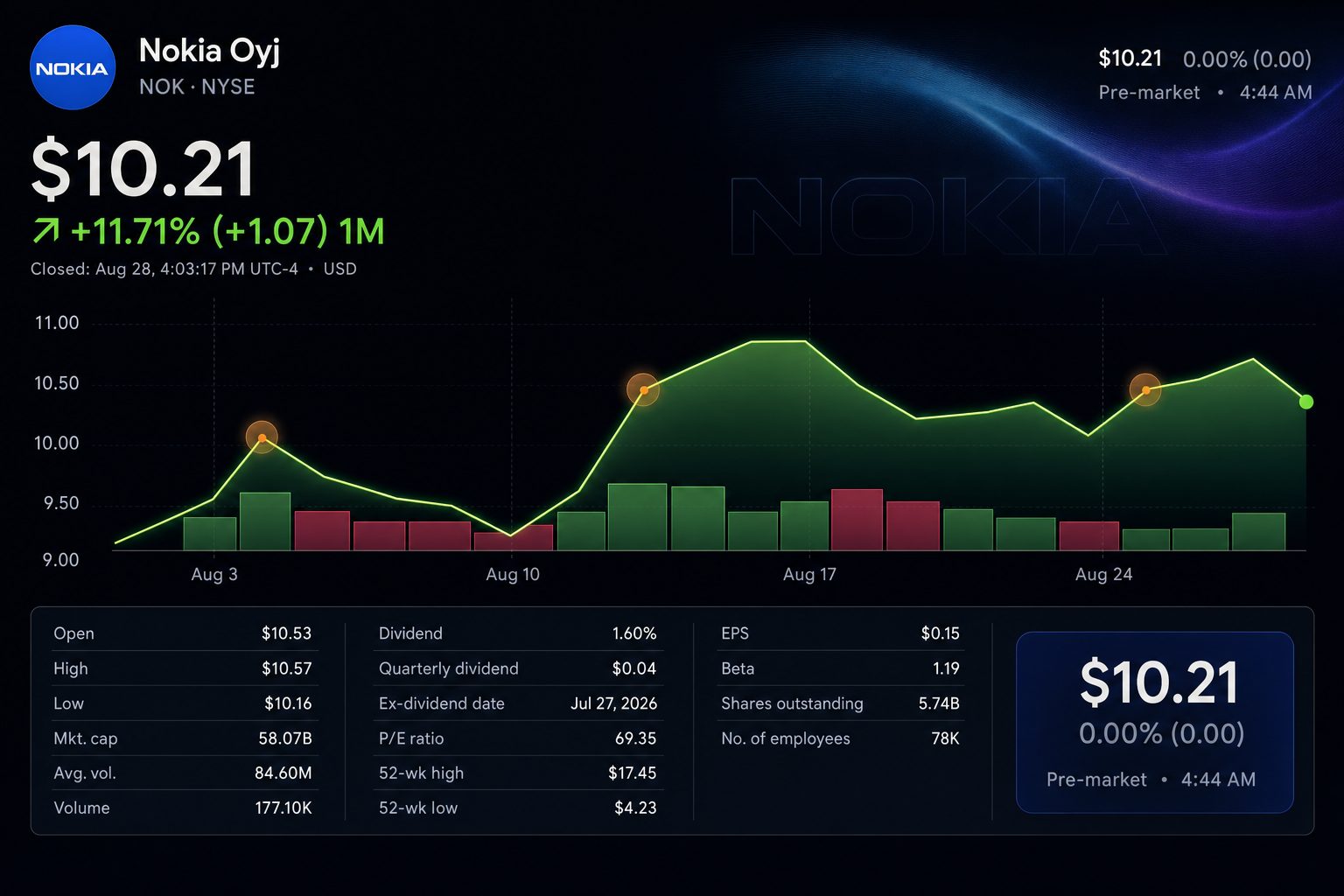
The ADR finished at $10.21, snapping a three-session run of gains. Trading volume reached 50.6 million shares, falling short of the 50-day average of 86.9 million.
Nokia reported better core operating metrics. Net sales for the second quarter climbed 8% to €4.82 billion, and the comparable operating margin was up 70 basis points to 9.0%.
Sales from AI and cloud saw strong growth, rising 105% in constant currencies to €446 million, as associated order intake came to approximately €2.8 billion.
| Q2 2026 signal | Value | Year-over-year | Investor read-through |
|---|---|---|---|
| Net sales | €4.82bn | +8% | Widespread rebound |
| AI & Cloud sales | €446m | +105% constant currency | Main growth driver |
| Comparable margin | 9.0% | +70 bp | Core performance gains |
| Reported margin | −1.0% | −430 bp | Impact from restructuring |
| Free cash flow | −€732m | €820m decline | Operational challenge |
The difference in accounting measures stays significant. Nokia reported an operating loss of €50 million following restructuring charges of €390 million, but its comparable operating profit was €434 million.
Cash flow poses a tougher challenge. About €1.15 billion was absorbed by working capital, cutting net cash and interest-bearing investments to €2.78 billion.
Management maintained its operational guidance. Nokia projects comparable operating profit between €2.1 billion and €2.6 billion, aiming for slightly above the midpoint.
The share price is still down 41.5% from its June 3 peak of $17.45. Still, the stock has posted a solid gain over the past year, keeping expectations high.
A recent valuation assessment shows the trailing price-to-earnings ratio at nearly 72 times, higher than the 57-times average for peers and above the communications sector’s average of about 34 times.
Risks: AI-related orders may fluctuate, and the conversion process could take more than twelve months. Quicker cash recovery or reduced restructuring expenses would enhance the upside scenario.
Nokia’s rerating depends on cash conversion. Even if AI revenue doubles, gains are muted if working capital and restructuring keep absorbing operating profits.
Related articles: NYSE:NOK