Date: December 9, 2025
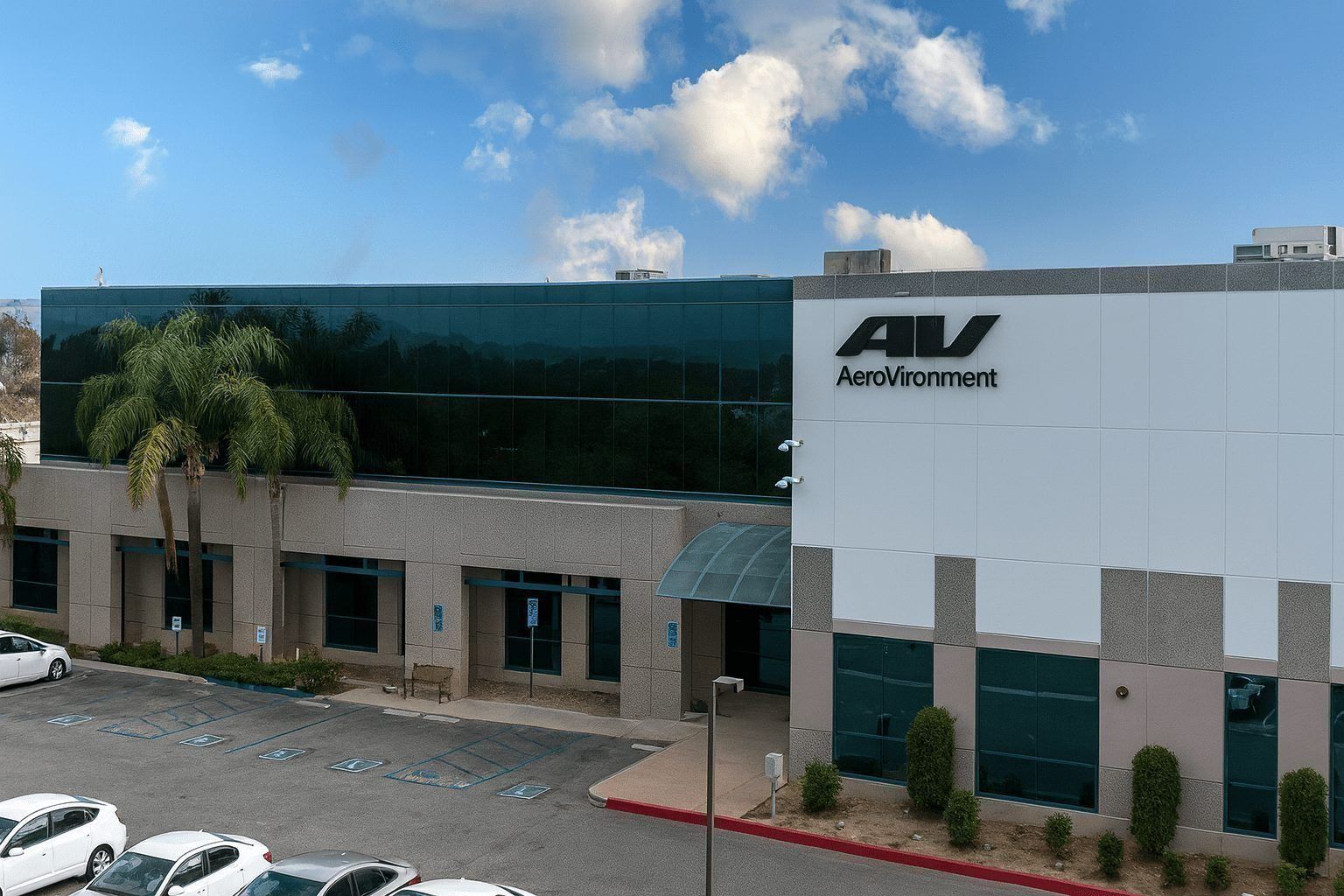
AeroVironment, Inc. (NASDAQ: AVAV), the U.S. defense-technology and drone specialist behind the Puma and Switchblade systems, heads into its fiscal Q2 2026 earnings report tonight with fresh contract wins, new software products, and a stock that is up sharply over the past year but still well below its 2025 peak.
On December 9, 2025, AVAV trades around $282 per share, giving the company a market capitalization of roughly $14 billion. The stock is up about 80–85% over the last 12 months, yet remains more than 30% below its 52‑week high of $417.86, leaving investors debating whether the latest pullback is a buying opportunity or a warning on valuation. StockAnalysis+1
At the same time, AeroVironment has secured a major $874 million U.S. Army contract, announced multiple product upgrades, and attracted bullish analyst coverage alongside some notably cautious valuation models and AI-based forecasts. Business Wire+1
AeroVironment (AVAV) stock snapshot on December 9, 2025
According to StockAnalysis and other market data providers, AeroVironment shares are trading near $282.47, with an intraday range around $275.85–$285.52. The 52‑week range runs from $102.25 to $417.86, meaning the stock is still more than 32% below its high and nearly three times above its 52‑week low. StockAnalysis+2Investing.com+2
Key valuation and performance metrics as of December 9, 2025 include: StockAnalysis+2Investing.com+2
- Market cap: ≈ $14.0–14.1 billion
- Revenue (trailing 12 months): ≈ $1.09 billion
- Net income (TTM): roughly –$45 million, leading to a negative trailing EPS
- Forward P/E: around 66x, based on consensus forward earnings
- Price‑to‑book: about 3.1x
- EV/EBITDA (TTM): well above 100x, reflecting high expectations for future growth
- 1‑year share price performance: roughly +80–84%
Because AeroVironment is still reporting negative GAAP earnings, traditional trailing P/E metrics are not very meaningful; some data providers list extremely large negative ratios solely as a mechanical result of the math. Companies Market Cap+1
New defense contracts and product news driving the AVAV story
The most important recent catalyst is a five‑year Indefinite Delivery, Indefinite Quantity (IDIQ) contract from the U.S. Army Contracting Command supporting future Foreign Military Sales (FMS) of AeroVironment systems to allied and partner forces. Business Wire
- The IDIQ ceiling is $874.26 million over five years.
- It covers multiple Group 1–3 unmanned aircraft systems and counter‑UAS systems, including JUMP 20™, P550™, Puma™, Raven™, and Titan C‑UAS™, plus training, initial spares, and logistics support. Business Wire
This contract effectively creates a framework for friendly governments to buy AeroVironment drones and counter‑drone systems through U.S. channels, reinforcing the company’s role as a key supplier for NATO and other partners.
P550 long‑range reconnaissance drone
On December 8, AeroVironment also announced a three‑year Other Transaction Agreement with a base value of $13.2 million (and options up to $42 million) to provide its newly developed P550 uncrewed aircraft system for the U.S. Army’s Long Range Reconnaissance (LRR) program. Avinc+1
The all‑battery electric P550 is described as a high‑performance Group 2 eVTOL system designed for long‑range ISR (intelligence, surveillance and reconnaissance), rapid deployment, and modular payload swapping, built on an open and scalable architecture to keep upgrade costs down. Business Wire+1
Puma Visual Navigation System (VNS) expansion
Earlier in December, AeroVironment expanded its Puma™ Visual Navigation System (VNS) kit to the Puma LE small UAS. The VNS kit enables GNSS‑denied navigation, using visual‑inertial odometry and onboard compute to keep aircraft flying precisely in GPS‑contested environments. Avinc+2Yahoo Finance+2
This type of upgrade is strategically important: modern conflicts increasingly feature GPS jamming and spoofing, making resilient navigation a core selling point for small tactical drones.
AV_Halo software platform: CORTEX, MENTOR and Hoverfly integration
AeroVironment is also pushing hard on its software and command‑and‑control stack under the AV_Halo™ brand:
- On December 2, the company announced AV_Halo CORTEX and MENTOR, two new capability sets that extend AV_Halo as a unified, AI‑enabled software platform for battle management and immersive training across air, land, sea, space and cyber. Business Wire+1
- On December 3, Hoverfly Technologies revealed that its tethered unmanned aerial systems (TeUAS) have been whitelisted on AV_Halo Command, meaning operators can control Hoverfly’s tethered drones using the same interface that already supports more than twenty uncrewed systems. This integration promises improved cross‑domain interoperability, AI‑driven autonomy, and faster ISR‑to‑kinetic mission execution for users of the AV_Halo ecosystem. MooMoo+1
Taken together, these announcements suggest AeroVironment is trying to position itself not just as a drone manufacturer, but as a defense‑tech platform company whose software, data and command layers can orchestrate a variety of manned and unmanned assets.
Leadership and security: new Chief Security Officer
On December 5, AeroVironment named Milancy Harris as Vice President and Chief Security Officer. Harris previously served as Acting Under Secretary of Defense for Intelligence and Security and earlier as Deputy Assistant Secretary of Defense for Irregular Warfare and Counterterrorism, among other senior national‑security roles. Business Wire
Her mandate is to lead an integrated, enterprise‑wide security strategy to protect AeroVironment’s people, programs and technologies—a relevant factor for investors who care about cyber, physical, and regulatory risk around sensitive defense work. Business Wire+1
Earnings preview: Street sees triple‑digit revenue growth in Q2 FY2026
AeroVironment reports fiscal Q2 2026 results after the market close on December 9, 2025. Different data providers show slightly different consensus numbers, but they agree on one point: expectations are very high.
- Zacks currently expects Q2 EPS of about $0.85, up roughly 81% year over year, on revenue of about $477 million, a projected 153% jump from the prior‑year quarter. Nasdaq
- A separate estimate set cited by Investor’s Business Daily (FactSet data) points to EPS of around $0.78, up 66%, and revenue near $469 million, up about 148%. Investors
In other words, Wall Street is looking for mid‑single‑digit EPS and triple‑digit revenue growth versus last year’s Q2, driven largely by surging demand for autonomous systems, loitering munitions, and integrated C‑UAS solutions. MLQ+2GuruFocus+2
The options market is bracing for an especially volatile reaction. TipRanks data indicate that options prices are implying about a ±12.46% one‑day move in AVAV shares following the earnings release—substantially higher than the average stock. TipRanks
Backdrop: record revenue, backlog and guidance
AeroVironment’s recent financial results explain why expectations are so elevated:
- For fiscal 2025, the company reported record revenue of about $821 million, up 14% year over year, with Q4 revenue of $275 million, up 40%. MLQ+2GuruFocus+2
- FY2025 bookings reached $1.2 billion, and the funded backlog ended the year at around $726 million, up 82% from the prior year—evidence of strong multi‑year demand. MLQ+1
- For fiscal 2026, management has guided to $1.9–$2.0 billion in revenue and $300–320 million in adjusted EBITDA. Non‑GAAP EPS guidance has been cited in the $2.80–3.00 range in earlier commentary, with some later reporting suggesting an increase toward $3.60–3.70 per share as integration synergies and mix improvements kick in. MLQ+2GuruFocus+2
More recently, AeroVironment’s Q1 FY2026 results showed revenue of roughly $455 million, up about 140% from the prior year, with backlog over $1.1 billion and bookings near $399 million. Management said this provides visibility to roughly 82% of the midpoint of the fiscal 2026 revenue guidance—a level of coverage investors typically associate with prime contractors rather than mid‑cap defense names. Aviation Investor+2Aviation Investor+2
Wall Street ratings and price targets for AVAV
Analysts across multiple platforms remain overwhelmingly positive on AeroVironment heading into the Q2 print, even after the stock’s big run and recent pullback.
Street ratings
- StockAnalysis lists AVAV as a “Strong Buy”, with 14 analysts covering the name. StockAnalysis
- Data compiled on Public.com show that about 62% of analysts rate the stock Strong Buy and 38% rate it Buy, with no Hold or Sell ratings. Public
- Zacks recently upgraded AeroVironment to a Buy, and several recent Zacks notes highlight the stock as one of three drone‑technology names to enhance portfolio returns heading into 2026. Public+2Ticker Nerd+2
Price targets: wide range, big implied upside
Different aggregators report slightly different averages and ranges, but all show significant upside from current levels:
- StockAnalysis: average 12‑month target around $359.36, implying roughly 28% upside from ~$282, with a range of $300–$430. StockAnalysis+1
- MarketBeat: average target near $362–363, also implying high‑20s percentage upside. MarketBeat
- Public.com: average analyst target about $365.85. Public
- Meyka AI’s analyst data show a consensus price target of around $329.08, with a high of $430 and a low of $146, reflecting both bullish and more cautious views. Meyka
A detailed breakdown from GuruFocus using data from 14 Wall Street analysts shows an even higher average target price of $404.93, with a high estimate of $486 and a low of $335. At a reference price of $281.63, that average implied roughly 44% upside. GuruFocus
RBC’s new $400 target and other recent moves
One of the most notable analyst actions this week came from RBC Capital:
- RBC maintained its “Outperform” rating on AVAV but cut its price target from $440 to $400, a reduction of a little over 9%. GuruFocus
- The same note recaps a series of earlier target hikes from other firms: BTIG lifting its target from $300 to $415, Canaccord Genuity raising from $305 to $430, and JMP Securities increasing from $325 to $400 in October as AeroVironment’s growth and guidance improved. GuruFocus+1
Overall, the analyst community’s fundamental view is clearly bullish, but there is growing debate over how much of AeroVironment’s growth is already priced in.
Alternative valuations and AI-based forecasts are more cautious
Traditional analyst models aren’t the only game in town. A range of quantitative, AI‑driven, and discounted cash flow (DCF) models offer a more mixed picture.
Discounted cash flow and “fair value” models
- Simply Wall St recently published “AeroVironment (AVAV): Assessing Valuation After New AV_Halo Upgrades and Puma LE Navigation Enhancements,” noting that at a recent close of $278.39, their narrative “fair value” estimate was about $404, implying the stock could be 31% undervalued under aggressive growth assumptions. Simply Wall St
- However, their internal DCF model suggests an intrinsic value closer to $191, implying the stock might actually be overvalued if cash flows fall short of bullish projections. Simply Wall St
- GuruFocus calculates a one‑year GF Value of about $258.37, which would imply roughly 8% downside from a reference price around $281–282. GuruFocus
- A purely formula‑driven fair‑value estimate using a Peter Lynch‑style approach at ValueInvesting.io yields a theoretical fair value of –$4.50 per share, which is not economically meaningful but underscores how mechanical models can break down when a company has negative current earnings and very high growth expectations. Value Investing
AI and pattern‑based price forecasts
A range of AI‑driven platforms are also weighing in:
- Meyka AI notes AVAV’s negative EPS and high negative trailing P/E (around –436x), but also highlights year‑over‑year revenue growth of roughly 33% and a consensus analyst rating of 4.0 (Buy). Meyka’s internal analyst set reports an average price target around $329, broadly consistent with other bullish forecasts but a bit lower than the most optimistic Wall Street numbers. Meyka
- Intellectia runs a pattern‑correlation model comparing AVAV to several other tickers and estimates a –19.1% expected return over the next month, versus about –1.7% for the S&P 500 ETF (SPY). That model suggests short‑term downside risk despite the strong long‑term narrative. Intellectia
These models do not replace fundamental analysis, but they highlight how sensitive AeroVironment’s valuation is to small changes in assumptions around margins, growth duration, and defense spending.
Institutional flows and insider activity
Institutional investors have been actively building positions in AVAV throughout 2025.
A new MarketBeat report on December 9 notes that Invesco Ltd. increased its stake in AeroVironment by 75.6% in the most recent quarter, now holding about 609,019 shares—roughly 1.23% of the company, valued at around $173.5 million. MarketBeat
The same report points out that: MarketBeat
- Several other institutional investors, including Amalgamated Bank and Ameritas Investment Partners, have also modestly increased holdings.
- In total, around 86% of AeroVironment’s shares are owned by institutional investors, a high figure for a mid‑cap stock and a sign of strong professional interest.
On the insider front, filings show some modest selling in recent months:
- An internal executive, Trace E. Stevenson, sold about 1,717 shares at an average price around $381, reducing his stake by roughly 26% but still retaining nearly 4,900 shares.
- CFO Kevin McDonnell sold 513 shares at roughly $331, trimming his position by about 2.6%. MarketBeat
Insider ownership remains below 1%, which is not unusual for a company that has been public for many years but does reduce the alignment that some investors prefer.
“On sale” or still expensive? The current bull vs. bear debate
A December 7 Seeking Alpha article titled “AeroVironment Is On Sale: Modern Defense Runs On Drones, Not Tanks” argues that AVAV is still attractively priced relative to its long‑term opportunity in autonomous systems, loitering munitions, and integrated C‑UAS platforms—especially as global defense spending pivots toward unmanned and AI‑enabled capabilities. Seeking Alpha+1
The bull case typically emphasizes: Business Wire+4MLQ+4GuruFocus+4
- Rapid growth in demand for drones and loitering munitions in modern conflicts, including Ukraine and other theaters.
- Record bookings and backlog that provide multi‑year revenue visibility.
- The potential for AV_Halo to evolve into a high‑margin software and command‑and‑control platform, binding together drones, sensors, and counter‑drone systems.
- The integration of BlueHalo and other acquisitions that expand AeroVironment’s reach into space, cyber and directed‑energy markets.
The bear or cautious case focuses on:
- Valuation risk: With a forward P/E in the mid‑60s and very high EV/EBITDA multiples, AVAV trades at a premium not only to traditional defense primes but also to many high‑growth industrial tech names. StockAnalysis+2Investing.com+2
- Execution risk: The integration of large acquisitions like BlueHalo, plus the need to scale production and maintain margins, leaves room for missteps, as Simply Wall St notes in its discussion of DCF downside scenarios. Simply Wall St+1
- Policy and budget risk: AeroVironment’s growth is tightly linked to U.S. and allied defense budgets, foreign military sales pipelines, and evolving doctrine on unmanned systems and counter‑drone defenses. A shift in priorities or procurement cadence could impact growth trajectories. Business Wire+1
- Short‑term technicals: After a huge multi‑year run and a sharp pullback from October’s highs, some technical and AI‑driven models flag elevated volatility and the possibility of further correction before any next leg higher. Simply Wall St+2Intellectia+2
What today’s setup means for AeroVironment investors
As of December 9, 2025, AeroVironment sits at a critical intersection:
- The company enjoys strong fundamental momentum, with record revenue, bookings and backlog, plus fresh contracts like the $874 million Army FMS IDIQ and the P550 Long Range Reconnaissance program. Business Wire+1
- Its technology stack—from small UAS and loitering munitions to the AV_Halo software ecosystem and counter‑UAS offerings—places it at the heart of how many militaries expect to fight in the coming decade. Business Wire+2Business Wire+2
- Wall Street consensus is decidedly bullish, with most brokers rating AVAV a Buy or Strong Buy and average price targets 20–45% above current levels. Public+4GuruFocus+4StockAnalysis+4
At the same time, valuation is demanding, many quantitative models are less enthusiastic than human analysts, and the options market is pricing in a double‑digit percentage swing around tonight’s earnings. Intellectia+4TipRanks+4Investing.com+4
For investors, AeroVironment today looks less like a classic value stock and more like a high‑beta, high‑expectation defense‑tech play:
- Upside potential if the company continues to convert backlog to revenue, expands margins, and proves that AV_Halo and BlueHalo integration can support a durable, software‑ and services‑heavy business model.
- Downside risk if growth decelerates, margins disappoint, or defense‑spending priorities shift away from AeroVironment’s strongest product lines.
As always, this article is informational and not investment advice. Anyone considering AVAV should carefully review AeroVironment’s latest SEC filings, earnings presentations, and risk disclosures, and weigh them against personal risk tolerance and portfolio objectives.