
New York, Feb 5, 2026, 17:05 EST — After-hours update
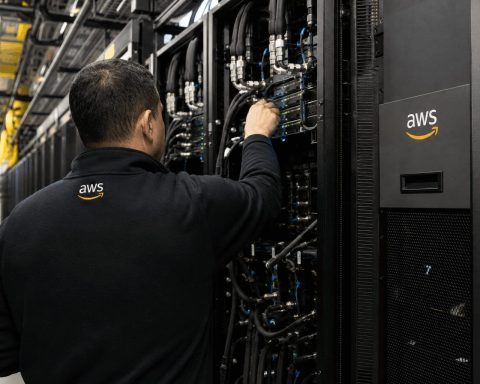
- Amazon plunged as much as 11% in after-hours trading following a warning of roughly $200 billion in capital expenditures for 2026 and a weaker profit forecast for the first quarter.
- Big Tech’s AI spending is under the microscope again after Alphabet outlined a $175 billion to $185 billion capex target for 2026. Meanwhile, software stocks continue to slide amid worries over disruption.
- Traders are eyeing Amazon’s remarks on cloud capacity alongside next week’s postponed U.S. jobs and inflation data.
Amazon.com (AMZN.O) dropped in after-hours Thursday after forecasting roughly $200 billion in capital expenditures for 2026 and projecting first-quarter operating income between $16.5 billion and $21.5 billion—falling short of estimates. Shares tumbled as much as 11%, last down around 7%. The capex, which covers long-term assets like data centers and chips, also factors in about $1 billion in extra costs from its Leo satellite internet venture.
Investors are drawing a sharper distinction between AI spending and its returns. Alphabet (GOOGL.O) announced plans to boost capital expenditure to $175 billion-$185 billion in 2026, up from $91.45 billion in 2025, while cautioning about ongoing “supply-constrained” cloud capacity. CEO Sundar Pichai highlighted that AI investments and infrastructure are fueling revenue growth, noting Google Cloud’s revenue surged 48% to $17.7 billion. Reuters
The market is still grappling with a bleaker side of the AI story: what becomes of software firms that provide tools AI could undercut. The S&P 500 software and services index dropped for a seventh day in a row Thursday, heading toward erasing roughly $1 trillion in value since Jan. 28. Goldman Sachs strategist Ben Snider noted, “The uncertainty around the eventual impact of AI means near-term earnings results will be important signals of business resilience.” Reuters
Wall Street tumbled on Thursday, with the Nasdaq plunging 1.59% to its lowest level since November. Microsoft (MSFT.O) slid 5%, Oracle (ORCL.N) took a 7% hit, and Palantir (PLTR.O) dropped nearly 7%. Nvidia (NVDA.O) also edged down 1.4%. “We’re seeing this volatility about whether this investment will translate, ultimately, into results,” said Tom Hainlin, an investment strategist at U.S. Bank Wealth Management. Reuters
Nvidia is also grappling with a policy hurdle unrelated to demand. The Trump administration is open to ByteDance buying Nvidia’s H200 chips, but the company hasn’t agreed to the proposed license terms — including a know-your-customer rule designed to curb military use, according to someone familiar with the situation. Nvidia has pushed back, saying the conditions must be “commercially practical, else the market will continue to move to foreign alternatives.” Reuters
Just a day before, Nvidia CEO Jensen Huang dismissed the idea of AI as a “software replacement,” calling that view “illogical.” Speaking at an AI conference run by Cisco Systems, he insisted that AI will continue to depend on current software tools instead of reinventing the fundamentals. Reuters
Tensions have been mounting for days. On Wednesday, Advanced Micro Devices (AMD.O) plunged 17% after its revenue forecast pointed to struggles in keeping up with the AI chip race. Palantir dropped nearly 12%, while Nvidia slid 3.4%. “The market is suddenly skeptical and concerned about it,” said Jed Ellerbroek, a portfolio manager at Argent Capital, commenting on the scale of AI infrastructure buildouts. Reuters
The risk is clear: rising AI investments alongside stagnant profits could squeeze Big Tech’s margins, prompting investors to lower growth valuations. Add export restrictions and licensing disputes to the mix, and the chip supply chain faces disruption despite solid demand.
Investors are set to focus on Amazon’s take on AWS capacity limits and the pace at which it can convert AI infrastructure into more profitable revenue. Looking ahead, the U.S. Employment Situation report for January is due Wednesday, Feb. 11, followed by the January CPI data on Friday, Feb. 13, per the Bureau of Labor Statistics calendar.
Related articles: NASDAQ:AMZN