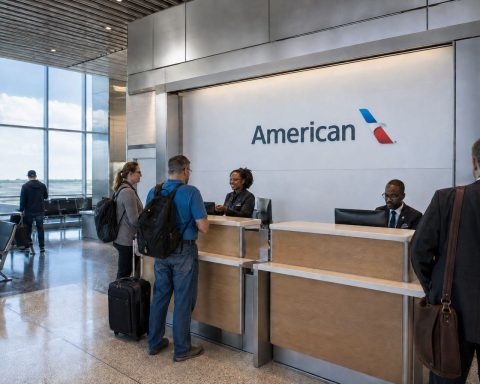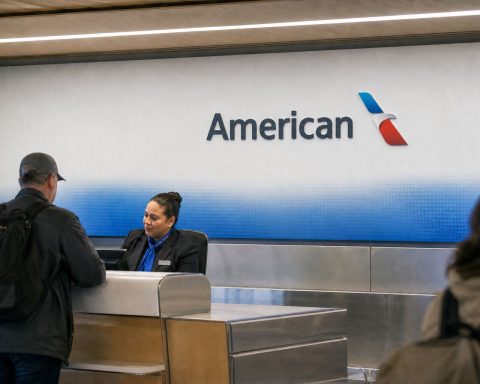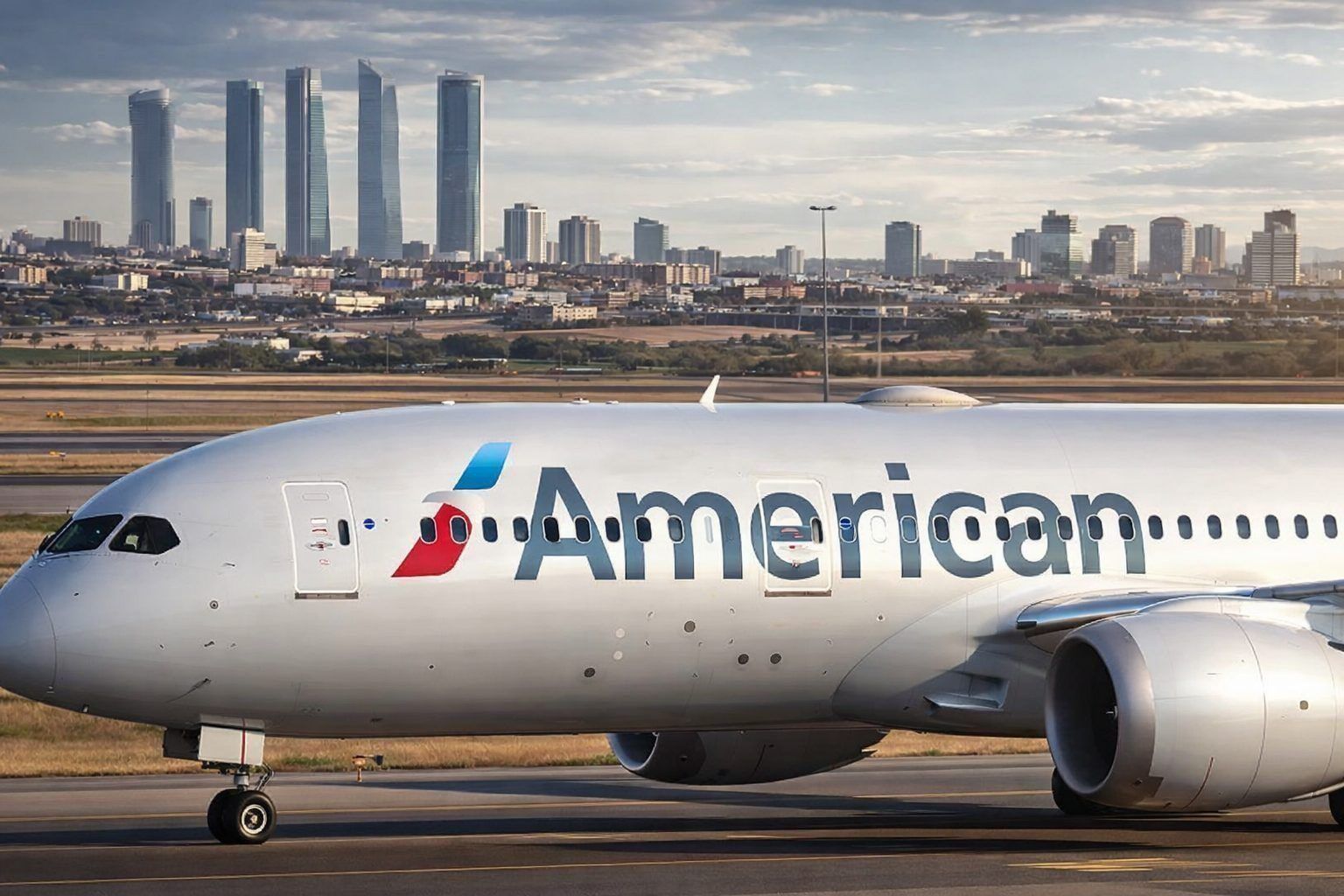

Missing a connection is one of air travel’s most infuriating moments: your first flight is late, you land already behind schedule, and your next plane is pushing back just as you reach the gate. American Airlines says it’s trying to reduce that pain point—by using an AI-driven system that can briefly hold certain departing flights for late-arriving connecting passengers when doing so won’t disrupt the broader operation.
The move is designed for a very specific scenario: tight connections that are still realistically makeable—if the airline can buy you a few extra minutes without triggering cascading delays across the network. It’s not a blanket promise to wait, and it doesn’t erase the need to hustle. But it may change the odds on some of the most stressful connections in American’s busiest hubs.
Why tight connections are so hard in the first place
Even when your itinerary is “legal” to book, tight connections can collapse fast because boarding windows are unforgiving. American’s own boarding guidance notes that boarding ends 15 minutes before departure—and if you’re not onboard, your seat may be reassigned and you won’t be allowed to board once the doors close. American Airlines
That’s why a connection that looks like 25–35 minutes on paper can feel like a sprint in real life, especially in large hubs where the distance between gates (or even concourses) can be significant. AFAR points out that this 15-minute cutoff is exactly what makes very short layovers so difficult to pull off, even when everything is “mostly” on time. AFAR Media
What American Airlines is actually doing: “Short holds” powered by Connect Assist
American’s approach—often described as a “short hold” program—uses a tool called Connect Assist to spot passengers at risk of missing a connection and to help operations teams decide when holding a departing flight makes sense. AFAR Media
American first publicly detailed the initiative in a May 2025 operations update, saying it began testing technology at Dallas–Fort Worth (DFW) that identifies flights with connecting customers who might misconnect. If a brief delay won’t affect the airline’s schedule, American says it will “propose a short hold” to get those customers onboard—an effort the airline describes as developed in-house to automate and enhance connection-saving processes. American Airlines Newsroom
The “AI” part: dozens of inputs, not a single rule
According to American spokesperson Luisa Barrientos Flores, the decision process isn’t a simple “X passengers are late, hold the plane.” She told AFAR the airline uses a “complex algorithm” that evaluates dozens of inputs to avoid downstream impacts to the schedule and other customer itineraries. AFAR Media
And in a look inside American’s operations at Charlotte, Michael Wanner, a managing director in the airline’s Hub Control Center, described Connect Assist as even considering where passengers are seated on the arriving aircraft—helping estimate how quickly they can physically get off the inbound flight and reach the next gate. He also emphasized the tool improves over time as it “learns” from use. WFAE
How long will American hold the plane?
The headline detail travelers care about: this is a short wait.
AFAR reports that American’s spokesperson said flights are held “on average” about 10 minutes to help customers make connections. AFAR Media
WFAE’s reporting from inside American’s Charlotte hub similarly says the connection-saving tech enabled holds with average hold times of 10 minutes or less, and described one example where a short hold helped 50 passengers make a single flight.
The key takeaway: think minutes, not “they’ll wait until you arrive.”
Where the service is live: the airports currently named in reporting
American’s short-hold capability has been reported as active at a set of major hubs, beginning with DFW and Charlotte (CLT), and expanding to additional airports.
AFAR lists the following airports where American will hold flights for some tight connections: AFAR Media
- Dallas–Fort Worth (DFW)
- Charlotte (CLT)
- Chicago O’Hare (ORD)
- Phoenix (PHX)
- Miami (MIA)
- Philadelphia (PHL)
- Los Angeles (LAX)
Separately, an IndianEagle Travelbeats explainer published in late December 2025 lists the same group of airports as locations where the short-hold service is available as of that month.
American has also indicated expansion beyond the initial test markets: the May 2025 newsroom release said the test would expand next to CLT and then to other hubs.
How you’ll know if your connecting flight is being held
One of the most passenger-friendly parts of this rollout isn’t just the hold itself—it’s the communication.
AFAR reports that when a flight is held, customers receive an automated text letting them know how long the connecting flight will wait at the gate (and notes American began “texting and emailing” passengers about these holds). AFAR Media
That matters because uncertainty is often what spikes stress: without a clear signal, travelers don’t know whether to sprint, rebook, or resign themselves to an overnight stay.
A practical step that can help: turn on American’s notifications
To maximize your chance of getting timely updates, make sure American can actually reach you.
American promotes a flight-alert option called BeNotified, which sends updates by text or email (especially for AAdvantage members who set preferences once for all flights).
American also offers single-flight notifications through its flight notifications tools if you prefer setting alerts trip-by-trip.
Is American guaranteed to hold your flight if you’re late?
No—and travelers should plan like the answer is always no until they receive a hold message.
American’s own public wording around the program is conditional: it proposes a short hold only if the airline determines it can delay without impacting the broader schedule.
And third-party explainers emphasize the same point: the short hold is an operational decision, not an entitlement, and it may not be applied on every tight connection.
Why airlines are leaning into these tools now
Holding flights for connections used to be an ad hoc call—often left to gate teams balancing on-time performance, crew legality, and customer experience in real time.
American’s June 2025 tech update explicitly frames its short-hold system as a way to enhance a process that was previously handled case-by-case, helping the airline save more customer connections than manual monitoring alone.
Operationally, the incentives are clear:
- For passengers: fewer missed connections, fewer unexpected overnights, less “run-and-pray” uncertainty.
- For airlines: fewer expensive reaccommodations, fewer disrupted itineraries, less strain on customer service channels during irregular operations.
How American’s approach compares with United (and what Delta is doing)
American isn’t the first U.S. carrier to operationalize short flight holds.
United’s ConnectionSaver: the closest parallel
United introduced ConnectionSaver in 2019, describing it as technology that automatically identifies departing flights that can be held for connecting customers while still ensuring the onboard customers arrive on time. United also tied the program to personalized text messages that help travelers navigate from gate to gate.
In a 2025 update, Business Travel News reported that United added app visibility that tells connecting passengers whether their flight is being held, building on ConnectionSaver. United chief customer officer David Kinzelman told reporters the AI-backed system considers the inbound flight’s position and the time it will take passengers to reach the gate.
And for more independent industry context: aviation analyst Brett Snyder (Cranky Flier) reported in a detailed 2019 breakdown that early tests of United’s system reduced misconnects among short connections and highlighted how automating hold decisions can scale beyond what human “connection planners” could do manually. Cranky Flier
Delta: more visibility than holds (at least as described publicly)
AFAR reported that Delta said it does not have a comparable system specifically designed to hold flights for connecting passengers, but it does provide connection information and real-time updates through tools like Delta Sync for logged-in SkyMiles members.
What travelers should do differently (and what not to assume)
American’s short-hold program can help—but it doesn’t change the fundamentals of making a connection. If you want to put this new system to work for you, here are smart adjustments that don’t rely on wishful thinking:
1) Still avoid ultra-tight connections when you have a must-make trip
Even with a short-hold tool, boarding still ends 15 minutes before departure—and that rule is what turns small delays into missed flights. If you’re traveling for a wedding, cruise, international long-haul, or anything time-critical, give yourself more cushion.
2) Make sure you can receive the message
If a hold notification is sent, it won’t help if your reservation is missing a current phone number/email or your alert preferences aren’t set. Consider enabling BeNotified or setting flight notifications before travel day.
3) If you get a “we’re holding” text, treat it like a countdown—not permission to stroll
A 10-minute average hold can disappear quickly if your arrival gate is far, the inbound taxi takes longer, or deplaning is slow. The whole point is to give you a realistic shot—not to eliminate urgency.
4) Remember: the algorithm is protecting the network, too
American’s spokesperson has framed the system as deliberately designed to avoid downline disruption, not maximize holds at all costs. That means there will be times the answer is simply “cannot hold.” AFAR Media
The bottom line
American Airlines’ Connect Assist short-hold service is a meaningful shift in how tight connections are managed at major hubs: it uses AI-informed operational decision-making to decide when a brief wait can save connecting passengers—often around 10 minutes on average—without creating bigger problems elsewhere.
For travelers, the biggest win may be the transparency: if your onward flight is being held, you may get a message telling you exactly how long you have—turning a stressful guess into a clear sprint plan. Just don’t mistake “short hold” for “guaranteed hold,” and keep the basics intact: realistic layovers, notifications enabled, and a fast path to your next gate. AFAR Media
Related articles: NASDAQ:AAL