
NEW YORK, Feb 9, 2026, 10:59 (EST)
- Apollo is close to finalizing a $3.4 billion loan deal, according to a report, that’s linked to leasing Nvidia AI chips for Elon Musk’s xAI.
- Alphabet is considering a U.S. bond sale in the neighborhood of $15 billion, as Big Tech ramps up borrowing to bankroll AI infrastructure.
- Investors are watching to see if custom chips, including Google’s TPUs, and suppliers like Broadcom, can start to erode Nvidia’s dominance.
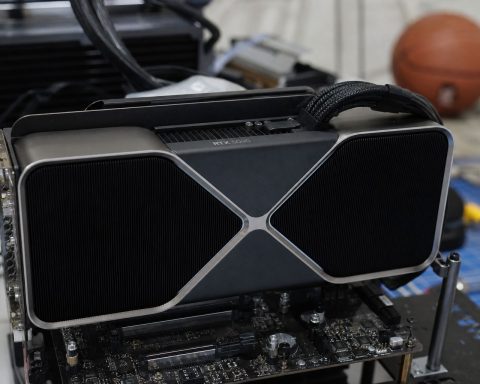
Apollo Global Management is nearing a $3.4 billion loan agreement for an investment vehicle that plans to acquire Nvidia chips and lease them to Elon Musk’s xAI, according to The Information on Monday. Valor Equity Partners is arranging the deal, which could be wrapped up this week, the report said. Apollo would not comment. SpaceX, Nvidia, and xAI didn’t respond to requests for comment.
This latest financing move highlights how the AI boom is quickly becoming a capital-markets narrative, not solely a tale of technology. Companies are bundling, leasing, or even refinancing money for compute—whatever it takes to secure chips up front without burning through cash immediately.
Alphabet is targeting roughly $15 billion through a U.S. high-grade bond sale, according to Bloomberg News, moving to fund AI infrastructure as major cloud players ramp up debt. Hyperscalers, essentially the top-tier cloud companies, are on track to invest over $630 billion into AI this year, Reuters noted, despite returns trailing the flood of capital.
Alphabet jolted markets last week with a bold projection: capital spending could surge to as much as $185 billion in 2026, a dramatic leap from this year’s $91.45 billion, as the tech giant throws even more at servers, data centers, and networking equipment. “We are seeing our AI investments and infrastructure drive revenue and growth across the board,” CEO Sundar Pichai said to analysts, following a 48% spike in Google Cloud revenue to $17.7 billion for the December quarter. Reuters
Some investors aren’t betting on Nvidia alone. On Feb. 7, The Motley Fool’s Keithen Drury flagged Broadcom as another name gaining traction, thanks to its push into custom AI chips known as ASICs—these chips are purpose-built for specific tasks. As cloud players shift away from Nvidia’s general-purpose GPUs, ASICs are getting attention. Drury highlighted Google’s TPU (Tensor Processing Unit) as a standout example in AI inference—the process of running models after training.
Broadcom keeps pushing its image as the behind-the-scenes supplier for the custom-chip boom. Back in September, the company revealed it had landed a $10 billion AI chip deal with a new client—didn’t disclose who, but analysts immediately pegged OpenAI as the likely buyer, considering both the size and timing. Broadcom, for its part, stayed quiet on the name. Reuters later pointed out that those same analysts see Google-parent Alphabet and Meta as current Broadcom customers, as major tech firms look to lessen their reliance on Nvidia.
Nvidia remains the go-to for most big AI training projects, the chip every company mentions when budgets come out. But looking further ahead, the landscape gets complicated—custom chips, niche hardware, a growing list of suppliers all scrambling to tie down their own hyperscaler clients.
Still, the surge in spending is rattling some investors. Amazon’s plan for $200 billion in capital outlays this year has reignited concerns that cloud leaders are drifting away from the asset-light model and piling into capital-heavy territory. According to AJ Bell investment director Russ Mould, funds have been rotating out of shares “where positive surprises may be hard to achieve.” Reuters
Still, chip stocks keep drawing buyers when prices slip. Nvidia surged 7.8% Friday, pulling AMD and Broadcom up as well, with investors doubling down on expectations that AI-driven spending will continue fueling chip demand. “There’s enough evidence that there’s real demand for AI products,” said Ross Mayfield, investment strategy analyst at Baird. Reuters
At this point, money keeps flowing in — from loans, leases, bond sales, and not just what gets reported on earnings calls. The bigger question: can all that capital actually drive lasting cloud expansion and top-line gains, or does it just leave shareholders holding a costly stack of servers?
Related articles: NASDAQ:NVDA