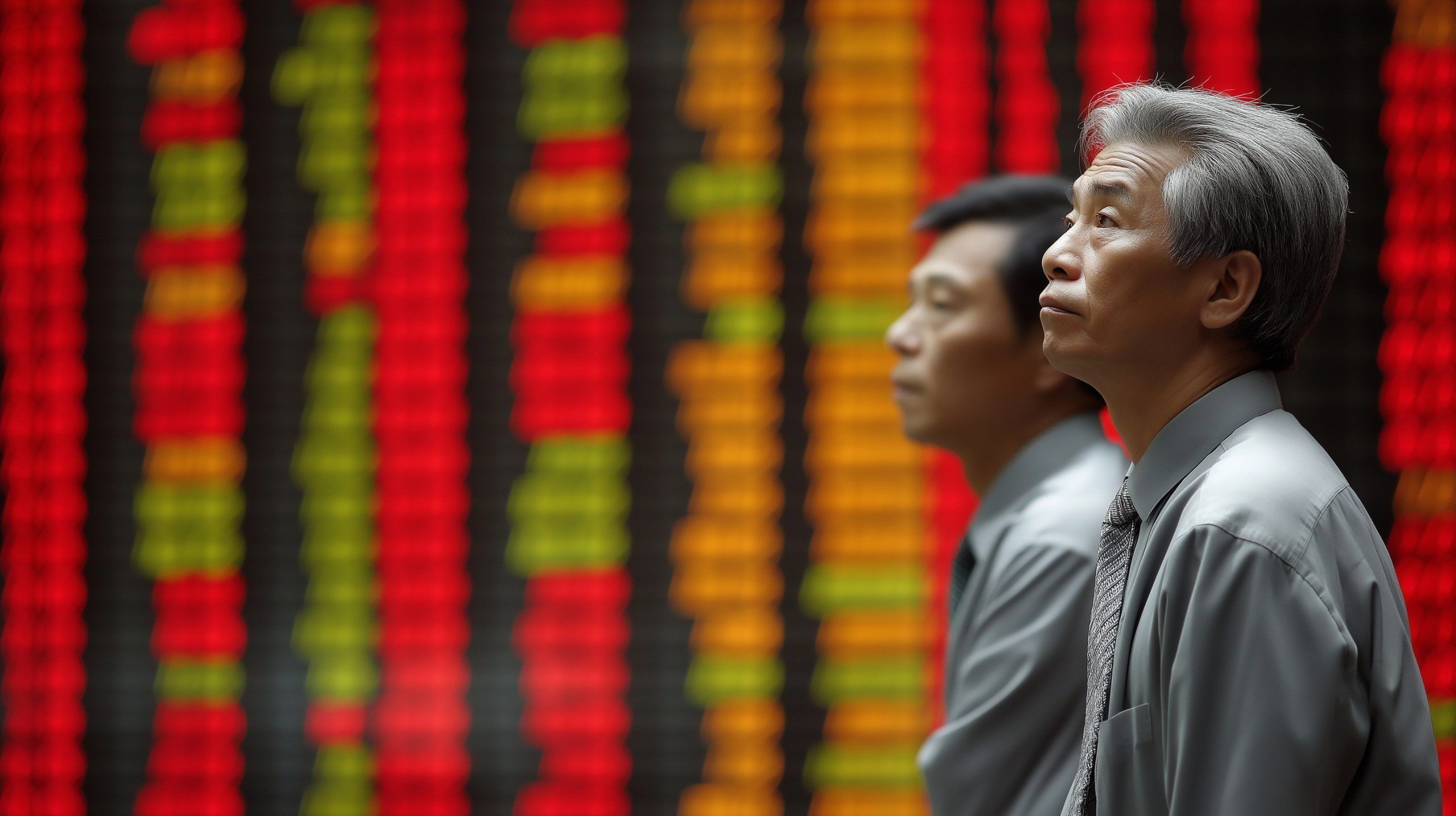
Asian stock markets ended a quiet, holiday-thinned Christmas Eve session mixed on Wednesday, December 24, 2025, as a record close on Wall Street helped sentiment but didn’t translate into a broad regional breakout. Modest gains in mainland China and Hong Kong offset declines in South Korea and Australia, while Japan hovered around flat as investors weighed fresh Bank of Japan signals, a firmer yen, and rising Japanese bond yields.
With several markets operating shorter sessions and global participation fading into the year-end break, trading was more about preserving 2025’s strong gains than chasing new highs—especially with gold and silver again pushing into record territory, reshaping cross-asset positioning from currencies to equity sectors.
Asian market snapshot: where key benchmarks closed
Moves across the region were narrow, but the split was clear:
- Shanghai Composite: 3,940.95 (+0.53%)
- CSI 300 (China blue chips): 4,634.06 (+0.29%)
- Hang Seng (Hong Kong): 25,818.93 (+0.17%)
- Nikkei 225 (Japan): 50,356.69 (+0.04%)
- Topix (Japan): 3,407.37 (-0.46%)
- Kospi (South Korea): 4,108.62 (-0.21%)
- ASX 200 (Australia): 8,762.70 (-0.38%)
- Nifty 50 (India): 26,157.30 (-0.08%)
- FTSE TWSE Taiwan 50: 25,371.24 (+0.24%)
The global cue: S&P 500 record close meets “thin liquidity” reality
Asian investors came in with a supportive handover from the U.S., where the S&P 500 notched another record close amid tech strength and optimism around growth. Strong U.S. third-quarter GDP (reported at an annual pace of 4.3%) supported risk appetite, even as inflation measures remained sticky and traders debated the path for U.S. rates into 2026.
But “supportive” did not mean “directional.” With holiday closures approaching and many desks running lighter risk, it was the classic year-end pattern: small headline-driven moves with limited follow-through, and a higher chance of outsized swings if a surprise hits the tape. AP News+1
Japan stocks: Nikkei flat as BOJ signals and bond-market stress compete
Japan’s Nikkei 225 ended essentially unchanged, while Topix fell more noticeably.
Two Japan-specific macro themes dominated investor conversations:
1) BOJ minutes keep the “how many hikes?” debate alive
Fresh central bank minutes signaled that policymakers have been actively debating how quickly to keep raising rates and what pace is needed to anchor inflation expectations without choking growth—an ongoing tension that matters for bank shares, rate-sensitive domestic stocks, and exporters exposed to currency swings.
2) Fiscal policy and bond issuance push long yields higher
Reuters reported Japan is planning around 29.6 trillion yen ($189 billion) of new government bond issuance to fund what could be a record-sized budget of about 122.3 trillion yen for the next fiscal year—numbers that have added to market worries about debt supply and helped push 30-year Japanese government bond yields to fresh record highs (around 3.45%).
In a sign authorities are sensitive to those yield moves, a separate Reuters report said Japan is likely to reduce new issuance of super-long government bonds next fiscal year to about 17 trillion yen, potentially trimming 20-, 30- and 40-year sales in a way that directly addresses oversupply concerns.
Currency overlay: yen strength adds another variable
FX also mattered. The yen firmed amid heightened sensitivity to potential intervention risk—an issue that becomes even more market-moving when liquidity thins around the holidays.
China and Hong Kong: mainland up on policy signals; HK steadies as IPO concerns grow
Mainland China led the region on the day, with the Shanghai Composite up 0.53% and the CSI 300 up 0.29%.
A key China policy headline on Dec. 24 focused on housing support: Beijing’s municipal authorities further eased home-buying rules, including lowering the required consecutive income tax payment period for non-local residents to at least one year (from two) and allowing families with more than one child to buy an additional home in downtown Beijing—measures aimed at supporting demand amid pressure on prices.
Hong Kong’s Hang Seng added a modest 0.17% in a shortened session.
Hong Kong’s bigger story today wasn’t the close—it was the pipeline
Away from the day’s mild index move, a Financial Times analysis flagged a more structural concern: after a blockbuster year for fundraising, Hong Kong’s IPO market is showing signs of fatigue. The FT reported that despite raising about $35 billion from IPOs and secondary listings up to mid-December, a large share of recent listings have been flat or down on debut, raising concerns about valuation discipline and a crowded issuance pipeline (with 300+ prospective listings cited).
For equity investors, that matters because IPO “tone” often acts like a risk-appetite thermometer—especially in a market where new listings can absorb liquidity quickly and change sector leadership.
South Korea: Kospi slips, but the won steals the spotlight
South Korea’s Kospi dipped 0.21% on the day, rounding out a muted Christmas Eve session.
But the bigger development came through foreign exchange and policy coordination. Reuters reported that South Korea’s National Pension Service (NPS)—described as the world’s third-largest pension fund with 1,361.2 trillion won ($927 billion) in assets—initiated a new round of strategic FX hedging operations, helping drive the won as much as 2.2% stronger to 1,449.3 per dollar at one point (its strongest since mid-November).
Reuters also noted broader stabilization efforts, including steps by authorities and a renewed central bank swap arrangement; Citi’s Kim Jin-wook was cited forecasting dollar-won rates stabilizing around 1,450 over the next three months, reflecting confidence in policy signals.
Why this matters for stocks: a steadier currency can ease imported inflation fears and reduce the risk premium that foreign investors demand—yet a suddenly stronger won can also tighten conditions for exporters. It’s a delicate balance investors will keep watching into early 2026.
Australia: ASX 200 dips as profit-taking competes with commodity euphoria
Australia’s ASX 200 fell 0.38%.
The Australian market sits at the crossroads of two powerful narratives right now:
- A year-end “risk-on” tailwind driven by global equity strength and AI-linked enthusiasm. Reuters
- A commodity complex that’s been anything but calm—gold and silver hit new records again, reinforcing support for some resource names while also raising questions about inflation hedging and where “defensive” money is moving. Reuters+1
Singapore: STI slips slightly into the festive break
Singapore’s market also reflected the holiday mood. The Straits Times Index (STI) ended 0.06% lower at 4,636.34 on a shorter Christmas Eve session, according to The Straits Times.
India: early gains fade; IT remains a pressure point
Indian equities were mixed, with the Nifty 50 ending nearly flat to slightly lower on the day.
Reuters reported that benchmarks were modestly higher in early trade on the back of strong U.S. growth data, but gains were capped by weakness in information technology shares. Reuters linked the IT softness to amended U.S. Department of Homeland Security rules for the H‑1B work visa selection process that prioritize higher-skilled, higher-paid workers—an important channel for Indian IT services sentiment.
On the outlook, HDFC Securities’ Devarsh Vakil told Reuters the Nifty’s short-term trend remained positive and could extend toward 26,330—a key near-term reference point investors are watching as 2026 approaches.
Vietnam: frontier-market strength tied to political stability signals
In Southeast Asia’s higher-beta corner, Vietnam’s market drew attention. Reuters reported Vietnam’s stock market rose on signs of a smooth power transition, with the index jumping early and foreign investors net buying across recent sessions—underscoring how political clarity can quickly translate into risk appetite in frontier and emerging markets.
Outlook: what markets are pricing into 2026
Even on a slow day, Dec. 24 delivered several forward-looking signals that investors will carry into the first weeks of January:
1) Asia ends 2025 on a strong footing—but leadership is uneven
Reuters highlighted that Asian equities (as measured by MSCI’s Asia-Pacific index excluding Japan) were up about 26% for the year, their best performance since 2017, with Japan also up strongly and South Korea far outpacing regional peers in 2025.
2) The Fed path is still central to Asia
Currency and rate expectations remain a key input for Asian stocks. Reuters reported investors were still pricing roughly two more Fed cuts in 2026, and cited Goldman Sachs economist David Mericle expecting two 25bp cuts that would take the policy rate to 3%–3.25% (while flagging risks skewed lower).
3) Strategists are optimistic—but valuations and liquidity matter
Reuters also noted Citi strategist Scott Chronert maintained a positive equity outlook for 2026, citing earnings growth and elevated valuations—conditions that can support gains but also amplify sensitivity to data surprises and policy shifts.
4) Thin markets can exaggerate moves—especially in FX
From potential yen intervention risk to South Korea’s strategic hedging actions, Dec. 24 reinforced that currencies may remain the first—and fastest—transmission channel for volatility when liquidity is thin.
As Asia heads into the final trading days of 2025, the near-term base case is calm, rangebound trade—until it isn’t. The ingredients for sudden movement are visible: record-setting commodities, big macro policy questions in Japan and the U.S., and currency stabilization efforts that can rapidly shift investor positioning across the region.