
NEW YORK, September 6, 2026, 2:31 a.m. EDT — ASML Holding N.V. NASDAQ:ASML gained 4.17% on Friday, adding roughly $26.5 billion to its equity value. The curious part is where the impulse began. The bullish call covered two memory-chip makers, not ASML.
Lynx Equity Strategies analyst K.C. Rajkumar raised price targets for Micron Technology Inc. NASDAQ:MU and Sandisk Corp. NASDAQ:SNDK to $1,325 and $2,450. The September 4 note argued that a volatile memory trade had become investable again. It did not rate ASML.
ASML nevertheless caught the bid, with The Motley Fool linking Friday’s rise to that memory-sector enthusiasm.
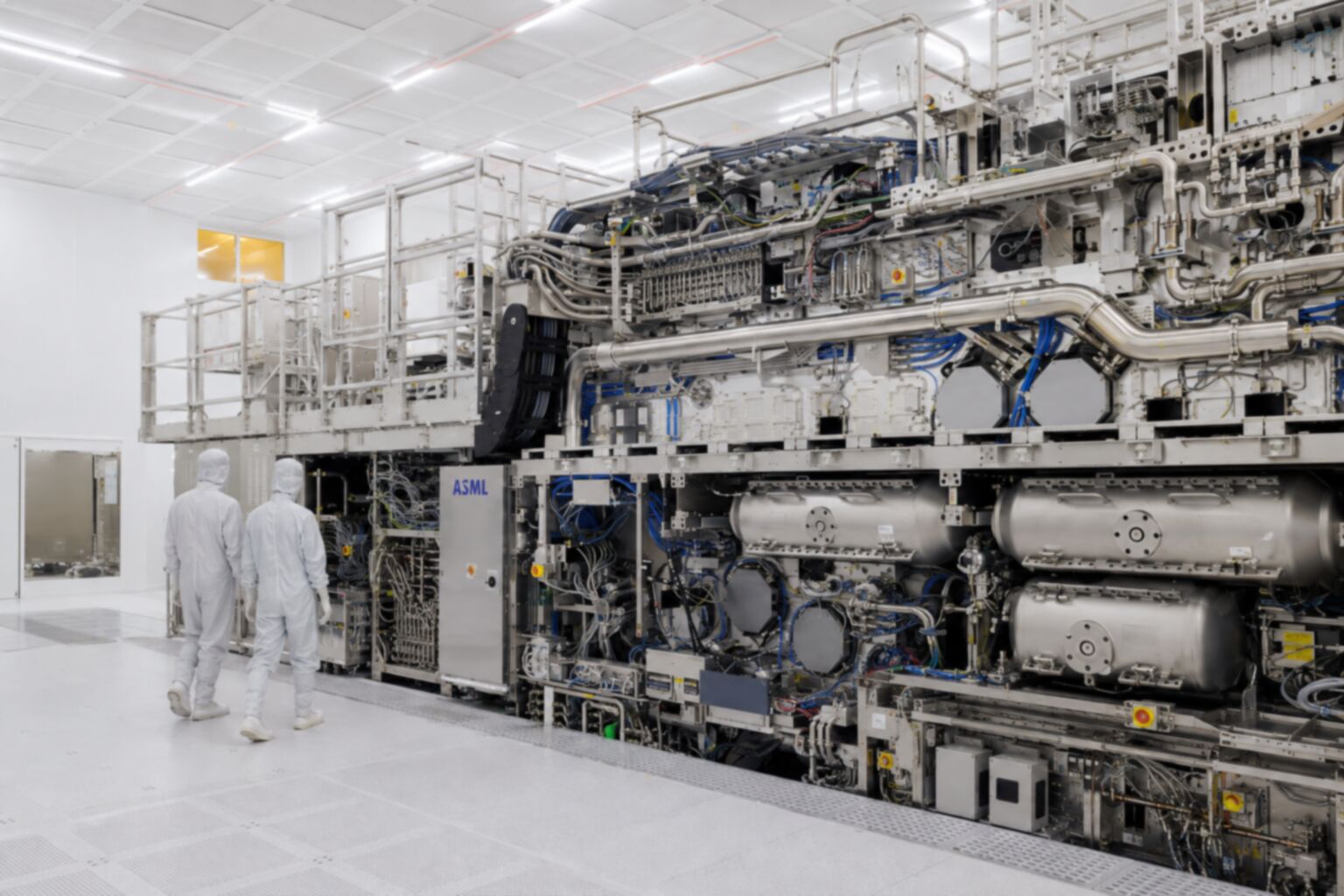
The read-through has an industrial logic: more high-bandwidth memory and advanced DRAM require added wafer capacity. ASML sells the lithography tools that make those investments possible.
Friday repaired only part of the August slide
Daily Nasdaq closing prices for ASML’s U.S.-listed shares.
Last market close at . Source: Nasdaq historical data. Prices are rounded.
The stock closed at $1,714.88 on volume of 1.29 million shares. Friday’s gain erased Thursday’s loss and more. Even so, ASML remains 8.9% below its August 17 close and 14.3% below its 52-week high.
Company evidence supports the memory thesis, and ASML raised its 2026 sales outlook three times this year. July’s range reached €43 billion to €45 billion, versus €34 billion to €39 billion in January.
Chief Executive Christophe Fouquet gave the reason plainly. “Ongoing AI-related investments” are driving demand for advanced logic and memory chips, he said in ASML’s second-quarter release. Customers were accelerating capacity plans.
The 2026 revenue bar kept moving higher
Company guidance at three reporting dates. Bar length compares each range midpoint with July’s €44 billion midpoint.
ASML also guided for a 54% to 56% gross margin this year. Source: ASML Q2 2026 results.
Second-quarter sales were €9.33 billion, while net income reached €2.92 billion on a 54% gross margin. ASML expects third-quarter sales of €11 billion to €12 billion.
Memory already matters, though it is one leg of a broader machine. ASML’s 2025 financial breakdown showed €8.4 billion of memory-related net system sales, against €16.1 billion from logic and €8.2 billion from service and field options.
The factory plan makes Friday’s trade more concrete. ASML intends to lift 2027 output capacity by 30% for both low-NA EUV systems and DUV immersion tools.
Capacity is rising; the valuation already expects plenty
Planned 2027 output versus approximate 2026 capacity, followed by Nasdaq’s latest market snapshot.
Capacity: ASML. Market value and analyst data: Nasdaq, as of September 4. Figures are rounded.
Capacity is not booked revenue: customers can delay fab schedules, and ASML still needs enough components to turn planned output into shipments.
The valuation leaves little room for a dull memory cycle. Nasdaq’s $660.9 billion market capitalization implies about 385.4 million shares. Applying Friday’s $68.69 gain to that count produces the estimated $26.5 billion value increase.
Wall Street remains constructive, with Nasdaq showing a mean Buy rating from 15 analysts and a $2,400 one-year target. That target stands 40.0% above Friday’s close, but it is a consensus marker rather than a forecast certainty.
Two figures can test the thesis next: memory customers’ capital spending and ASML’s order intake. Strong bookings would connect the chipmakers’ improving economics to lithography demand. Softer orders would expose Friday’s move as borrowed enthusiasm.
Risks remain substantial. Export controls can narrow ASML’s addressable market, while supply constraints may slow the planned capacity increase. A reversal in memory prices could also push customers to defer equipment deliveries.