
NEW YORK, June 23, 2026, 18:04 EDT
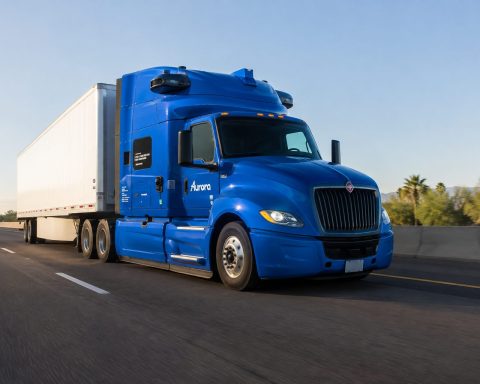
Aurora Innovation shares fell on heavy volume on Tuesday, leaving the self-driving truck developer’s stock about 9.6% below the price at which Uber sold a large block earlier this month, but 6.3% above a later director purchase. That puts the stock between two recent owner-reference points as investors price Aurora’s shift from test runs to driverless freight revenue.
Aurora closed down 2.1% at $6.42 on Nasdaq, with 34.4 million shares changing hands, about 26% above its 65-day average volume. The stock was little changed after hours at $6.43. Its Tuesday turnover was worth about $221 million at the closing price, large for a company whose latest quarterly revenue was still only $1 million.
The new angle is not just that Aurora fell. It is where it fell. Uber Technologies, through Neben Holdings, sold 67.5 million Aurora shares on June 2 at $7.10 each in a block sale, a single large negotiated trade. Uber still owned 258.5 million Class A shares, or 15.6%, after the sale, according to a Schedule 13D filing.
Nine days later, Aurora director David Wehner bought 82,500 shares at a weighted average price of $6.04, according to a Form 4 filing. The stock’s close on Tuesday sat between those two points: below where Uber reduced its stake, above where a board member added to his.
That matters because Aurora’s public float is being repriced while the company is still early in proving its business model. Aurora has said it is moving toward “hundreds of driverless trucks on the road this year,” Chief Executive Chris Urmson said in May, and that Hirschbach plans for 500 Aurora Driver-powered trucks. Business Wire
Aurora’s pitch is Driver as a Service, or DaaS — a model where customers pay for use of the self-driving system, usually tied to miles moved, rather than simply buying software outright. The company said McLane, a Berkshire Hathaway unit, approved driverless operations between Dallas and Houston after a supervised pilot that logged more than 280,000 autonomous miles and delivered 1,400 loads. Susan Adzick, president of McLane Restaurant, cited Aurora’s “exceptional safety performance” in that rollout. Business Wire
Competitive trading was rougher for some autonomy-linked names. Kodiak AI, a self-driving truck rival, fell 7.3%, while Tesla, whose valuation also carries a large autonomy premium, dropped 5.8%. The tech-heavy Invesco QQQ ETF lost 3.3%. Aurora’s 2.1% fall was smaller, but the stock still failed to retake the Uber block-sale price.
The risk is cash and timing. Aurora reported $1 million in first-quarter revenue, a $223 million net loss and $159 million of cash used in operations. It also said it had only recently started to generate revenue, did not expect significant revenue until commercial scale, and expected to opportunistically raise more capital, meaning sell stock or borrow money, to support longer-term operations.
For investors, that makes the next move less about one down day and more about whether Aurora can turn route launches into steady revenue before dilution fears come back. The stock has liquidity. It still needs scale.
![Asia Stock Market Today 26/08/2026 [UPDATE: 07:03 SGT] [Korea Opens Block Trading After Asia’s Broad Rebound]](https://ts2.tech/wp-content/uploads/2026/08/Asia-market-dashboard-2026-08-26-0703-480x384.jpg "Asia Stock Market Today 26/08/2026 [UPDATE: 07:03 SGT] [Korea Opens Block Trading After Asia’s Broad Rebound]")