
FORT WORTH, Texas, May 15, 2026, 12:04 CDT
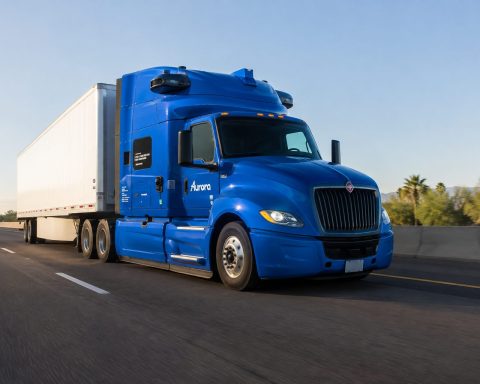
Volvo Autonomous Solutions and DSV have rolled out commercial driverless trucking in Texas, sending a Volvo VNL rig equipped with Aurora Innovation Inc.’s autonomous system down the Dallas-Houston corridor. According to DSV, the automated service will run between Aurora’s freight hubs in both cities, and is being integrated right into DSV’s standard logistics operation.
Timing matters. Aurora is pushing to show that autonomous trucking can move beyond small-scale pilots, targeting steady, repeatable freight runs. The company’s latest launch marks another operational step on a critical early corridor for self-driving trucks.
Autonomous freight means heavy trucks turn navigation over to software, sensors, and onboard computers—usually on predetermined stretches of highway at first. But Volvo says the DSV-Volvo routes won’t go fully driverless just yet. At this stage, a safety driver will remain behind the wheel for the rollout.
Helmut Schweighofer, chief of DSV Road, called the Texas operation a “production, depot-to-depot setup,” adding that autonomous driving is pushing into daily business. Over at Volvo Autonomous Solutions, Sasko Cuklev, who leads on-road solutions, described the Dallas-Houston launch as a “scalable foundation” for moving into more lanes. volvoautonomoussolutions.com
Volvo’s Autona/freight package for DSV is rolling out the Volvo VNL Autonomous truck, equipped with self-driving tech from Aurora and Waabi, along with backend tools aimed at large-scale autonomous freight. Multiple autonomy partners are in play here—truck makers and logistics firms are clearly not putting all their chips on one approach as they gauge where demand lands. It’s a close contest, and the stakes are high.
Aurora dropped its latest update just over a week after telling investors it could have more than 200 driverless trucks operating by the end of 2026. CEO Chris Urmson still insists the company is “on track to put hundreds of driverless trucks on the road this year.” In its shareholder letter, Aurora projected 2026 revenue somewhere between $14 million and $16 million. Aurora Innovation, Inc.
Aurora’s strategy is evolving. At first, the company plans to own or lease and operate some trucks directly. But that’s just the starting point. Aurora is aiming for Driver as a Service, or DaaS, its eventual model—clients would either purchase or run their own fleets, paying Aurora by the mile or a similar metric. The pitch: ongoing, software-like revenue connected to the number of trucks actually driving.
It’s a rough start by the numbers. Aurora scraped together $1 million in first-quarter revenue, while net losses ballooned to $223 million. The latest 10-Q spells it out: revenue trickled in only recently, and real sales won’t show up until commercial deployment picks up speed. The company burned through $159 million in operating cash for the quarter but still ended March sitting on $273 million in cash. Add in another $1.00 billion stashed in short- and long-term investments.
The cap table’s getting attention too. On Thursday, a Schedule 13G showed Capital Research Global Investors holding 82.7 million Aurora shares—good for a 5.0% stake in the class as of March 31. The filing specifies they’re just ordinary-course holdings, with no plans to seek control.
Aurora traded around $7.85 late Friday morning, bringing its market value close to $15.3 billion. Right now, investors are looking past current revenue, zeroing in on whether the company can open new routes, roll back safety-driver requirements where allowed, and lock in long-term freight deals.
Forget the next press release—Aurora’s got to nail execution. Its Texas rollout makes clear the technology can handle real logistics runs, but that hardly settles the big question: Can autonomous trucking scale fast enough to stay ahead of steep hardware costs, cautious shippers, and the deep pockets needed for a nationwide freight push?