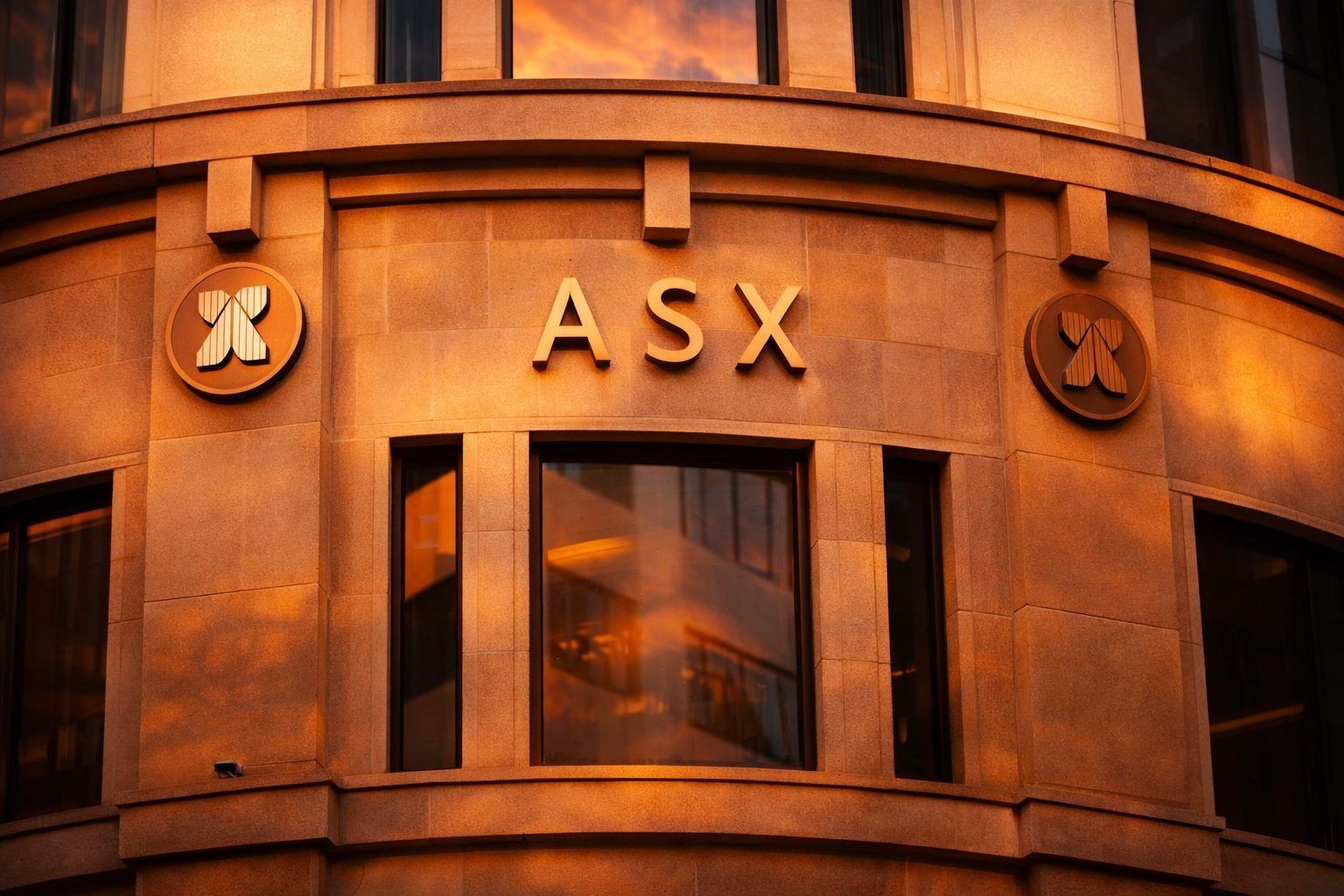

Sydney, 20 December 2025 — The Australian Securities Exchange is heading into the final stretch of 2025 with two storylines colliding in the same place: a sharemarket trying to finish the year on stable footing, and a market operator (ASX Ltd) being pushed into a deep operational reset by regulators after repeated failures. The result is an unusual end‑of‑year mix of holiday-thinned trading, big-picture forecasts for 2026, and a very immediate question: can Australia’s critical market infrastructure be made “boringly reliable” again—fast? ASIC+2Reuters+2
ASIC vs ASX Ltd: the $150 million “circuit-breaker” and a forced overhaul
The most consequential ASX development in the past week wasn’t a rally or a sell-off. It was ASIC’s “transformational package” response to an Inquiry interim report into the ASX Group—an inquiry launched after “repeated and serious failures” and ongoing concerns shared with the Reserve Bank of Australia (RBA) about ASX’s ability to run stable, secure, resilient market infrastructure. ASIC+1
ASIC says it has obtained commitments from ASX on reforms that include:
- Strengthening the independence and governance of the ASX clearing and settlement boards
- A strategic reset of ASX’s multi‑year transformation program, “Accelerate,” with clearer milestones and accountability
- An additional $150 million capital charge on ASX Ltd to ensure robust financial resources until remediation is complete
- A commitment to stronger leadership (paired with stepped-up ASIC/RBA supervisory work) ASIC+1
ASIC Chair Joe Longo framed the package as a “circuit-breaker,” warning that there are “no quick fixes or shortcuts.” ASIC also states the inquiry panel has already conducted around 140 stakeholder interviews and reviewed nearly 10,000 documents, underscoring the depth of scrutiny now sitting over Australia’s market operator. ASIC
What the Inquiry interim report said (and why it stings)
The interim report—prepared by an expert panel including Rob Whitfield, Christine Holman and Guy Debelle—argues that the current remediation activity “will not resolve the serious shortcomings” identified, and calls for a fundamental reset that puts ASX’s stewardship role first. ASIC Download+1
ASIC’s own summary of interim findings is blunt:
- Short-term financial focus and shareholder returns compromised ASX’s obligations as critical infrastructure
- Strategy lacked the vision expected of a national market operator
- Culture described as defensive
- Governance did not ensure sufficient independence/investment for clearing and settlement subsidiaries
- Existing supervisory practices failed to achieve desired outcomes ASIC
ASX Ltd’s immediate financial hit: dividend cut, ROE target lowered, higher spend
ASX Ltd has publicly committed to ASIC’s package and laid out what changes immediately in its own investor-facing settings.
From ASX’s market announcement (15 December):
- The dividend payout ratio range moves to 75%–85% of underlying net profit after tax (previously 80%–90%) and is expected to sit at the bottom end for at least the next three dividends
- ASX plans a discounted dividend reinvestment plan for at least the next three dividends
- The additional $150 million capital charge must be accumulated by 30 June 2027 and held until remediation milestones are met to ASIC’s satisfaction
- The medium-term underlying ROE target is reduced to 12.5%–14.0% Australian Securities Exchange+2Reuters+2
ASX also kept major parts of its spending guidance intact but flagged the scale of ongoing investment: total expense growth expected 14%–19% in FY26 (including $25–$35m linked to the ASIC response) and capex guidance around $170m–$180m in FY26 and $160m–$180m in FY27.
The market reaction earlier in the week was sharp: Reuters reported ASX shares fell as much as 5.1% after the announcement of the capital charge and dividend changes.
ASX 200 market wrap: steady near 8,600, but the “real” story is sector rotation
With 20 December falling on a Saturday, the last cash session was Friday, 19 December, when the benchmark S&P/ASX 200 finished around 8,621—a modest up day that helped stabilise a choppy December tape.
What mattered more than the headline number was how the index got there:
- Information technology rebounded into the end of the week, with large-cap names like WiseTech Global, Technology One and Life360 among the prominent drivers cited in daily wrap coverage.
- Banks helped underpin the index—Commonwealth Bank in particular was highlighted as influential in Friday’s lift.
- Energy and health care have been recurring drags in December, a dynamic that IG’s week-ahead note also flagged as the market tried (and largely failed) to put on a convincing “Santa rally” early. IG
On the year, major Australian market commentators put the ASX in “positive but not euphoric” territory: CommSec noted the Australian market was up about 5.5% year‑to‑date by mid‑December, while warning that 2026 could again be “unpredictable.” CommBank
Compliance and enforcement headlines: why they matter for ASX trading confidence
A healthy exchange isn’t just prices going up. It’s trust in the plumbing.
Two major enforcement stories this week reinforced the “market integrity” theme surrounding the ASX:
- Macquarie agreed to pay a A$35 million penalty after admitting systemic failures in short-sale reporting, according to Reuters—an issue that goes directly to transparency in Australian markets.
- A Federal Court increased ANZ’s total penalty to $250 million for misconduct (as covered in ABC’s business live reporting), keeping regulatory standards and institutional governance front-of-mind for investors into year‑end.
When regulators are this active, markets can trade “normally” on the surface while repricing the risk premium underneath—especially for financials, brokers, and market infrastructure names.
The operational resilience problem: outages, CHESS replacement, and credibility
ASIC’s intervention did not appear out of nowhere. Reuters has recently detailed a technology-related trading disruption tied to ASX’s technology partner Nasdaq, noting it triggered regulatory and political scrutiny.
And the credibility issue isn’t abstract: Reuters also reported earlier this month that an outage deepened investor doubts about ASX’s technology overhaul, describing the reputational stakes for a market operator responsible for national critical infrastructure.
CHESS replacement: signs of progress, but on a longer clock
While the failed earlier CHESS replacement effort still hangs over sentiment, ASX’s public technical committee material shows ongoing work and testing. In its CHESS Replacement Technical Committee presentation (3 December 2025), ASX reported a parallel testing cycle that processed over 34 million trades, with “no latency or missing trade issues identified” in that cycle’s highlights. Australian Securities Exchange+1
That’s the kind of engineering detail markets like—because it’s measurable. The harder part is regaining confidence that the project stays on schedule, stays governed, and doesn’t regress into “we’ll fix it later.”
Forecasts for the ASX: Santa rally stats and what they imply for late December
If you want a market superstition that’s actually been stress-tested with data, seasonality is one of the better ones.
A Market Index analysis published via TradingView looked at 40 years of Australian market seasonality using a total return index (including dividends). It found December has historically been positive more often than not—about 65.5% reliability across long windows—and that a weak November doesn’t reliably “kill” December. In the 30‑year sample cited, the average December return after an up November was +2.06%, and after a down November +1.12%—still positive on average either way. TradingView
The twist: the same analysis suggests January tends to be weaker after a down November, which matters for anyone extrapolating a late‑December bounce into a smooth “summer rally” into 2026. TradingView
ASX 2026 outlook: three big forecast frameworks (and where they overlap)
Forecasting an index level is always part math, part mood, part humility. Still, several widely circulated 2026 outlooks share a few overlapping assumptions: rates matter, AI narratives matter, China/commodities matter, and valuations aren’t cheap.
1) AMP’s Shane Oliver: ASX 200 to ~8,900 by end‑2026
AMP’s 2026 outlook (published 10 December) expects the RBA cash rate to hold at 3.6% and forecasts the ASX 200 rising to around 8,900 by end‑2026, while warning of volatility and the possibility of a meaningful correction along the way.
2) IG’s technical/macro road map: 9,300–9,500 by end‑2026 (with resistance)
IG’s ASX 200 2026 outlook argued the index’s 2025 gains were real but “lagging peers,” and pointed to inflation re‑acceleration as a constraint on easy central bank policy. IG also cited rich valuation metrics (forward P/E above long-run averages) and mapped a technical scenario where, if key lows hold, the index could grind toward the 9,300–9,500 area by the end of 2026. IG
3) CommSec’s themes approach: less “target,” more “triggers”
CommSec’s 2026 outlook leaned into catalysts rather than point forecasts:
- January/February earnings seasons (US then Australia)
- AI capex and whether it broadens beyond mega-cap tech
- Central bank divergence (Fed vs RBA)
- China growth and commodity demand
- Bank valuations after a strong run CommBank
Across these views, the shared message is basically: 2026 could be positive, but it likely won’t be polite.
Week ahead: the calendar events that can move the ASX into Christmas week
The next trading week (commencing 22 December 2025) is short on corporate catalysts and heavy on macro signals—exactly the kind of environment where thin liquidity can exaggerate moves.
IG highlights several key dates:
- Australia: RBA meeting minutes — Tuesday, 23 December, 11:30am AEDT
- Japan: BoJ meeting minutes — Wednesday, 24 December (~10:50am AEDT)
- United States: durable goods, Q3 GDP (second estimate), industrial production — early hours of 24 December AEDT
- US consumer confidence — early hours of 24 December AEDT IG
IG also notes the ASX 200 was set to snap a three‑week winning streak and that global sentiment was being shaped by renewed debate over AI valuations and capex intensity—a narrative that can spill into Australian tech, banks (via risk appetite), and resources (via global growth expectations).
Bottom line for the Australian Securities Exchange on 20 December 2025
The Australian Securities Exchange is finishing 2025 with a market that’s broadly steady and a market operator that’s being told to rebuild its foundations.
For investors and market participants, the practical takeaway is straightforward:
- The ASX 200 remains heavily driven by sector swings (banks vs tech vs materials), and seasonal tailwinds can appear—but they’re not a promise.
- ASX Ltd is now in a regulator-enforced transformation, with capital, governance, and delivery milestones that will matter as much as quarterly earnings.
- The most important “forecast” for 2026 may not be an index target at all, but whether Australia’s critical market infrastructure becomes reliably dull again—the highest compliment an exchange can earn.