
WASHINGTON, August 10, 2026, 22:10 EDT
- The SEC states that specific data-center securities do not qualify as asset-backed securities.
- Local opposition affected no fewer than 75 U.S. projects valued collectively at around $130 billion during the first quarter.
- Goldman Sachs forecasts that U.S. data-center power demand will more than double by 2027.
The U.S. Securities and Exchange Commission relaxed a regulatory restriction affecting some data-center bonds. According to the agency, securities structured in the manner outlined by Latham & Watkins are not classified as asset-backed securities.
The ruling is expected to simplify access to a rapidly expanding funding option. Operators require significant capital for land, energy, cooling, and building expenses. Debt investors are now presented with more definitive regulatory guidance.
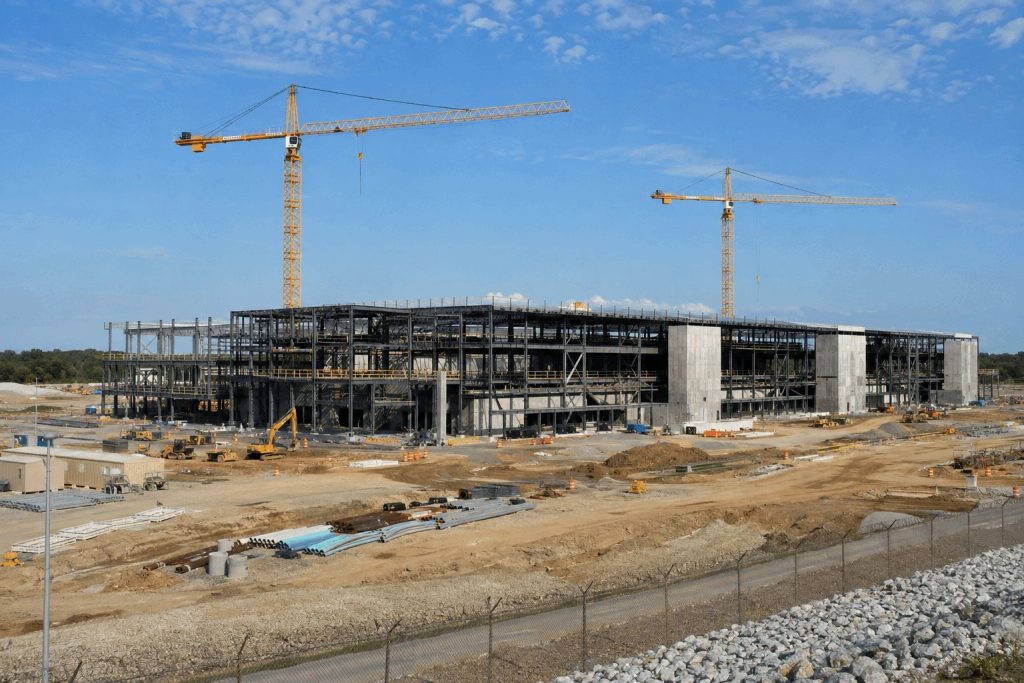
However, modifying the rule does not render a site ready for development. The timing of cash release by lenders remains dependent on permits, power, and local approval. This moves the investor’s focus from legal status to how prepared a project is.
| Question | SEC clarification | Investor consequence |
|---|---|---|
| What is the classification of these securities? | The SEC says these are not considered asset-backed securities | Some rules for ABS do not apply in this case |
| How extensive is the SEC’s interpretation? | The interpretation is limited to the category outlined by Latham & Watkins’s letter | The deal’s structure and underlying facts remain relevant |
| What risks are not included in the SEC position? | The SEC has not commented on project execution risk | Risks such as permitting, construction, and tenant credit are still significant |
The scope is specific. “We agree that the fixed-income or other securities issued in data center securitizations of the type described in your letter are not asset-backed securities,” the SEC stated. The ruling provides regulatory certainty but does not extend federal backing to the projects or their revenues. Reuters
Wall Street considers readiness a credit risk factor. JPMorgan Chase NYSE:JPM, Morgan Stanley NYSE:MS, and Bank of America NYSE:BAC provide advisory services or funding for major U.S. developments. Their due diligence process reviews technical aspects, zoning, environmental concerns, appraisals, and insurance.
“Readiness refers to having secured every necessary permit and approval, along with backing from the local community,” stated Karen Fang, global head of infrastructure and sustainable finance at Bank of America. Reuters
| Goldman Sachs projection | 2025 | 2026 | 2027 |
|---|---|---|---|
| U.S. data-center energy usage | 31 GW | 41 GW | 66 GW |
| Portion of U.S. peak summer electricity use | 4.1% | 5.3% | 8.5% |
Goldman Sachs Research projects that just 50% to 60% of capacity planned for the next one to two years will be operational as scheduled. The firm predicts that U.S. data center demand will more than double from 2025 to 2027. The main execution risk remains the difference between scheduled and live capacity.
The securities market already has an established base. In May, Latham & Watkins stated it had provided counsel on over 100 data-center securitizations. The total issuance from these deals surpassed $60 billion through upwards of 25 master-trust programs.
The physical pipeline remains in flux. Data Center Watch identified no fewer than 75 projects, representing approximately $130 billion, that encountered blocks or delays during the first quarter. In the first six weeks of 2026, more than 300 state bills were introduced, with 14 states proposing moratoriums.
| Project or financing | Scale | Local or credit issue |
|---|---|---|
| El Paso, Texas; BlackRock NYSE:BLK and Meta Platforms NASDAQ:META | $12.3 billion bond issued | Some locals object to the project |
| Sangamon County, Illinois; CyrusOne | $500 million development; $9.7 billion warehouse complex | Permits and leases required for construction proceeds |
| Saline Township, Michigan; Related Digital for Oracle NYSE:ORCL | $16 billion complex | Continuing despite community objections |
| Prince William County, Virginia; QTS, owned by Blackstone NYSE:BX | No sum made public | Cancelled over widespread opposition |
These cases illustrate the intersection of financing and regional risk. Banks facilitated the El Paso transaction and organized the CyrusOne deal. The Virginia project concluded prior to QTS approaching banks for funding.
| Market participant | Current positioning | What investors should monitor |
|---|---|---|
| Bank of America | Assesses operational readiness and credit strength | Project permits, required approvals, and backing from local communities |
| JPMorgan | Applies ongoing covenants at each stage of construction financing | Adherence to requirements during construction |
| Morgan Stanley | Sources, syndicates and commits capital, searching for ways to offset risk | Asset distribution and exposure retention |
| Private lenders | Weighs cancellation risk considering high compute demand | Assumed delays and recovery prospects |
Lenders do not depend solely on a single closing test. Builders are required to continually satisfy financial covenants and ongoing monitoring criteria ahead of each draw. This offers some protection for funders against construction delays, but it may also result in cash flow being halted if timelines are missed.
The SEC ruling could lead to higher issuance for bond investors. An increase in supply may enhance selection and price transparency. It might also amplify the divide between projects backed by solid tenants and final permits, and those based on ambitious schedules.
Risks: The SEC language refers specifically to the frameworks outlined in a single letter. Regional regulations could shift, delays in grid integration are possible, and expenses for building may increase. Lenders also face exposure to tenant concentration, should AI demand or client credit strength decline.
The upcoming trial involves the initial batch of deals applying the clarification. Investors are advised to assess spreads, covenants, and permit status. While streamlined paperwork is significant, having a prepared site remains a higher priority.
Related articles: NYSE:MS