Today: 21 July 2026

Marcin Frąckiewicz

Marcin Frąckiewicz is the founder and CEO of TS2 Space, a satellite communications company serving customers around the world. A graduate of the Warsaw School of Economics (SGH), he has more than two decades of experience in telecommunications, satellite services and technology ventures. He writes about satellite communications, space technology, artificial intelligence and the stock market, with a particular focus on technology companies, semiconductors, emerging industries and the trends shaping global innovation. Follow Marcin Frąckiewicz on Google News, Facebook. or Linkedin.

Internet Access in Mozambique

Internet Access in Mozambique

Mozambique’s internet infrastructure is still developing and heavily reliant on mobile networks. Fixed-line broadband penetration is minimal, with the state-owned Telecomunicações de Moçambique being the only operator offering integrated fixed-line services​ trade.gov. The country is primarily served by three mobile network providers:

23 February 2025
Internet Access in Libya: A Comprehensive Overview

Internet Access in Libya: A Comprehensive Overview

Libya’s internet infrastructure is recovering and evolving after years of conflict. Under Muammar Gaddafi’s regime, the telecom sector was entirely state-controlled and private competition was virtually nonexistent​ mondaq.com. The primary telecommunications holding is the Libyan Post, Telecommunication and Information Technology Company, which oversees key state-owned providers​ libyareview.com. Major service providers include:
16 February 2025
Internet Access in China

Internet Access in China

China’s internet landscape is characterized by massive scale, state-controlled infrastructure, and strict governance. With over a billion users online, China hosts the world’s largest internet community, but this access comes with significant restrictions and a parallel digital ecosystem separate from the global internet. Below is an overview of key aspects of internet access in China, from infrastructure and service providers to censorship policies and emerging trends.
Internet Access in Syria

Internet Access in Syria

Syria was relatively late in opening internet access to the public. An internet connection was established in the country by 1997, but for years Syria was the only connected Middle Eastern country that did not allow general public access Hrw. In the late 1990s, only government institutions and a few individuals could get online Hrw. This cautious rollout reflected official policy: the regime under President Hafez al-Assad took a “go-slow” approach, fearing the free flow of information. All media in Syria were tightly controlled, and officials were wary that the internet could enable dissent Hrw. Even Bashar al-Assad advocated for expanding internet access, but security services resisted due to concerns over “making it safe” for a traditional society Hrw. Public internet access only truly began around 2000, shortly after Bashar al-Assad took power Thenetmonitor.
7 February 2025
Zebra Medical Vision’s AI Reads Medical Images. Now Comes the Hospital Test

Zebra Medical Vision’s AI Reads Medical Images. Now Comes the Hospital Test

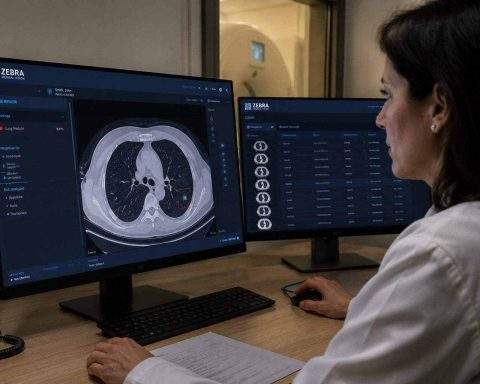
Nanox is trying to turn Zebra Medical Vision’s scan-reading software into a hospital business, not just an AI demo. The company said it had accelerated work around Nanox.AI, added Cedars-Sinai as a clinical-trial partner for an aortic valve calcification tool and pushed U.S. deployment of Nanox.ARC systems, with Chief Executive Erez Meltzer calling the fourth quarter “strong momentum.”
AI Layoffs in 2023: The Real Number Was 4,247, and the Next Wave Is Harder to Count

AI Layoffs in 2023: The Real Number Was 4,247, and the Next Wave Is Harder to Count

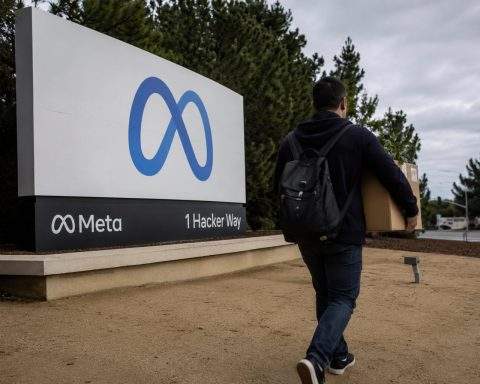
The answer to the headline question “How many jobs have been lost to AI in 2023?” is not millions. Using Challenger, Gray & Christmas data, U.S. employers linked 4,247 announced job cuts to artificial intelligence in 2023, based on the firm’s January 2024 figure of 4,628 AI-linked cuts since May 2023, including 381 that January; Andrew Challenger said companies were “not outright blaming AI” for many layoff decisions.
1 405 406 407

Stock Market Today

Go toTop