
Today: 19 July 2026
Browse Category

LSE:ISAT 16 February 2025 - 7 January 2026

From Battlefields to Space: How Ukraine’s Satellite Program Skyrocketed in 2024-2025

From Battlefields to Space: How Ukraine’s Satellite Program Skyrocketed in 2024-2025

Russia’s full-scale invasion has dramatically accelerated Ukraine’s drive into the satellite age. Once a quiet player in space, Ukraine in 2024-2025 is treating satellites as strategic necessities rather than luxuries mod.gov.ua. Under the pressures of war, the country has launched ambitious new programs, forged international partnerships, and harnessed commercial space technology to gain an edge on the battlefield and rebuild its economy. “Space is a domain that is increasingly calling for defense policy attention,” Danish Defense Minister Troels Poulsen remarked in mid-2025, noting how strengthening Ukraine’s satellite capabilities has become vital in the fight against Russia thedefensepost.com. This report provides a comprehensive look at Ukraine’s satellite and space-related developments during 2024 and 2025 – from government initiatives and international collaborations to military reconnaissance, private sector projects, and the transformative use of satellite services in war and peace.

2025 Satellite Internet Showdown: Starlink vs Viasat vs HughesNet vs OneWeb & More

2025 Satellite Internet Showdown: Starlink vs Viasat vs HughesNet vs OneWeb & More

Satellite internet is entering a new era in mid-2025. From SpaceX’s Starlink LEO constellation grabbing headlines to established GEO providers like Viasat and HughesNet rolling out faster plans, consumers and businesses now have more options than ever. This report compares the most popular satellite internet services worldwide – covering both home/consumer plans and enterprise solutions – on key factors like coverage, speeds, latency, pricing, equipment, data caps, and special features. Whether you’re a rural homeowner seeking broadband or an enterprise needing connectivity at sea, read on for a comprehensive comparison.
Mobile & Portable Satellite Internet in 2025: The Ultimate Guide to Starlink Roam, HughesNet, Inmarsat, Viasat & More

Mobile & Portable Satellite Internet in 2025: The Ultimate Guide to Starlink Roam, HughesNet, Inmarsat, Viasat & More

A SpaceX Starlink satellite dish set up outdoors. Portable satellite internet terminals like this bring high-speed connectivity to remote areas in 2025.Mobile and portable satellite internet delivers broadband connectivity from satellites in space directly to users on the move or in remote locations. Instead of relying on traditional ground cables or cell towers, a portable satellite dish or terminal connects to orbiting satellites to provide internet access virtually anywhere on Earth. This technology has rapidly advanced in recent years – SpaceX’s Starlink constellation alone now blankets around 130 countries with low-latency broadband from thousands of low-Earth-orbit satellites en.wikipedia.org. Traditional providers like HughesNet, Viasat, Inmarsat, and Iridium have also expanded and upgraded their satellite networks. In this report, we’ll explore how mobile satellite internet works, the key service providers in 2025, their pros and cons, regional coverage differences, costs, equipment needs, popular use cases, a comparison of major services, and future trends. Whether you’re an RVer, sailor, disaster responder, or remote worker, portable satellite internet is transforming what’s possible for staying connected off the grid.
The GEO Reboot: How 2040 Will Look from 36,000 km Up

The GEO Reboot: How 2040 Will Look from 36,000 km Up

Geostationary satellites – perched 36,000 km above Earth in the coveted orbit where they match Earth’s rotation – are entering a new era of renewal and reinvention. After decades of steady service, many of the world’s GEO satellites are aging beyond their planned lifespans, and a wave of replacements and upgrades is on the horizon. Between now and 2040, both government space agencies and commercial operators are preparing for a “GEO reboot” that will transform the orbital lineup. This report dives into global trends driving the geostationary replacement cycle, from the typical 15-year satellite lifespan and what ends a mission, to the technological leaps extending or shortening those cycles. We’ll look at historical patterns up to 2024 and use industry forecasts to predict how the GEO belt will evolve through 2040. Along the way, data visualizations – launch timelines, fleet age distributions, replacement forecasts – will illuminate the coming changes. Finally, we examine the key forces at play: policy shifts, cost pressures, debris mitigation, and surging demand for services. By the end, one thing will be clear – the geostationary orbit of 2040 will be a very different, more dynamic place than it is today, as a new generation of
High Seas Broadband Boom: Maritime VSAT & L-Band Services Market Set to Soar by 2032

High Seas Broadband Boom: Maritime VSAT & L-Band Services Market Set to Soar by 2032

The maritime satellite communications market is entering a dynamic growth phase, buoyed by surging demand for connectivity at sea. In the coming years, services delivered via Very Small Aperture Terminal and L-band satellite links are expected to expand rapidly, transforming how ships stay connected on the open oceans. Industry forecasts project robust growth through 2032 – with the total maritime satellite communication market anticipated to reach roughly $12.4 billion by 2032 globenewswire.com. This report provides a deep dive into global trends for maritime VSAT and L-band services from 2025 to 2032, including market forecasts, key drivers, competitive landscape, technological innovations, and challenges shaping this critical connectivity sector. Maritime operators are riding a wave of digitalization, upgrading from legacy narrowband links to high-speed broadband at sea, all while maintaining reliable L-band backups for safety. The result is a “best of both worlds” approach – VSAT delivers unprecedented data speeds for crew and business use, and L-band ensures resilient coverage for critical communications. In the sections below, we chart the course of this market’s evolution, breaking down growth projections, segment trends, major players, and the innovations enabling a high-speed, always-connected future on the high seas.
11 June 2025
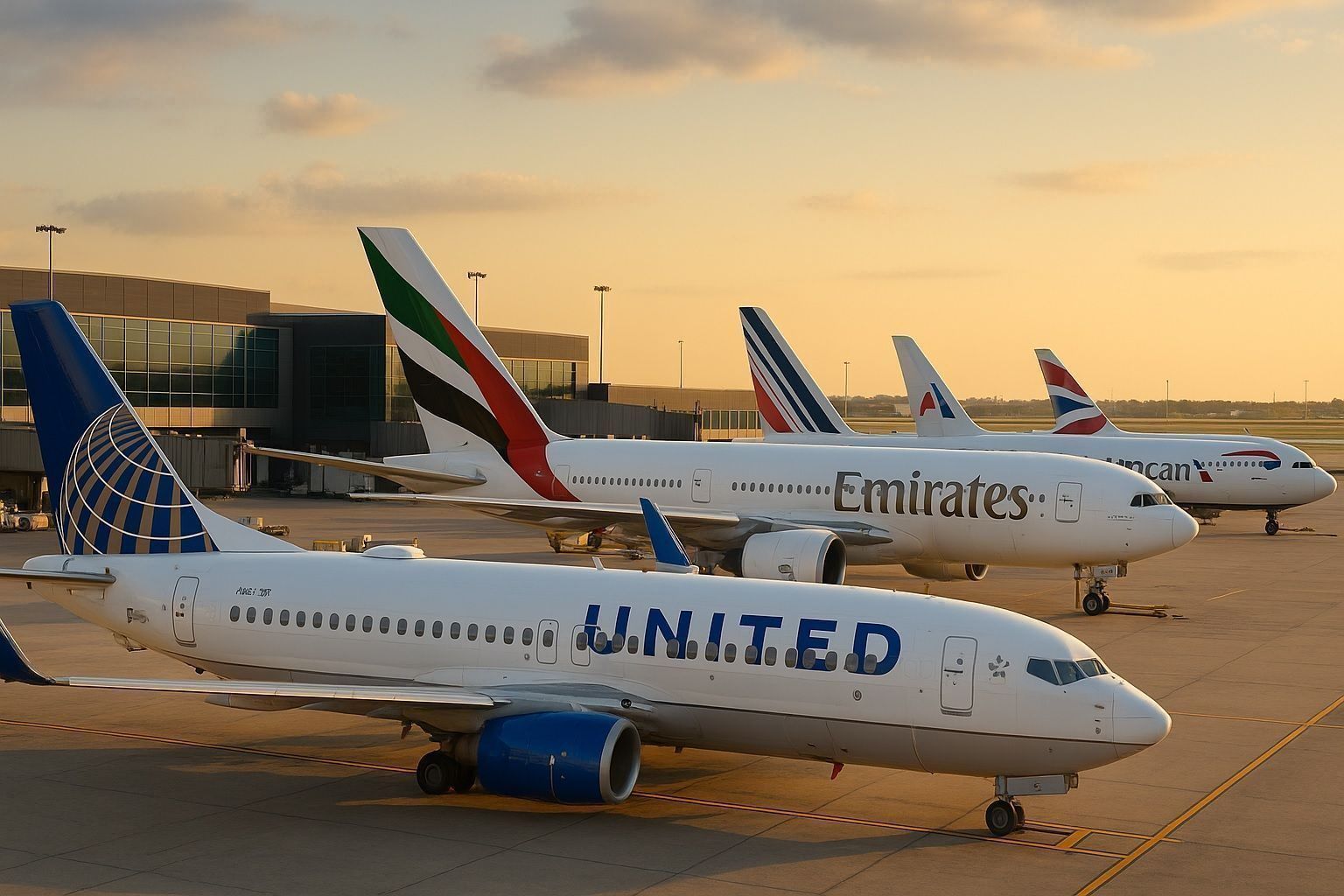
In-Flight Wi-Fi Takes Off: The Sky-High Race for Satellite Connectivity 2024–2030

In-Flight Wi-Fi Takes Off: The Sky-High Race for Satellite Connectivity 2024–2030

In-flight connectivity via satellite has shifted from a luxury novelty to an expected amenity in air travel. As airlines emerge from the pandemic, they are accelerating investments in high-speed Wi-Fi to meet passenger demand and gain competitive edge. Recent surveys show that 83% of passengers are more likely to rebook with an airline that offers quality onboard Wi-Fi, and free connectivity is now the most influential factor when choosing an airline Inmarsat Inmarsat. This report provides a comprehensive roadmap of IFC adoption from 2024 through 2030, examining global and regional trends, airline strategies, and the evolving satellite technologies enabling the next generation of in-flight Wi-Fi. It also explores market dynamics driving IFC expansion, including passenger expectations for home-like internet speeds aloft, competitive differentiation through free Wi-Fi offerings, and new revenue streams for airlines. Key technical and regulatory considerations – from antenna innovations and bandwidth scalability to spectrum policy and cybersecurity – are analyzed. A year-by-year deployment timeline is outlined, and a comparative table of major IFC providers highlights their coverage, technology, partnerships, bandwidth, and airline clients.
fldksafljads

Satellite Phones: Comprehensive Global FAQ

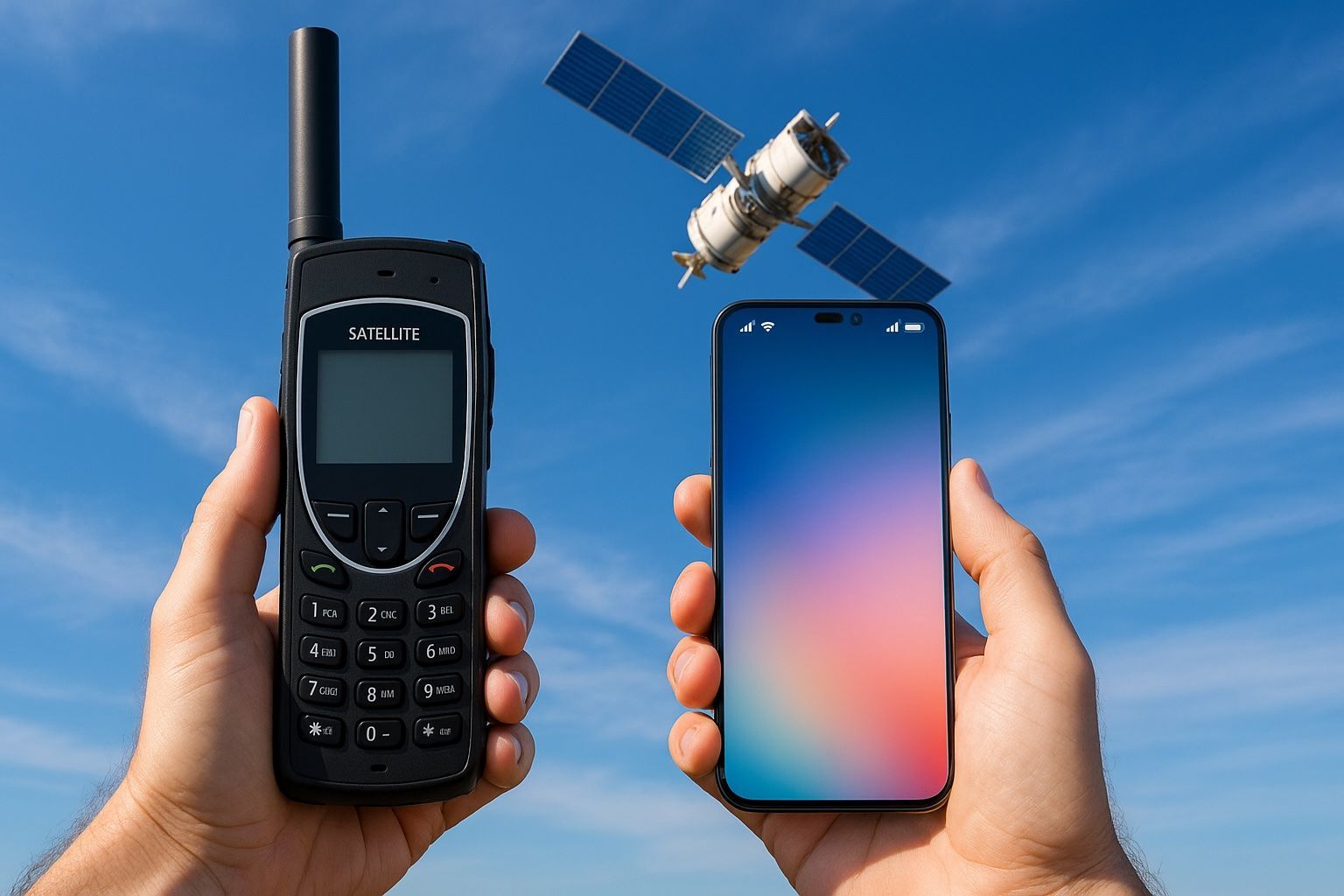
A satellite phone is a mobile phone that connects directly to orbiting satellites instead of terrestrial cell towers. This means it can place calls and send messages from almost anywhere on Earth, especially in regions without cellular coverage. Like a regular cell phone, a satphone supports voice calling and SMS texting, and some models offer low-speed data for email or basic internet access. The key advantage is that satellite phones work in remote areas – mountains, oceans, deserts – where no landline or cell network exists. However, they require a clear line-of-sight to the sky to reach the satellite, so they typically have a prominent antenna and must be used outdoors or near a window.
When the Grid Goes Dark: How Satellite Phones Keep Us Connected in Emergencies

When the Grid Goes Dark: How Satellite Phones Keep Us Connected in Emergencies

When hurricanes flatten cell towers and earthquakes sever landlines, staying connected becomes a lifeline. In such dire scenarios, satellite phones emerge as critical tools to maintain communication when the grid goes dark. Unlike regular cell phones tied to terrestrial networks, satellite phones link directly to satellites orbiting above, enabling calls and messages from virtually anywhere on Earth. This report explores how satellite communication technology works and why it’s invaluable during emergencies. We’ll compare satellite phones with other emergency comms, profile the major satellite phone providers, and examine real-world case studies – from natural disasters to conflict zones and remote expeditions. We’ll also consider the advantages and limitations of satellite phones in crisis settings, the regulatory hurdles in some regions, their role in government and humanitarian operations, and emerging innovations that are shaping the future of emergency connectivity.
Out of Signal? These Phones Talk to Space! The Truth About Satellite SMS and Satellite Phones

Out of Signal? These Phones Talk to Space! The Truth About Satellite SMS and Satellite Phones

In today’s connected world, we expect our phones to have signal everywhere – but far beyond the reach of cell towers, only satellites can bridge the gap. Satellite communication refers to using orbiting satellites to send and receive signals, allowing phones to connect where no ground network exists en.wikipedia.org. This is crucial for emergency responders, explorers, sailors, and anyone in remote areas or disaster zones where terrestrial networks are down. Satellite connectivity has proven to be a lifeline in natural disasters and conflicts, as it remains operational even when local infrastructure fails en.wikipedia.org. In recent years, advances have brought satellite links to ordinary smartphones, meaning even if you’re “out of signal,” your phone might still “talk to space” to keep you connected.
Internet Access in Libya: A Comprehensive Overview

Internet Access in Libya: A Comprehensive Overview

Libya’s internet infrastructure is recovering and evolving after years of conflict. Under Muammar Gaddafi’s regime, the telecom sector was entirely state-controlled and private competition was virtually nonexistent​ mondaq.com. The primary telecommunications holding is the Libyan Post, Telecommunication and Information Technology Company, which oversees key state-owned providers​ libyareview.com. Major service providers include:
16 February 2025
Go toTop