
Today: 18 July 2026
Browse Category

NASDAQ:VSAT 18 July 2025 - 8 July 2026

NASA New Horizons wake-up spotlights deep-space comms gap still out of investor reach

NASA New Horizons wake-up spotlights deep-space comms gap still out of investor reach

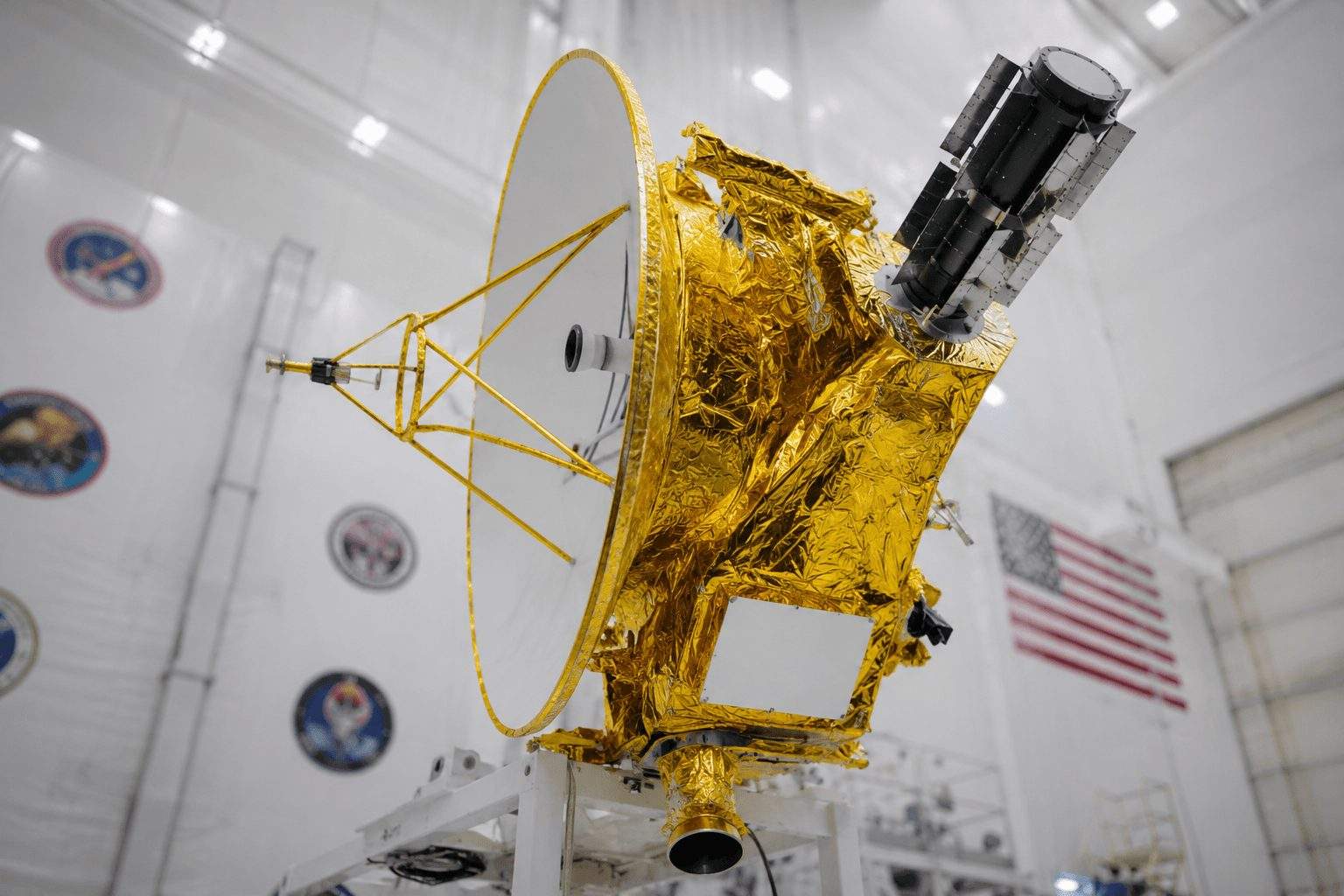
NASA’s New Horizons mission is showing how far commercial space communications still have to go. The agency’s Near Space Network handles missions as far as 2 million km from Earth, but New Horizons is about 9.5 billion km out. That’s around 4,750 times farther than the edge of NASA’s current commercial network. The agency buys commercial direct-to-Earth and relay services only within that range.
Rocket Lab-Iridium deal puts cash-flow satellites in focus for space stocks in June 2026

Rocket Lab-Iridium deal puts cash-flow satellites in focus for space stocks in June 2026

Space and satellite stocks faced a tougher test this Monday than the SpaceX-driven rally that kicked off June, as investors started to focus on networks and contracts over just launch schedules. Rocket Lab Corporation said it will buy Iridium Communications Inc. in a deal valued at about $8 billion. The deal brings Rocket Lab access to L-band spectrum, over 2.55 million subscribers and $495 million in 2025 operational EBITDA to fold into its launch and spacecraft operations.
Space & Satellite Stocks Today: Rocket Lab (RKLB), Viasat (VSAT), Planet Labs (PL), Spire (SPIR), Iridium (IRDM) and Globalstar (GSAT) — News, Forecasts and Analysis for Dec. 17, 2025

Space & Satellite Stocks Today: Rocket Lab (RKLB), Viasat (VSAT), Planet Labs (PL), Spire (SPIR), Iridium (IRDM) and Globalstar (GSAT) — News, Forecasts and Analysis for Dec. 17, 2025

Space and satellite stocks are back in the spotlight on Wednesday, December 17, 2025, as investors juggle a busy mix of government launch schedules, fresh earnings, analyst price targets, and connectivity breakthroughs—all while the broader U.S. market digests shifting expectations for interest rates and policy headlines.
Viasat (VSAT) Soars to a 52‑Week High on Analyst Upgrade; Earnings Beat and ViaSat‑3 F2 Launch Delay in Focus — Nov 10, 2025

Viasat (VSAT) Soars to a 52‑Week High on Analyst Upgrade; Earnings Beat and ViaSat‑3 F2 Launch Delay in Focus — Nov 10, 2025

Viasat, Inc. rallied to a new 52‑week high on Monday after a fresh Outperform upgrade and $52 price target from Raymond James. The move extends gains from Friday’s Q2 FY2026 results, which showed an adjusted EPS beat and narrowing losses. Meanwhile, the ViaSat‑3 F2 satellite launch remains scrubbed pending a new date after back‑to‑back attempts last week. ulalaunch.com+4Investing.com+4Finviz+4
Blue Origin’s New Glenn Set to Launch NASA’s ESCAPADE to Mars Today (Nov. 9): Liftoff at 2:45 p.m. ET — How to Watch, Weather, Flight Plan & What’s Onboard

Blue Origin’s New Glenn Set to Launch NASA’s ESCAPADE to Mars Today (Nov. 9): Liftoff at 2:45 p.m. ET — How to Watch, Weather, Flight Plan & What’s Onboard

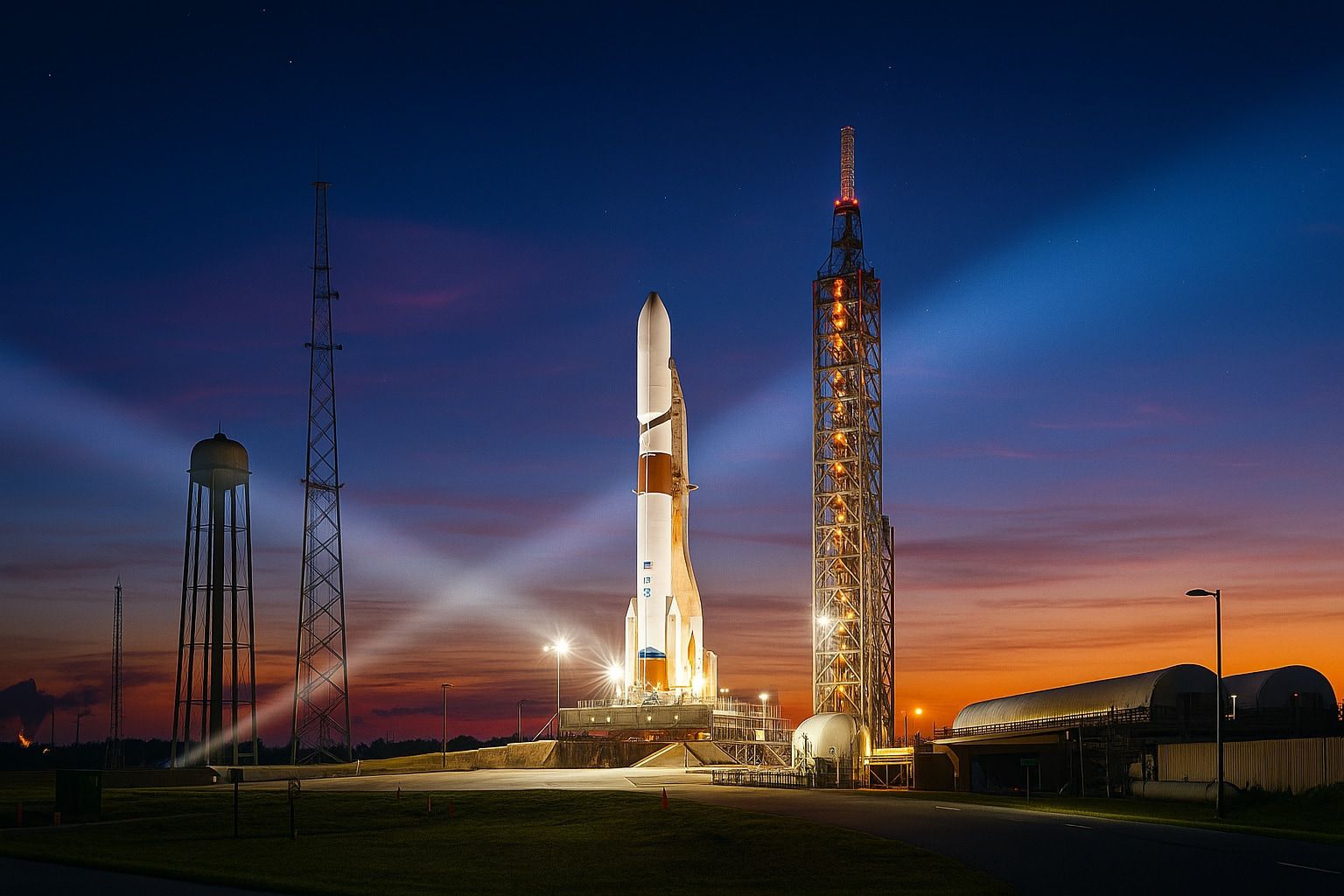
Blue Origin’s heavy‑lift New Glenn rocket is poised for its second orbital mission this afternoon, carrying NASA’s twin ESCAPADE spacecraft on a path toward Mars along with a Viasat communications demo. The launch window opens at 2:45 p.m. ET from Launch Complex 36 at Cape Canaveral Space Force Station; Blue Origin’s official webcast begins ~45 minutes before liftoff. Blue Origin
9 November 2025
SpaceX: Comprehensive Overview of History, Technologies, Missions, and Future Plans

SpaceX’s Surprise Doubleheader: 29 New Starlinks Tonight — and a Blistering Launch Cadence That’s Reshaping Satellite Internet (and Rival Stocks)

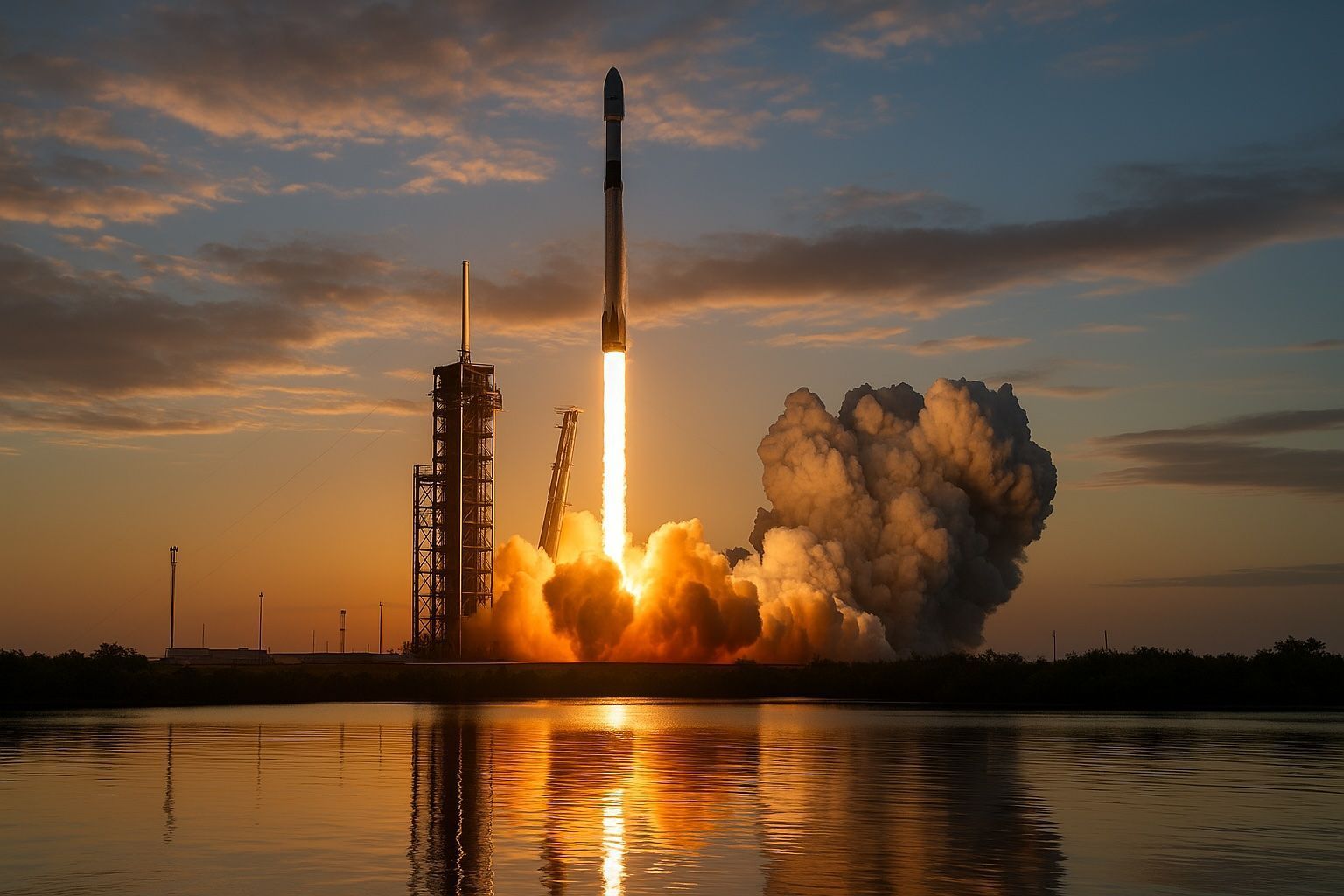
SpaceX’s Starlink 6‑81 adds 29 “V2 Mini” satellites to the world’s largest active constellation. The flight is set for 6:48 p.m. EST out of SLC‑40 at Cape Canaveral, with the 45th Weather Squadron calling the odds over 95% favorable. As Spaceflight Now summarized ahead of liftoff, SpaceX has “at least eight [Starlink] missions planned [in November] before the Thanksgiving Day holiday.” Spaceflight Now
5 November 2025
Viasat’s 2025 Takeoff: Stock Soars, New Satellites Launch, and a High-Stakes Future

Viasat’s 2025 Takeoff: Stock Soars, New Satellites Launch, and a High-Stakes Future

Viasat’s stock has been on a tear in 2025, marking a stark reversal of fortune. By late Q3 2025, VSAT shares had climbed roughly +280% year-to-datetrefis.com – a dramatic rebound after plummeting 70% in 2024trefis.com. The rally has accelerated through the year: a fresh surge in August saw the stock jump 25% in six daystrefis.com, as investors reacted to improving financial news and strategic developments. Viasat’s market capitalization now hovers around $4–4.5 billiontrefis.com, up from barely $1 billion at 2024’s trough, yet the stock still trades at a substantial discount to historical valuation multiples. At about 1.5× enterprise value/sales, VSAT is 22% below its 5-year average and at a 66% discount to the broader market’s EV/Sfinimize.com – reflecting lingering profit concerns. For context, peer Iridium Communications commands ~5.8× salesfinimize.com thanks to its solid margins, while Viasat’s depressed multiple suggests skepticism about its earnings path.
Space Race Showdown, Mars Surprises & a New ‘Mini-Moon’ – Global Space News (Sept 15–16, 2025)

Space Race Showdown, Mars Surprises & a New ‘Mini-Moon’ – Global Space News (Sept 15–16, 2025)

China’s latest launch: On Sept. 16, China launched a test satellite for its planned satellite-internet network, using a Long March 2C rocket with a Yuanzheng-1S upper stage english.news.cn. Liftoff from Jiuquan at 9:06 a.m. Beijing time was successful, inserting the tech demo satellite into orbit to advance China’s broadband megaconstellation plans. This marked the 595th flight of China’s Long March rocket family english.news.cn, underscoring China’s rapid launch cadence. The mission highlights Beijing’s push into satellite internet – an area of growing strategic importance as China races to build its own Starlink-like network.
Starlink Blitz, Spy Sat Scare & Mission Milestones: Space News Roundup (Sept 4–5, 2025)

Starlink Blitz, Spy Sat Scare & Mission Milestones: Space News Roundup (Sept 4–5, 2025)

NASA & SpaceX – New Boosts and Milestones: In a notable first for ISS operations, SpaceX’s CRS-33 Dragon cargo ship successfully executed a reboost of the International Space Station on Sept. 3 nasa.gov. Firing new thrusters in its trunk for over five minutes, the uncrewed Dragon raised the ISS orbit by about a mile – inaugurating a capability that will be used periodically through fall 2025 to help maintain the station’s altitude nasa.gov nasa.gov. This test comes as NASA seeks alternatives to rely less on Russia’s Progress vehicles for station-keeping. Meanwhile, SpaceX is poised for a landmark booster recovery: the company’s next Starlink mission is set to achieve the 500th landing of a Falcon first stage if successful spaceflightnow.com. The Starlink 10-57 launch from Kennedy Space Center, scheduled for early Sept. 5, will mark SpaceX’s 111th flight of the year – keeping the company on pace for a record ~170 launches in 2025 spaceflightnow.com. The veteran Falcon 9 booster flying this mission is on its 27th reuse, underscoring SpaceX’s aggressive turnaround and reusability practices spaceflightnow.com. Weather was 70% favorable for the sunrise liftoff, with Space Force meteorologists monitoring coastal showers but expecting no organized storms during the launch window spaceflightnow.com.
Global Satellite Industry Skyrockets: Inside the $400B Space Boom and the Race to $1+ Trillion by 2035

Global Satellite Industry Skyrockets: Inside the $400B Space Boom and the Race to $1+ Trillion by 2035

Just 10–15 years ago, the satellite industry was a relatively stable domain dominated by government programs and a handful of commercial players focused on geostationary communications satellites. In 2010 the global space economy was around $277 billion thespacereport.org, heavily driven by broadcasting and government-funded activities. Since then, the industry has nearly doubled in size, fueled by a wave of private-sector innovation often dubbed the “NewSpace” movement. Companies like SpaceX and Blue Origin – founded in 2002 and 2000 respectively – began to challenge traditional aerospace firms by the early 2010s, pioneering reusable rockets and drastically lowering launch costs. In parallel, the advent of standardized small satellites and microsatellite constellations enabled startups to enter space businesses with unprecedented speed and affordability.
Wi‑Fi Titans Clash: Starlink Gen3 vs TP‑Link Deco BE95 vs Netgear Orbi 970 – 2025 Mesh Router Showdown

Global Satellite Internet Showdown 2025: Starlink vs. Viasat vs. OneWeb – Who’s Winning the Race for Space Broadband?

Satellite internet has entered a new era in 2025. Once a niche last-resort service with slow speeds and tiny data caps, it’s now a fast-growing sector powering everything from rural homes to airplanes in flight. The charge has been led by SpaceX’s Starlink, the low-Earth orbit constellation that proved satellite broadband can be fast and relatively low-latency. Hot on its heels are legacy players like Viasat and HughesNet upgrading their systems, new LEO networks like OneWeb targeting businesses, and tech giants like Amazon’s Project Kuiper preparing to launch full services. Even regional and government initiatives are joining the fray to connect hard-to-reach populations.
Grenadines Internet Access 2025: Fiber, 4G, and Starlink Connecting Paradise

Grenadines Internet Access 2025: Fiber, 4G, and Starlink Connecting Paradise

The Grenadines – a chain of idyllic islands including Bequia, Mustique, Canouan, Union Island, Mayreau, and more – are rapidly shedding their past reputation of sluggish internet. In 2025, these tropical gems enjoy unprecedented connectivity options: subsea fiber-optic cables now link key islands to high-speed broadband, 4G LTE mobile networks blanket most populated areas, and satellite internet is emerging as a game-changer for remote access. This report provides a comprehensive look at internet access across the Grenadines, covering current infrastructure, providers, service types, coverage and performance, ongoing challenges, and practical insights for residents, tourists, digital nomads, and investors alike.
10 August 2025
Free Satellite Internet: Myth or Reality? The Cheapest Options Revealed

Free Satellite Internet: Myth or Reality? The Cheapest Options Revealed

The concept of free internet beamed from satellites is undeniably alluring. Imagine getting online from anywhere on Earth without paying a monthly bill – a potential game-changer for remote communities and travelers. Over the years, there have even been ambitious claims of making this a reality. For instance, in 2018 a Chinese company LinkSure announced plans for a 272-satellite constellation to provide free global Wi-Fi by 2026 abc.net.au abc.net.au. Likewise, start-up Quika touted “the world’s first entirely free high-speed satellite internet” for developing countries, aiming to bridge the digital divide americantv.com. These projects generated excitement – one Chinese social media user gleefully imagined “going out without asking for a Wi-Fi password” if LinkSure succeeded abc.net.au. Clearly, the demand for no-cost connectivity from space is high. But how close are we to that ideal?
Internet Access and Satellite Connectivity in Honduras: A Digital Lifeline in Central America

Internet Access and Satellite Connectivity in Honduras: A Digital Lifeline in Central America

Honduras has made steady gains in internet connectivity over the past decade, transforming digital access into a crucial lifeline for its population. As of early 2024, an estimated 7.03 million Hondurans were internet users, representing about 65.9% of the population datareportal.com. This marks a significant rise from just a few years prior – in 2017, only about 25–32% of the population had internet access giswatch.org, and by 2022 penetration was 55.9% datareportal.com. The COVID-19 pandemic, economic initiatives, and expanding mobile networks have all accelerated internet adoption in recent years. Still, roughly one-third of Hondurans remain offline datareportal.com, highlighting the work left to bridge the digital divide.
Internet Access in Vatican City: History, Infrastructure, Providers, and Modern Challenges

Internet Access in Vatican City: History, Infrastructure, Providers, and Modern Challenges

The Vatican City State, though the world’s smallest country, boasts a modern telecommunications system. It controls its own top-level internet domain .va and nearly all of its roughly 800 residents have internet access, with cellular phones widely used in daily life mesacc.edu. Over the past few decades, the Vatican has steadily embraced digital connectivity – from launching its first website in the 1990s to deploying fiber-optic broadband across its territory. This report provides a comprehensive overview of internet access in Vatican City, covering its historical development, current infrastructure, service providers and partnerships, coverage and performance, satellite services, institutional and public usage, regulatory and security measures, as well as challenges and ongoing digital initiatives.
1 2 3
Go toTop