

Euronext Today, 18 November 2025: European Stocks Slide as Eutelsat’s €828m Capital Raise, Nexans Buyback and AkzoNobel–Axalta Mega‑Merger Dominate Trade
European equities on Euronext are under pressure today, 18 November 2025, as investors digest a fresh wave of capital‑raising, buybacks and a blockbuster cross‑border merger against a backdrop of global risk‑off sentiment.

Internet Under Siege: Cable Chaos, Satellite Surges & Digital Divide Drama (Sept 9–10, 2025)
Sources: Global news reports and press releases from Sept 9–10, 2025 were used in compiling this roundup timesofindia.indiatimes.com aljazeera.com space.com reuters.com reuters.com prescottenews.com prescottenews.com prnewswire.com statescoop.com, along with statements from officials and industry leaders aljazeera.com aljazeera.com. Each development reflects the rapidly evolving landscape of global internet access – from physical infrastructure challenges and cutting-edge satellite deployments to the ongoing battles over digital rights and inclusion. The 48 hours of news around September 9–10, 2025, make one thing clear: the push to connect the world’s population continues to face both exciting breakthroughs and formidable obstacles.

Mystery Cable Cuts, SpaceX’s $17B Gamble & Satellite Showdowns – Internet Access Roundup (Sept 8–9, 2025)
A sudden undersea communications crisis struck over the weekend as multiple fiber-optic cables were mysteriously cut in the Red Sea. On Sept 7, internet monitors reported that two critical subsea systems – the SEA-ME-WE 4 and IMEWE cables – were severed near Jeddah, Saudi Arabia ts2.tech. The impact was felt across continents: connectivity slowed to a crawl or halted entirely in countries including India, Pakistan, Kuwait, Saudi Arabia and the UAE ts2.tech. “Multiple countries including India and Pakistan have been affected” by the outage, confirmed NetBlocks, calling it a “series of subsea cable outages” hitting the region reuters.com ts2.tech. Major Gulf telecoms Etisalat and Du experienced nationwide slowdowns, prompting user complaints of sluggish speeds ts2.tech. Even Microsoft sounded the alarm – Azure cloud customers were told to expect higher latency after “multiple undersea fiber cuts in the Red Sea” forced data to detour on longer paths reuters.com.

Global Satellite Industry Skyrockets: Inside the $400B Space Boom and the Race to $1+ Trillion by 2035
Just 10–15 years ago, the satellite industry was a relatively stable domain dominated by government programs and a handful of commercial players focused on geostationary communications satellites. In 2010 the global space economy was around $277 billion thespacereport.org, heavily driven by broadcasting and government-funded activities. Since then, the industry has nearly doubled in size, fueled by a wave of private-sector innovation often dubbed the “NewSpace” movement. Companies like SpaceX and Blue Origin – founded in 2002 and 2000 respectively – began to challenge traditional aerospace firms by the early 2010s, pioneering reusable rockets and drastically lowering launch costs. In parallel, the advent of standardized small satellites and microsatellite constellations enabled startups to enter space businesses with unprecedented speed and affordability.
Global Satellite Internet Showdown 2025: Starlink vs. Viasat vs. OneWeb – Who’s Winning the Race for Space Broadband?
Satellite internet has entered a new era in 2025. Once a niche last-resort service with slow speeds and tiny data caps, it’s now a fast-growing sector powering everything from rural homes to airplanes in flight. The charge has been led by SpaceX’s Starlink, the low-Earth orbit constellation that proved satellite broadband can be fast and relatively low-latency. Hot on its heels are legacy players like Viasat and HughesNet upgrading their systems, new LEO networks like OneWeb targeting businesses, and tech giants like Amazon’s Project Kuiper preparing to launch full services. Even regional and government initiatives are joining the fray to connect hard-to-reach populations.

From Sand to Signal: The Shocking Reality of Internet Access in the Sahara
Introduction: The image of the Sahara Desert typically evokes endless dunes and remote oases – not Wi-Fi signals. Yet in today’s world, even this vast expanse is inching its way online. Spanning roughly 9 million square kilometers across North Africa, the Sahara is the largest hot desert on Earth Esimo. It stretches across or borders about ten countries – including Algeria, Mali, Niger, Chad, Libya, Sudan, Egypt, Mauritania, Morocco, and Tunisia – each grappling with the challenge of bringing internet connectivity to some of the most remote communities on the planet. The harsh environment and low population density long left many Saharan areas “digital black holes” with virtually no reliable internet or mobile service Esimo. Recently, however, technological breakthroughs and policy initiatives have sparked hope for a more connected future in this “digital desert.” Below, we explore the current state of internet infrastructure in the Sahara, the rise of satellite internet solutions like Starlink and OneWeb, the unique challenges to connectivity, efforts to bridge the digital divide, the costs of getting online, and how access to the internet is transforming Saharan societies.

The Truth About Internet Access in Slovakia: How Fast, How Cheap, and Is Satellite the Future?
Slovakia’s internet landscape offers a mix of ultra-fast fiber in cities, widespread mobile broadband, and emerging satellite options. Overall connectivity is strong – nearly all households can get online – and prices are notably affordable by European standards. This report provides a comprehensive look at how Slovaks connect to the internet: the types of access available, coverage in urban vs. rural areas, major service providers, typical speeds and latency, quality and reliability, government initiatives, and how Slovakia compares with EU and global benchmarks. We’ll also explore the rise of satellite internet and whether it could shape the future of broadband in Slovakia.

Apple’s $100B Surprise, Space Startup Soars, and Tech Glitches Galore – Tech News Roundup (Aug 6–7, 2025)
Apple Doubles Down on US Manufacturing: Apple announced an additional $100 billion investment in US manufacturing to stave off tariff threats theverge.com theverge.com. The new “American Manufacturing Program” expands Apple’s partnership with Corning to make “100 percent” of iPhone and Apple Watch cover glass in Kentucky, and teams with Samsung at its Texas chip fab on a “never-before-used” chipmaking technology theverge.com. “I’m proud to say that Apple is leading the creation of an end-to-end silicon supply chain right here in America... We’re going to keep working with our suppliers to move even more of this incredibly advanced work to America,” CEO Tim Cook said theverge.com. The pledge builds on Apple’s earlier $500 billion US investment plan and comes as President Donald Trump pressures firms to produce domestically, even threatening a 25% tariff on iPhones if they don’t theverge.com theverge.com. Apple’s move appears to be paying off—its stock rose 1.6% after the announcement, as Citi analysts noted “concerns over incremental tariff impact to Apple have eased” reuters.com reuters.com.

Inside the Struggle for Internet Access in Western Sahara: From Political Blackouts to Satellite Lifelines
Western Sahara – a sparsely populated desert territory disputed between Morocco and the Sahrawi Arab Democratic Republic – faces unique challenges in connecting to the digital world. The region’s political limbo and harsh geography have historically kept it on the margins of internet development. Basic telecom statistics weren’t even tracked separately for Western Sahara for many years due to its contested status en.wikipedia.org. Yet, as the internet becomes essential for economic growth, education, and activism, Western Sahara’s people are striving to get online. This report delves into the current state of internet access in Western Sahara, the providers and infrastructure that enable it, and the obstacles – political, geographic, and economic – that still hamper connectivity. It also compares Western Sahara’s digital landscape with its neighbors and highlights initiatives aimed at bridging the digital divide in Africa’s last colony.

Satellite Internet Revolution: How SpaceX Starlink and Rivals Are Connecting the World from Space (2025–2030 Outlook)
Satellite internet is a form of wireless internet connectivity delivered via communications satellites orbiting the Earth ey.com. Instead of relying on terrestrial fiber-optic cables or cell towers, users connect through a satellite dish that beams data to satellites in space, which then relay the signals to ground stations connected to the global internet backbone. This means service can be accessed virtually anywhere on the planet, making satellite internet especially crucial for remote and rural areas where laying cables is impractical or cost-prohibitive ey.com. In these underserved regions – from isolated villages to ships at sea – satellite broadband can bridge the digital divide by providing high-speed connectivity where traditional infrastructure is lacking grandviewresearch.com reuters.com. The technology’s significance was vividly demonstrated when satellite networks were used to restore communication after natural disasters and during conflicts reuters.com reuters.com. In short, satellite internet has emerged as a game-changer for global connectivity, offering a new pathway to bring fast broadband to the hardest-to-reach places and to add resilience by diversifying beyond terrestrial networks.

Secret SpaceX Launch, Starlink Triumphs, and Solar Storm Warnings – Space News Roundup (July 13–14, 2025)
The past two days saw major space milestones and surprises across the globe. A mystery SpaceX launch carried a “smartphone in space” satellite for Israel, marking the Falcon 9’s 500th mission spokesman.com spaceflightnow.com. Meanwhile, satellite internet initiatives made strides – Starlink scored regulatory wins and debut services – as rivals in Europe and China unveiled their own direct-to-device connectivity plans ts2.tech ts2.tech. On the space station front, a private astronaut crew headed home space.com, and China readied a cargo ship to resupply its orbiting outpost ts2.tech. Astronomers weren’t left out: a colossal sunspot sparked space weather alerts ts2.tech, and scientists uncovered evidence of dozens of “invisible” galaxies swarming our Milky Way ts2.tech. Below is a comprehensive roundup of the weekend’s top satellite and space developments – from launch pads and labs to boardrooms and policy halls – complete with expert insights and official quotes.

Satellite Surprises and Space Shake-Ups: Weekend Roundup (July 12–13, 2025)
The past 48 hours delivered a blitz of satellite news across the globe. From a stealth SpaceX launch of a “smartphone in space” to international plans for new orbiting networks, this weekend saw major developments in civilian, commercial, scientific, and military space arenas. Here’s a comprehensive roundup of everything you need to know, complete with expert quotes and official statements, on satellite launches, breakthroughs, anomalies, and policy moves around the world.
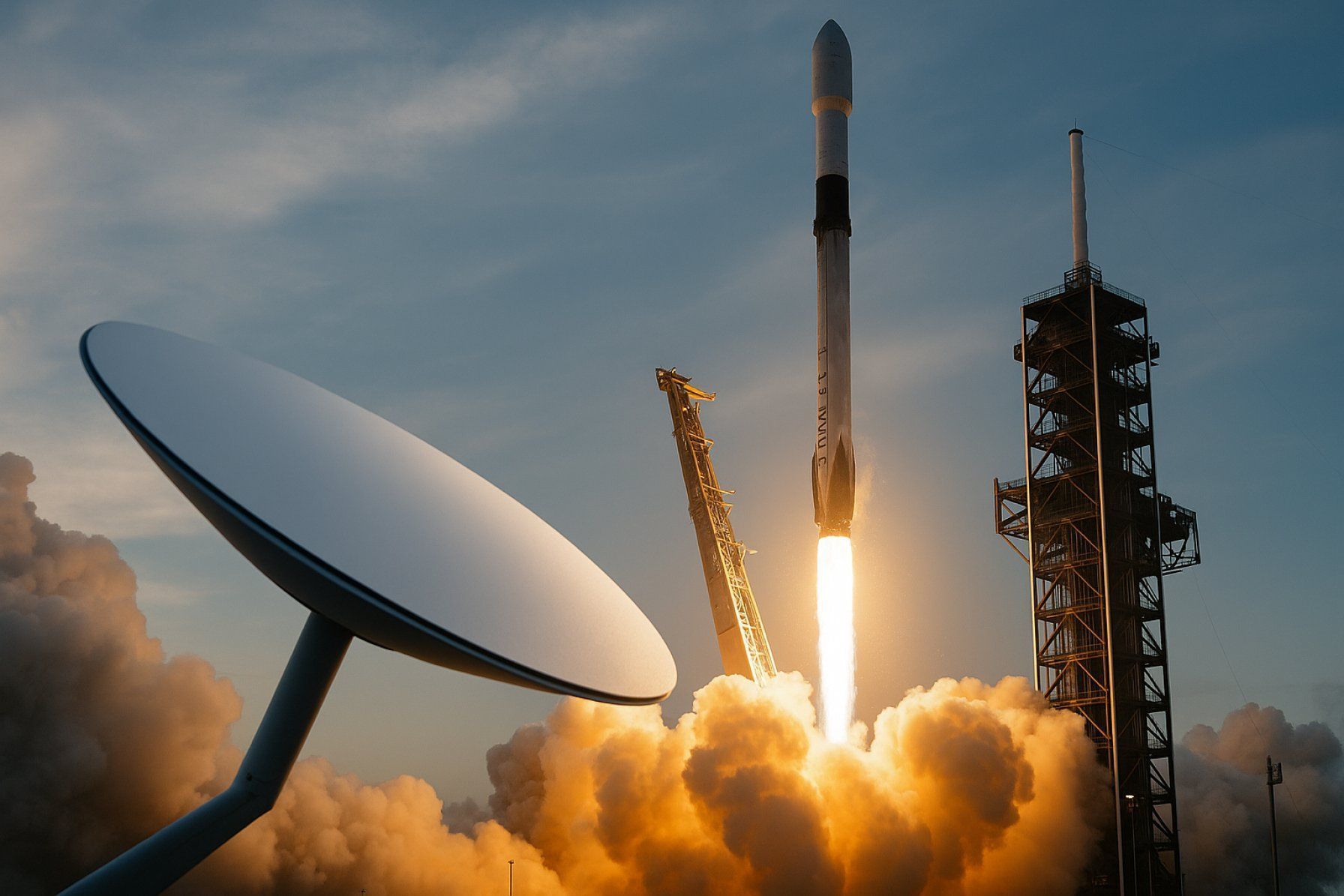
Space Race 2.0: Starlink, SpaceX, and the New Satellite Wars—How Today’s Space News Is Shaping Our Future / Updated: 2025, July 12th, 12:02 CET
NASA announced live space coverage on Netflix in 2025, following the launch of NASA+ on Amazon Prime. From July 2025, Starlink Direct to Cell, launched with T-Mobile, will let smartphones connect directly to Starlink satellites for calls and messages, backed by 657 Starlink V3 satellites. Starlink received regulatory clearance to deliver satellite internet to rural India, bridging the digital divide amid Elon Musk’s expanding political influence. Eutelsat achieved the world’s first successful 5G mobile connection via satellite through the IRIS2 program, enabling 5G on standard smartphones. SpaceX’s first GTO mission will carry Israel’s Dror-1 geostationary satellite from Cape Canaveral on
Space News Shockers: Satellite Wars, NASA Upheaval, and the Next Celestial Wonders Revealed / Updated: 2025, July 11th, 12:01 CET
Over 2,000 senior NASA employees have resigned amid budget cuts, with a potential 25% funding reduction threatening missions, while Sean Duffy, a former congressman and reality TV star, was named interim NASA administrator and serves as both NASA administrator and Secretary of Transportation. An alleged Iranian missile strike destroyed a $15 million U.S. communications radome at Al Udeid Air Base in Qatar, which housed the Modernization Enterprise Terminal (MET) for secure military communications. Russia’s secret Nivelir project drew attention after Cosmos 2558 released a small object in orbit, a move interpreted as a possible anti-satellite test signaling space-arms concerns. The
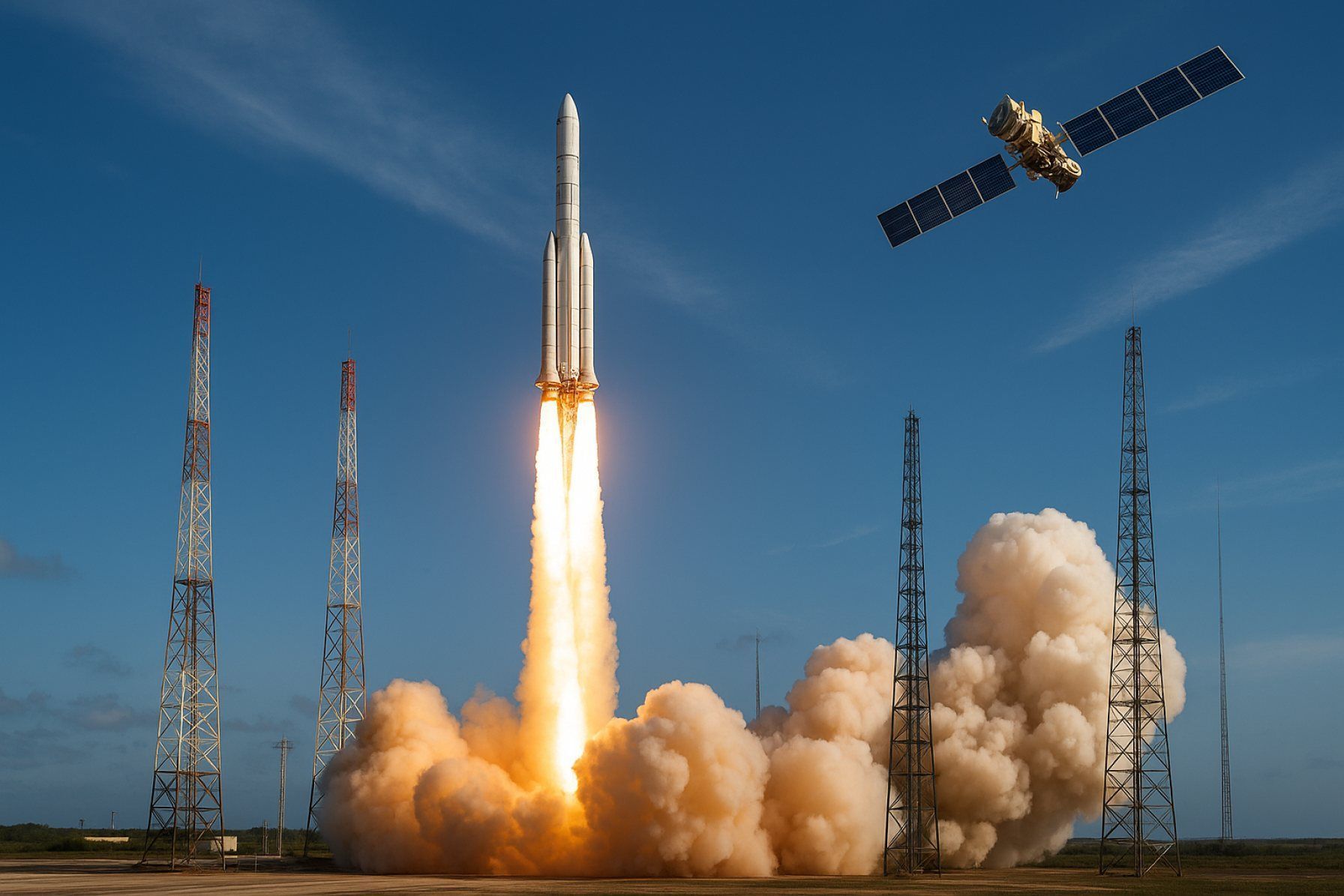
Space Race Heats Up: Europe’s Bid for Autonomy, Starlink’s Global Surge, and the New Era of Satellite Power / Updated: 2025, July 11th, 00:31 CET
In 2024 the US conducted 154 orbital launches, while Europe managed only three, underscoring Europe’s push to establish launch facilities in Sweden and Norway for continental autonomy. Starlink now has over 7,500 satellites in orbit and 5 million users, and operates on 1,000 aircraft, including 54 Qatar Airways Boeing 777s. France and the UK each invested over €163 million in Eutelsat, making France the largest shareholder and the UK holding a 10.9% stake, to expand Eutelsat’s LEO fleet and support Europe’s IRIS² project. Amazon’s Kuiper project is projected to generate $7.1 billion in consumer revenue by 2032, with about $23

Space & Satellite Deep Dive – 8th July 2025: Starlink Expansion, Interstellar Visitor, AI in Orbit & Global Policy Shifts / Updated: 2025, July 8th, 12:00 CET
SpaceX’s Starlink 10-28 mission launched from Cape Canaveral Space Force Station on July 8, 2025, deploying 28 broadband Starlink satellites into low-Earth orbit and marking the Falcon 9 booster’s 22nd flight, with the booster landing on the drone ship A Shortfall of Gravitas about 8 minutes and 14 seconds after liftoff. The 500th Falcon 9 launch occurred with the Starlink 10-25 mission, deploying 27 Starlink V2 Mini satellites and marking booster B1067’s 29th flight. 3I/ATLAS, discovered by NASA’s ATLAS survey in July 2025 in Chile, is about 20 km wide and travels up to 68 km/s, making it the third

Global Satellite Communications Boom: Major Launches, Mergers & Breakthroughs (June–July 2025)
The past two months have been exceptionally dynamic for the satellite communications industry worldwide. From a flurry of satellite launches and constellation deployments to high-stakes mergers, investments, and policy moves, the period saw rapid advances in commercial broadband, military networks, and new IoT applications. Below we break down the major events and trends – including new LEO internet services, strategic corporate shakeups, defense satcom initiatives, and market forecasts – with expert insights and analysis.

Space News Roundup: July 2025 / Updated: 2025, July 6th, 12:00 CET
MTG-S1, Europe’s first geostationary meteorological sounder, was launched with an Infrared Sounder and Copernicus Sentinel-4, enabling high-frequency atmospheric data collection over Europe and Africa. SpaceX planned the Starlink 10-28 mission for June 8 from Cape Canaveral on a Falcon 9, marking the 59th orbital launch of 2025, and won an $81.6 million USSF-178 contract. SpaceX’s Starship exploded over Florida during ascent, scattering debris before four mock satellites could be deployed. T-Mobile will launch T-Satellite with Starlink service on July 23, authorized for nearly all phones including the iPhone 13, with full satellite internet rolling out in October. MethaneSAT, an $88

Space-Age WiFi: How Starlink, HughesNet, and Viasat Are Beaming Broadband from Space
Introduction: Satellite internet has gone from a last-resort connection to a game-changing way to get online, thanks to a new generation of satellites beaming broadband down to Earth. Once known for slow speeds and high latency, satellite internet “WiFi” is now undergoing a revolution. Companies like SpaceX’s Starlink are launching thousands of low-orbit satellites to deliver fast internet even in the most remote corners of the globe. Meanwhile, established providers HughesNet and Viasat have launched new satellites and plans to remain competitive. The result is that people in rural villages, ships at sea, and even disaster zones can now get online where traditional cable or fiber can’t reach. This report will explain how satellite internet works, compare major providers, discuss technical advantages and limitations, explore key use cases from farms to war zones, outline costs and equipment, and examine recent innovations like low-Earth-orbit constellations. We’ll also forecast the future of satellite broadband – including global expansion and the challenges ahead – all in a clear, structured breakdown for both general readers and tech-savvy audiences.
TechStock² Updates
![Asia Stock Market Today 28/08/2026 [UPDATE: 00:51 SGT] [Salesforce Leads KASE Global Into Final Minutes After Asia’s Split Close]](https://ts2.tech/wp-content/uploads/2026/08/Asia-market-dashboard-2026-08-28-0051-480x384.jpg "Asia Stock Market Today 28/08/2026 [UPDATE: 00:51 SGT] [Salesforce Leads KASE Global Into Final Minutes After Asia’s Split Close]")