Today: 30 June 2026
Browse Category

Future Tech 29 July 2025 - 29 December 2025

Shocking AI Showdown: ChatGPT, Gemini & Claude Blaze New Trails in 2025

Shocking AI Showdown: ChatGPT, Gemini & Claude Blaze New Trails in 2025

In short, early Nov 2025 finds AI rapidly reshaping tech and business. Chatbots like ChatGPT and Claude remain at the forefront of reliability, while Google’s Gemini is closing some gapstechradar.comgeeky-gadgets.com. A flood of specialized AI tools is emerging, and experts say mastering AI is now essential for tomorrow’s workforceafrotech.com. Marketers report being freed from busywork by AI “agents” that personalize at scalesearchengineland.comsearchengineland.com. Behind the scenes, AI investments are monumental – Nvidia’s chip boom and OpenAI’s record IPO plans reflect a market that analysts mostly back with confidencereuters.comreuters.com. As one Hargreaves Lansdown strategist puts it, NVIDIA’s $5T cap “is more than a milestone; it’s a statement” of how central AI has becomereuters.com. Looking ahead, forecasters see continued growth but caution that companies and investors must stay agile. The “platform shift” to AI requires constant adaptation – brands must keep iterating, or risk being outpaced by those who harness these new tools most creativelysearchengineland.comsearchengineland.com. Sources: Industry reports and news from Nov 3–5, 2025 including Search Engine Land, TechRadar, AfroTech, South China Morning Post, Reuters, Yahoo Finance, and tech analysis sitestechradar.comscmp.comgeeky-gadgets.comreuters.comreuters.com. These are cited above where facts are mentioned.
Quantum Computing Inc. (QUBT): 2025’s Wild 3,200% Quantum Stock Surge – Boom or Bubble?

Quantum Computing Inc. (QUBT): 2025’s Wild 3,200% Quantum Stock Surge – Boom or Bubble?

QUBT’s share price has been on a rollercoaster in 2025, reflecting both speculative hype and sudden reversals. After an explosive rally in late 2024, QUBT entered 2025 at lofty levels and promptly cratered: shares plunged about –37% in January 2025 and –42% in February 2025 Portfolioslab, wiping out roughly two-thirds of its value in the first two months. This steep pullback from the late-2024 peak was likely a combination of profit-taking and sober reflection on the minimal fundamentals supporting the price. However, the volatility didn’t end there. QUBT staged another dramatic comeback in Q2 2025: the stock rebounded +68% in May and +69% in June 2025 Portfolioslab amid renewed enthusiasm for quantum tech. Notably, on June 11, 2025, QUBT spiked as much as +38% intraday after Nvidia CEO Jensen Huang publicly hailed quantum computing as nearing “an inflection point” Nasdaq Nasdaq. Huang’s endorsement, coupled with a cooler inflation report, ignited a sector-wide quantum rally that day – with QUBT leading the pack Nasdaq Nasdaq. This exemplifies QUBT’s high beta and sensitivity to macro sentiment: any whiff of positive news can trigger outsized gains, while disappointments or dilutive financing can send it diving.
Battle of AI Titans: ChatGPT vs Google Gemini – The Ultimate 2025 Showdown

Clash of the AI Titans: Google Gemini 2.5 vs. OpenAI ChatGPT‑5 (GPT‑5) in 2025

ChatGPT-5: OpenAI’s ChatGPT-5 is powered by the GPT-5 model, which was released on August 7, 2025 as the successor to GPT-4. GPT-5 is a multimodal large language model natively trained on both text and images, enabling it to understand and generate text with visual context seamlessly. At launch, it achieved state-of-the-art performance on a broad range of benchmarks in coding, mathematics, finance, and vision tasks. OpenAI reported major improvements in GPT-5’s abilities: faster responses, more accurate and detailed answers, stronger coding and writing skills, and significantly lower rates of hallucination compared to GPT-4. Notably, GPT-5 was designed to handle potentially harmful or sensitive prompts with “safe completions” – providing high-level, safe answers where possible instead of simply refusing queries. This reflects an updated alignment approach, aiming to be helpful yet avoid misuse. Another update is that ChatGPT-5’s style is less superficially agreeable – it’s more willing to provide critical or dissenting answers when appropriate rather than always saying “yes,” an adjustment to reduce sycophantic behavior. Under the hood, GPT-5’s architecture is actually a system of models. It consists of a high-throughput base model for most queries and a slower, deeper “GPT-5 Thinking” model for complex problems, coordinated by a real-time
Global Markets on Edge as Fed Rate Decision Nears: Asia Optimistic, West Cautious

Quantum Gold Rush: QUBT vs. D-Wave – Inside the High-Stakes 2025 Quantum Computing Showdown

Quantum Computing Inc. – Photonic Quantum Tech at Room Temperature: Quantum Computing Inc., branded as QCi, is a small-cap quantum technology company that has captured outsized attention due to its unconventional approach. Rather than using superconducting circuits or ion traps like many competitors, QCi focuses on photonic quantum computing – using particles of light passing through specialized optical chips to perform computations. The company’s core technology revolves around thin-film lithium niobate photonic integrated circuits nasdaq.com. This approach potentially offers a big advantage: QCi’s photonic qubits can operate at ambient room temperature, avoiding the need for the ultra-cold dilution refrigerators that systems from IBM, Google, D-Wave and others typically require nasdaq.com. By eliminating cryogenics, QCi aims to slash the cost and complexity of quantum hardware and allow easier scaling of quantum processors. QCi’s flagship prototype is the Dirac-3 quantum computer – a rack-mounted photonic processing unit that the company calls its highest-performance machine for optimization problems. It leverages what QCi terms “Entropy Quantum Computing,” an approach that intentionally harnesses and manages quantum noise and loss to help explore solution spaces quantumcomputinginc.com quantumcomputinginc.com. While such claims are hard for laypeople to verify, QCi has showcased the Dirac-3’s capabilities through demos and early
2025’s Robotic Dogs Unleashed: The Ultimate Cyberdog Showdown 🌐🤖🐕

2025’s Robotic Dogs Unleashed: The Ultimate Cyberdog Showdown 🌐🤖🐕

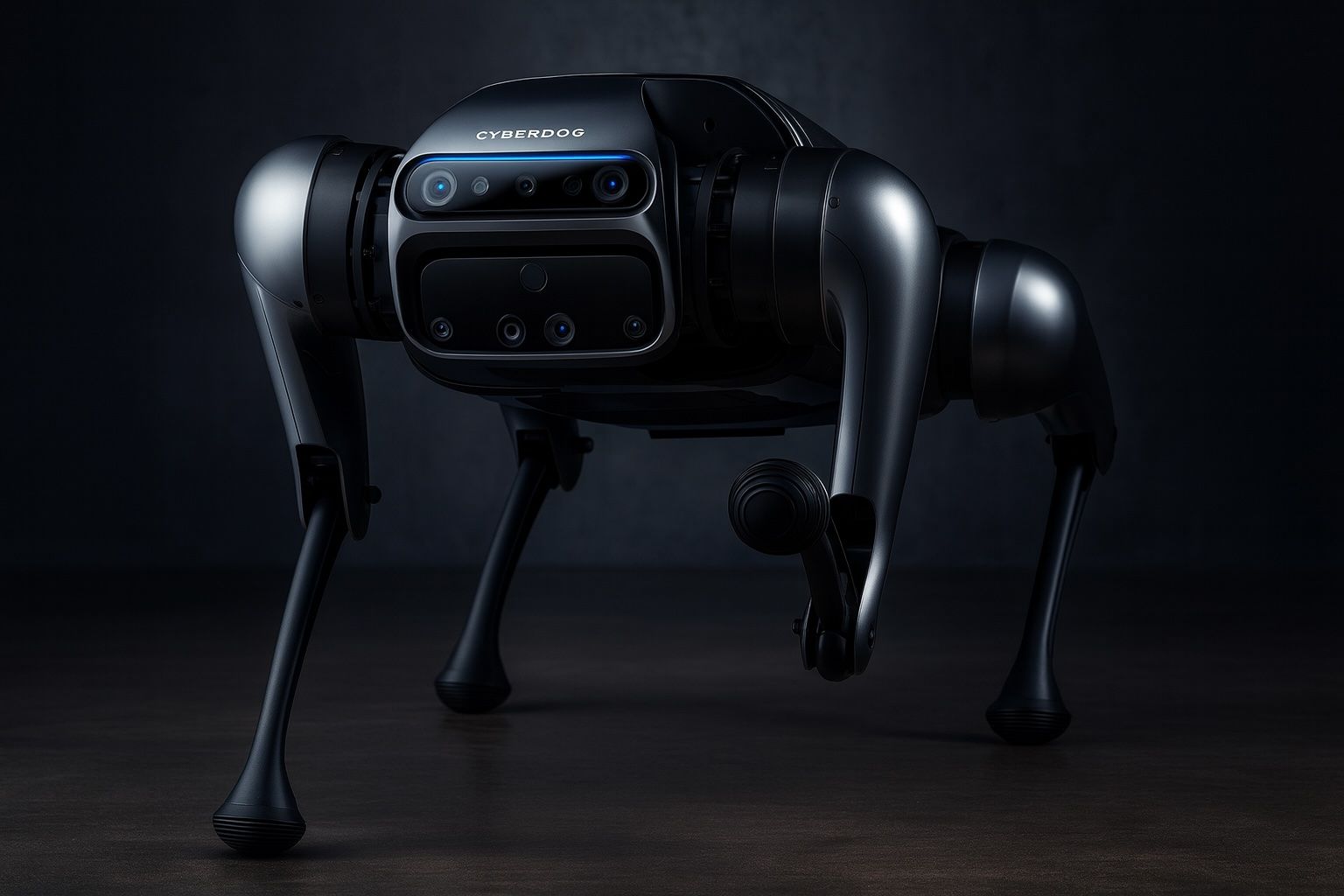
Cyberdogs are four-legged mobile robots that resemble mechanical canines. Unlike toy robots of the past, today’s cyberdogs leverage cutting-edge robotics and AI to move with animal-like agility and respond intelligently to their environment. They can trot, hop, and even dance, blurring the line between machine and pet. Crucially, these robots aren’t just gimmicks – they fulfill real roles: In short, “cyberdog” can mean a playful robo-pet or a hardcore autonomous inspector – or anything in between. Their appeal comes from combining the mobility of a dog with the intelligence of a computer. This unique package unlocks use cases across consumer tech, enterprise, and defense sectors.
The Ultimate Gaming Laptops of 2025 – Power, Portability, and Next-Gen Tech Unleashed

The Ultimate Gaming Laptops of 2025 – Power, Portability, and Next-Gen Tech Unleashed

To help you navigate the best gaming laptops of 2025, we’ve compared standout models across various categories – from no-compromise desktop replacements to budget-friendly portables: † CPU configurations: Razer’s Blade 16 offers either high-end Intel or a special AMD “Ryzen AI” edition pcgamer.com. ‡ Ryzen 9 9955HX3D is AMD’s 16-core mobile chip with 3D V-Cache, boosting frame rates in CPU-bound games.
11 September 2025
Quantum Revolution 2025: Unhackable Encryption, Superspeed Computing & the 6G Quantum Future

Quantum Revolution 2025: Unhackable Encryption, Superspeed Computing & the 6G Quantum Future

In 2025, the race is on to rebuild our digital security before quantum computers can crack it. Modern encryption protocols like RSA and ECC – which protect everything from online banking to emails – could be rendered obsolete by a powerful quantum computer running Shor’s algorithm. Post-quantum cryptography refers to new cryptographic algorithms designed to resist quantum attacks while still running on conventional computers csrc.nist.gov csrc.nist.gov. After a 7-year global competition, the U.S. National Institute of Standards and Technology finalized its first PQC standards in August 2024 nist.gov. These include a lattice-based key exchange and digital signature schemes derived from the algorithms CRYSTALS-Kyber, CRYSTALS-Dilithium, and SPHINCS+ csrc.nist.gov csrc.nist.gov. In March 2025, NIST selected an additional code-based encryption algorithm to be standardized by 2027 as a backup method csrc.nist.gov. “As we stand on the brink of a quantum revolution, the urgent need to migrate our cryptographic infrastructure to a quantum-safe framework has never been more critical,” warns cryptographer Michele Mosca weforum.org. The threat isn’t theoretical – attackers may already be stealing encrypted data now in hopes of decrypting it later when quantum decryption becomes possible f5.com cloudflare.com. This so-called “harvest now, decrypt later” tactic puts long-term sensitive information at risk today
Out-of-This-World Warfare: Inside U.S. Space Command’s Mission and Future

Out-of-This-World Warfare: Inside U.S. Space Command’s Mission and Future

The United States Space Command is the Pentagon’s dedicated hub for space warfare operations. It was originally activated in 1985 during the Cold War, when President Ronald Reagan approved a unified space command to coordinate military activities in orbit spacepolicyonline.com. For 17 years, this first iteration of Space Command oversaw satellite communications, missile warning, and space surveillance for the U.S. military. However, after the September 11, 2001 attacks, the Defense Department reshuffled its commands to prioritize homeland defense. In 2002, U.S. Space Command was inactivated and folded into U.S. Strategic Command as the military stood up U.S. Northern Command for continental defense spacepolicyonline.com. This move was seen as making room for the new NORTHCOM while keeping the total number of combatant commands limited. Space duties continued under STRATCOM, but without a singular focus, even as potential adversaries like China and Russia began advancing their own space capabilities spacepolicyonline.com. By the late 2010s, U.S. leaders grew concerned that space had evolved into a far less benign environment. Satellites had become indispensable to both national security and everyday life – enabling GPS navigation, banking transactions, communications, weather monitoring, and military precision strikes spacepolicyonline.com. At the same time, rival powers were actively developing
2 September 2025
AI’s Two-Day Tech Storm: Global Breakthroughs, Big Bets & Bold Moves (Aug 28–29, 2025)

AI’s Two-Day Tech Storm: Global Breakthroughs, Big Bets & Bold Moves (Aug 28–29, 2025)

It was a whirlwind 48 hours for the AI hardware and infrastructure arena. Nvidia’s blockbuster earnings call became a rallying cry for continued AI investment, even as some analysts warned of an overheating market. CEO Jensen Huang, the figurative general of the GPU juggernaut, emphatically rejected the notion of an AI slowdown reuters.com. “A new industrial revolution has started. The AI race is on,” Huang declared, projecting $3–4 trillion in AI infrastructure spending by 2030 reuters.com. This bullish forecast, he explained, stems from surging orders for Nvidia’s AI chips from cloud giants and data centers. In Huang’s view, we are still in the “early stages” of an AI boom, with hyperscalers pouring unprecedented capital into AI-ready server farms reuters.com reuters.com. Indeed, one large customer outside China just snapped up $650 million worth of Nvidia’s restricted H20 chips in a single quarter reuters.com – evidence, Huang noted, that “everything [is] sold out” when it comes to Nvidia’s lineup reuters.com. His message to investors: any near-term market jitters are “noise” compared to the multi-year AI upgrade cycle ahead. However, Nvidia’s triumph is entwined with geopolitics. The company pointedly excluded new sales to China from its forecast, reflecting Washington’s tightening export curbs on
No Signal? No Problem – Starlink’s Direct-to-Cell Satellites Are Eliminating Dead Zones

Direct-to-Cell Revolution: What It Is and When It Will Work in Your Country

Direct-to-Cell satellite connectivity is an emerging technology that lets ordinary mobile phones connect directly to satellites – effectively creating “cell towers in space.” Unlike traditional satellite phones, D2C aims to use the phone already in your pocket to get a signal virtually anywhere on Earth. In essence, satellites outfitted with advanced cellular base stations beam signals directly to standard smartphones far outside normal coverage reuters.com starlink.com. The goal is to eliminate mobile dead zones, so that even in remote deserts, mountains, oceans or disaster areas – anywhere you can see the sky – you could still send a text or make a call using your regular phone and phone number t-mobile.com starlink.com. Why is this a big deal? Today, over half a million square miles in the U.S. have no cell coverage t-mobile.com. Traditionally, if you traveled or lived in such areas, you’d be completely disconnected or forced to carry an expensive satellite phone. D2C technology changes that by extending standard mobile networks via satellite. As SpaceX CEO Elon Musk put it, “The important thing about this is that it means there are no dead zones anywhere in the world for your cell phone.” t-mobile.com In other words, D2C promises
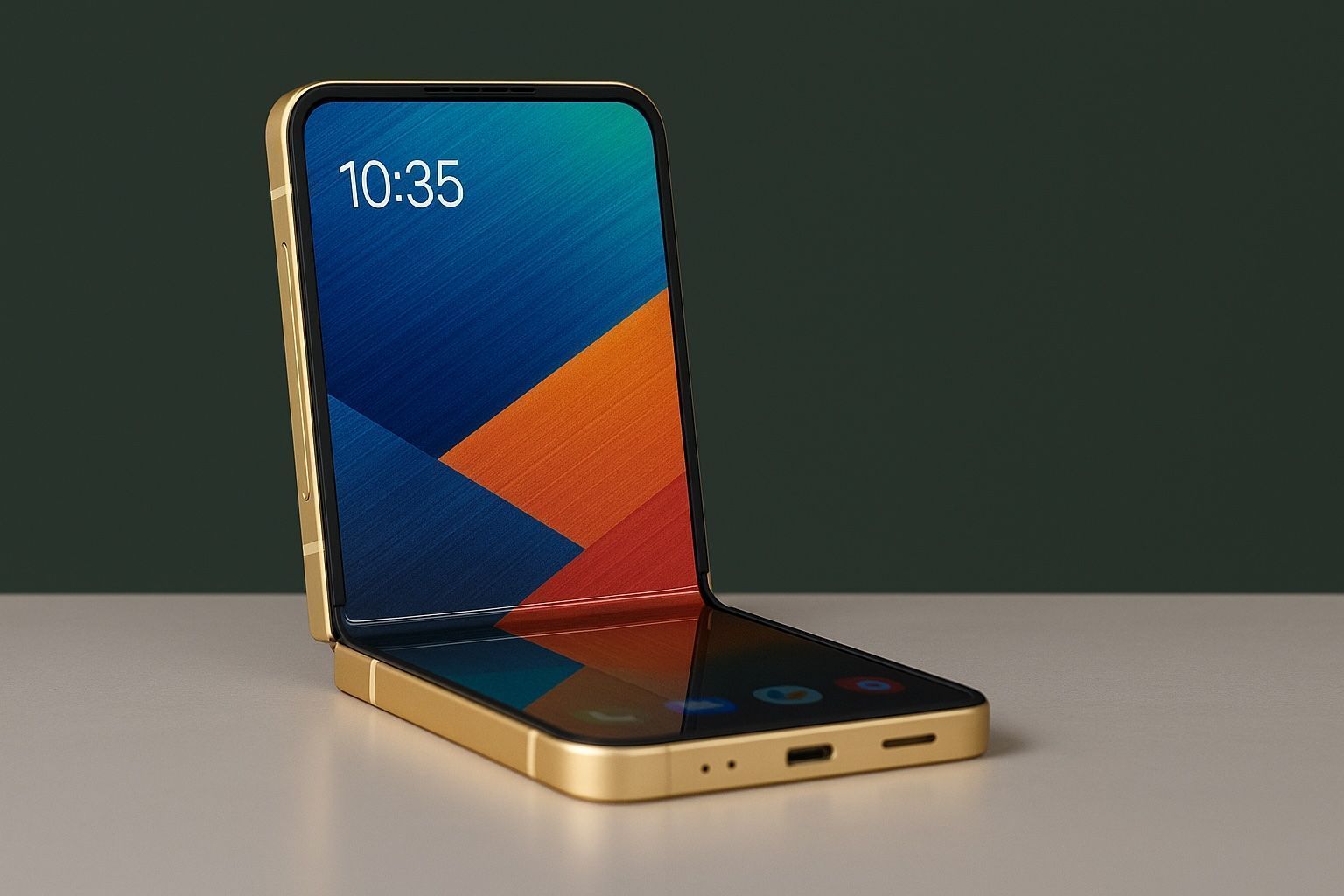
Flip Phone Face-Off: Samsung Galaxy Z Flip6 vs Motorola Razr 50 Ultra vs Oppo Find N3 Flip – Specs, Cameras & Foldable Futures

Flip Phone Face-Off: Samsung Galaxy Z Flip6 vs Motorola Razr 50 Ultra vs Oppo Find N3 Flip – Specs, Cameras & Foldable Futures

Foldable flip phones have made a roaring comeback, evolving from nostalgic throwbacks to cutting-edge flagships. Samsung’s Galaxy Z Flip6, Motorola’s Razr 50 Ultra, and Oppo’s Find N3 Flip represent the pinnacle of this trend as of mid-2025. All three pack high-end specs into pocketable clamshell designs, but each takes a different approach to design, cameras, displays, and durability. In this in-depth comparison, we’ll dissect their specifications, design & build quality, display technology, camera performance, battery life, software features, and durability. We’ll also highlight expert commentary and recent developments – from Samsung’s incremental refinements and Motorola’s big leap forward, to Oppo’s innovative triple-camera twist – with reputable sources cited throughout. Finally, we’ll peek at upcoming foldable models and rumors from Samsung, Motorola, and Oppo to see how the next generation might outshine the current one. First, here’s a side-by-side look at the core specs of the Galaxy Z Flip6, Razr 50 Ultra, and Find N3 Flip:
AI Just Changed Forever – Here’s Everything That Happened in the Last 48 Hours

AI Just Changed Forever – Here’s Everything That Happened in the Last 48 Hours

Sources: OpenAI GPT-5 launch report reuters.com reuters.com; Google $1B education initiative reuters.com reuters.com; Anthropic model updates pymnts.com pymnts.com; TS2 Space AI News Roundup ts2.tech ts2.tech ts2.tech ts2.tech ts2.tech; MIT News – AI-designed polymer study news.mit.edu; Reuters – AI in materials ts2.tech; Reuters – Profluent AI genome editor ts2.tech ts2.tech; The Guardian – DeepMind Genie 3 theguardian.com theguardian.com; Reuters – Meta & Scale AI deal reuters.com reuters.com; Reuters – OpenAI valuation and funding reuters.com ts2.tech; Reuters – Clay $100M funding reuters.com reuters.com; Reuters – Global M&A surge with AI drivers ts2.tech ts2.tech; NatLawReview – White House AI plan natlawreview.com natlawreview.com; Reuters – GSA approves AI vendors ts2.tech; Reuters – Senators warn on Chinese AI ts2.tech ts2.tech; TechCrunch – EU AI Act update techcrunch.com techcrunch.com; Reuters – Italy antitrust vs Meta AI reuters.com reuters.com; Reuters – U.S. Transportation Sec on AI pricing ts2.tech ts2.tech; Reuters – Anthropic lyrics lawsuit & judge remarks mediapost.com mediapost.com; Reuters – Voice actors vs AI dubbing reuters.com reuters.com; Reuters – “artistic, not artificial, intelligence” campaign reuters.com; Reuters – Legal AI hallucination fallout ts2.tech; Alan Turing Institute commentary turing.ac.uk.
DNA Drives, Glass Discs & 5D Crystals: The Race to Store Data Forever

DNA Drives, Glass Discs & 5D Crystals: The Race to Store Data Forever

Our world is generating data at explosive rates – far more than today's hard drives, flash SSDs, and magnetic tapes can economically keep up with datacenterdynamics.com fraunhofer.de. Even if we could build enough of those devices, they wear out quickly datacenterdynamics.com, forcing costly data migrations to avoid loss. This has sparked a race to find radically new storage technologies that can pack more data into less space and preserve it for centuries or longer. Three of the most promising contenders are: Each of these futuristic media claims ultra-high density, extreme durability, and millennia-long lifespans, but they differ in how they work and where they stand on the path to practical use. Below we compare these technologies on how they work, their storage capacity, longevity, environmental resilience, energy efficiency, speed, current progress, and real-world use cases – with insights from experts leading the charge.
Quantum Computing’s Explosive 48 Hours – Breakthroughs, Big Bets & Bold Moves (Aug 4–5, 2025)

Quantum Computing’s Explosive 48 Hours – Breakthroughs, Big Bets & Bold Moves (Aug 4–5, 2025)

Over the past two days, the quantum computing world has been buzzing with major announcements, scientific milestones, strategic investments, and bold predictions. From corporate leaps and technical breakthroughs to government initiatives and expert commentary, here’s a comprehensive roundup of all notable quantum computing developments from August 4–5, 2025. Global tech companies unveiled ambitious plans, researchers set new records, startups secured funding, policymakers advanced quantum agendas, and thought leaders weighed in on the quantum future versus hype. Below, we break down the key developments by category, with direct quotes and sources for each item. Sources: The information in this report is drawn from press releases, official news sites, research publications, and expert blogs issued or reported during the August 4–5, 2025 timeframe. Key sources include Fujitsu global.fujitsu global.fujitsu, IonQ investors.ionq.com investors.ionq.com, Rigetti thequantuminsider.com thequantuminsider.com, D-Wave thequantuminsider.com thequantuminsider.com, University of Cambridge phy.cam.ac.uk, Nature Communications via The Quantum Insider thequantuminsider.com, CERN/Quantum Zeitgeist quantumzeitgeist.com, SecurityWeek securityweek.com, The Economic Times economictimes.indiatimes.com, TechFundingNews techfundingnews.com techfundingnews.com, Quantum Computing Report quantumcomputingreport.com, The Quantum Insider thequantuminsider.com, Bank of America/CTech via The Quantum Insider thequantuminsider.com, and Schneier on Security schneier.com schneier.com, among others. Each development is hyperlinked to original source material for further reading and verification. The past 48 hours
How Machine Learning Works and Why It’s Changing Everything in 2025

How Machine Learning Works and Why It’s Changing Everything in 2025

Machine learning is a branch of artificial intelligence that lets computers learn from data instead of being explicitly programmed. In simple terms, an ML system finds patterns in example data and uses those patterns to make predictions or decisions on new data. As AI pioneer Andrew Ng famously put it, “AI is the new electricity,” highlighting how it can transform every industry just as electricity did knowledge.wharton.upenn.edu. ML is behind everyday technologies like voice assistants, face recognition on phones, and recommendation feeds on social media. It powers everything from email spam filters to self-driving cars. The core idea is that with enough relevant data, a machine can “figure out” the relationships on its own and continue improving over time. Machine learning comes in a few flavors depending on how the system learns:
Beyond the Eyepiece: The Next-Gen Microscopes of 2025–2026 Revolutionizing How We See the World

Beyond the Eyepiece: The Next-Gen Microscopes of 2025–2026 Revolutionizing How We See the World

Microscope technology is advancing at a breakneck pace – and the latest models of 2025 and beyond promise to revolutionize how scientists and hobbyists alike explore the micro-world. From AI-powered imaging software to hybrid systems combining multiple modalities, these next-gen microscopes are breaking old limits in resolution, speed, and ease of use. Leading manufacturers like Nikon, Zeiss, Leica, Thermo Fisher, Hitachi, Bruker, Olympus, and Keyence are unveiling cutting-edge optical, digital, electron, and scanning probe microscopes that push boundaries in what we can observe and analyze. In this comprehensive report, we compare the latest and upcoming microscope technologies – optical and digital microscopes, electron microscopes, scanning probe instruments, and hybrid AI-enhanced models – all designed to deliver sharper images, smarter analysis, and more automated workflows than ever before. What’s driving this microscope revolution? In a word: innovation. Manufacturers are racing to integrate artificial intelligence for automatic image analysis, enable remote and cloud-based operation for global collaboration, boost resolution into the atomic scale, and automate every step from focusing to data reporting. “Combining volume and time to enhance our understanding of complex biological processes, this represents a leap forward in 4D imaging,” says Dr. Bernhard Zimmermann, Head of Life Sciences Microscopy at
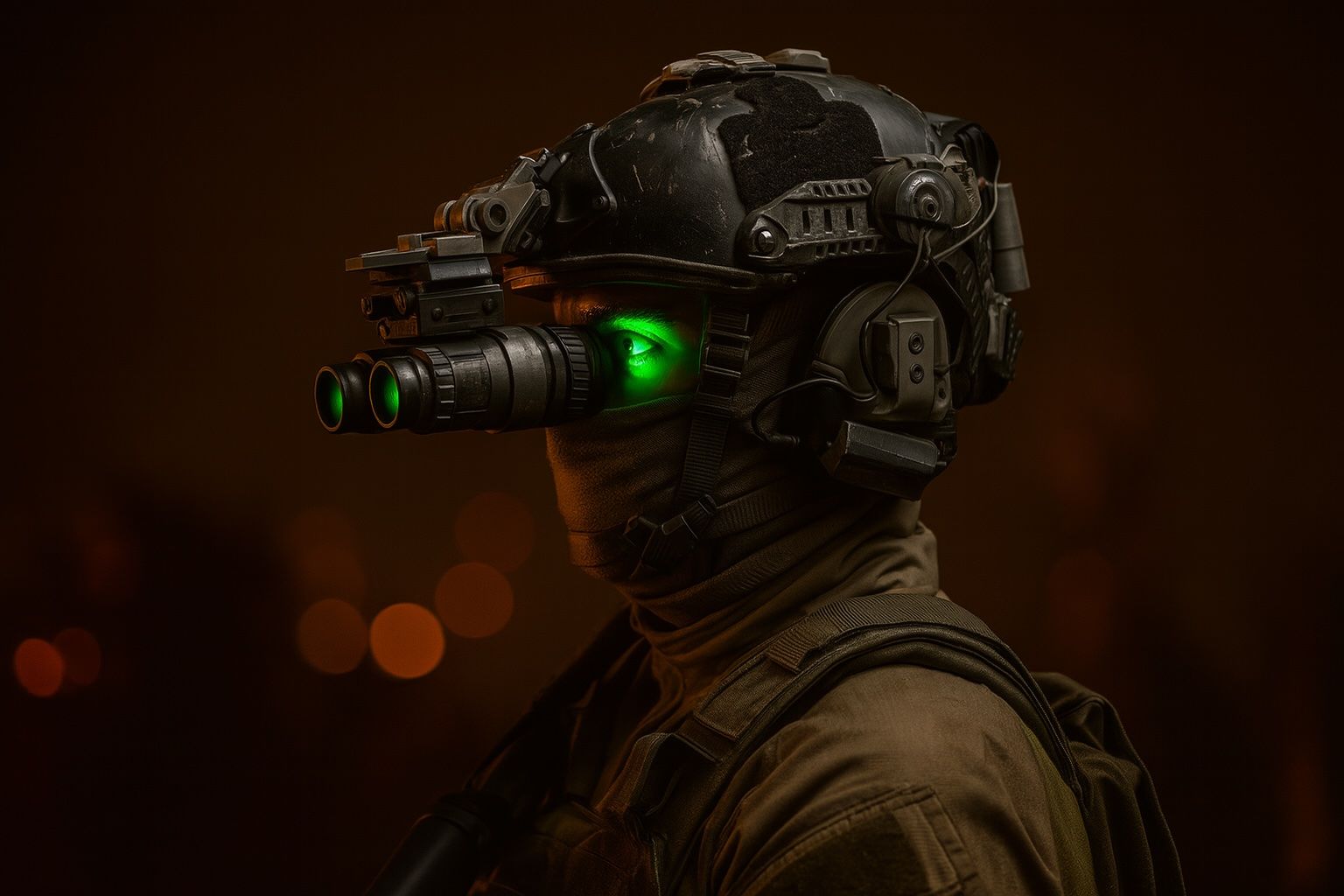
Night Vision Revolution: Top Goggles, Scopes & Thermal Tech of 2025–2026

Night Vision Revolution: Top Goggles, Scopes & Thermal Tech of 2025–2026

Night vision devices are undergoing a rapid revolution as we head through 2025 into 2026. Once limited to military use, modern night vision gear is now available for hunters, law enforcement, and tech-savvy consumers alike. The latest devices span traditional light-amplifying goggles, digital low-light cameras, and thermal imagers, with some cutting-edge systems even fusing multiple technologies for unparalleled nighttime awareness. From helmet-mounted military goggles that merge thermal and image intensification l3harris.com to ultra-HD digital scopes for civilian hunters atncorp.com, night vision tech has never been more advanced – or more accessible. In this report, we’ll compare the major night vision technologies – image intensifiers, digital night vision, and thermal imaging – across various form factors. We’ll break down key specs like resolution, field of view, battery life, weight, durability, and price, and highlight the standout models of 2025 along with what to expect in 2026.
Rings of the Future: Top Smart Rings of 2025 (and What’s Coming in 2026)

Rings of the Future: Top Smart Rings of 2025 (and What’s Coming in 2026)

Smart rings are booming and here to stay wareable.com. In fact, 2025 has seen a resurgence of high-tech rings from big brands and startups alike, all vying for a spot on your finger. These tiny wearables promise to track your health, help manage stress and sleep, and even let you pay with a wave of your hand. With so many newcomers, it’s getting incredibly challenging to choose between top options wareable.com. Fear not – this in-depth report will compare the latest and most popular smart rings of 2025 and peek at the upcoming innovations expected in 2026. We’ll cover everything from health and fitness tracking, sleep and stress monitoring, to cool extras like contactless payments, app notifications, biometric security, smart home tricks, and battery life. You’ll also find quotes from tech experts and links to official product pages and reviews for deeper insight. Whether you’re eyeing a discreet wellness tracker to replace your smartwatch or just curious about the one ring that might rule them all, read on.

Stock Market Today

  • Wanda Ordered to Pay Suning $258 Million After Failed IPO
    June 30, 2026, 12:08 AM EDT. A Chinese court ordered Dalian Wanda Group to pay Suning.Com 1.75 billion yuan ($258 million) after a property management IPO failed. The ruling settles a long dispute between the firms over the scrapped deal. It points to deal risk in China's property sector. Wanda now faces a major payout as the market feels the weight of regulatory and financial pressure around IPOs.
Go toTop